 Save
Save My grandmother kept a handwritten recipe card for lemon meringue pie tucked behind a faded photograph of her in the kitchen from 1952, flour dusting her apron. The first time I made it, I was convinced the meringue would collapse the moment it hit the oven—turns out, my worry was half the battle. There's something magical about watching those egg whites transform into clouds, especially when you're standing at the counter at three in the afternoon with nothing but time and curiosity. This pie isn't just dessert; it's a small act of faith that everything will come together perfectly.
I'll never forget making this pie for a summer potluck where everyone brought store-bought desserts in plastic containers, and I arrived with my pie still warm from the oven, the meringue peaks catching the late afternoon light. A neighbor took one bite and asked for the recipe on the spot, then actually made it three times that summer. That's when I realized this pie has the rare quality of making people feel like they've experienced something special, not just eaten something sweet.
Ingredients
- All-purpose flour: The foundation of a tender, flaky crust that won't disappoint you—measure by weight if you can, as it makes all the difference.
- Cold unsalted butter: This is non-negotiable; warm butter will ruin the texture before you even start, so cut it into cubes and keep it in the freezer until the last moment.
- Ice water: Add it slowly and with restraint; too much water and you'll have a tough, chewy crust that tastes like regret.
- Granulated sugar (filling): The sweet anchor that prevents the filling from tasting like pure lemon juice and puckered disappointment.
- Cornstarch: This is your thickening agent and your best friend; it transforms the filling from soup into something sliceable and elegant.
- Fresh lemon juice and zest: Meyer lemons are sweeter and more floral if you can find them, but regular lemons work beautifully—just squeeze them yourself rather than using bottled juice.
- Egg yolks and whites: Room temperature egg whites whip into better peaks, and separating eggs requires a steady hand but rewards you with silky texture.
- Cream of tartar: A pinch of this ingredient stabilizes the meringue and helps it stay glossy and strong, not weepy.
Tired of Takeout? 🥡
Get 10 meals you can make faster than delivery arrives. Seriously.
One email. No spam. Unsubscribe anytime.
Instructions
- Make the crust foundation:
- Whisk flour, salt, and sugar together, then work in cold butter cubes with your fingertips until the mixture looks like coarse breadcrumbs with some pea-sized pieces still visible. Add ice water one tablespoon at a time, mixing gently until the dough just barely holds together—overworking it now will betray you later.
- Chill and shape:
- Form the dough into a disk, wrap it well, and give it at least an hour in the refrigerator; this pause lets the gluten relax and makes rolling infinitely easier. Roll it out on a floured surface to fit your pie dish, press it in gently, trim the edges, and prick the bottom all over with a fork to prevent puffing.
- Blind bake the crust:
- Line it with parchment paper, fill it with pie weights or dried beans, and bake at 400°F for 15 minutes until the sides set. Remove the weights, bake another 8 to 10 minutes until golden, then let it cool completely while you make the magic happen.
- Build the lemon filling:
- Whisk sugar, cornstarch, and salt in a saucepan, then gradually add water while whisking to avoid lumps—this patient approach prevents a grainy filling. Cook over medium heat, stirring constantly, until it thickens and bubbles, about 5 to 7 minutes; watch for the moment it transforms from translucent to glossy.
- Temper the egg yolks:
- Whisk the yolks in a separate bowl, then slowly pour a little of the hot mixture into them while whisking constantly; this gradual warming prevents scrambled eggs. Pour this yolk mixture back into the saucepan and cook for 2 more minutes while stirring gently.
- Finish the filling with brightness:
- Remove from heat and stir in lemon zest, fresh lemon juice, and butter; the mixture should look smooth and silky. Pour it into the cooled crust and set it aside while you prepare the meringue.
- Whip the meringue:
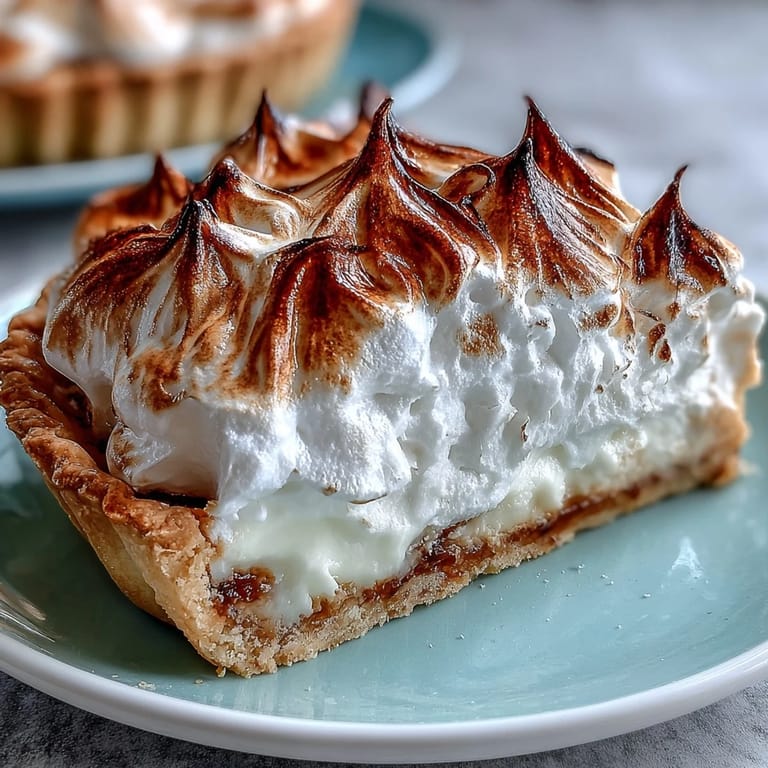
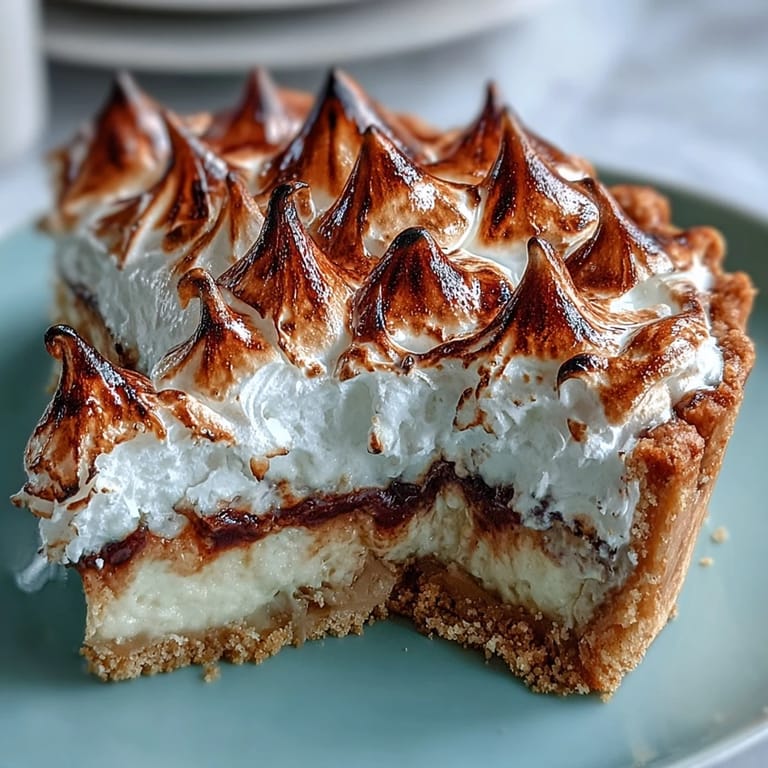
- In a scrupulously clean bowl, beat egg whites with cream of tartar on high speed until soft peaks form, then gradually add sugar while continuing to beat until the peaks are stiff and glossy. Beat in vanilla extract and spread the meringue over the warm filling, making sure to seal the edges all the way to the crust to prevent shrinking.
- Bake until golden:
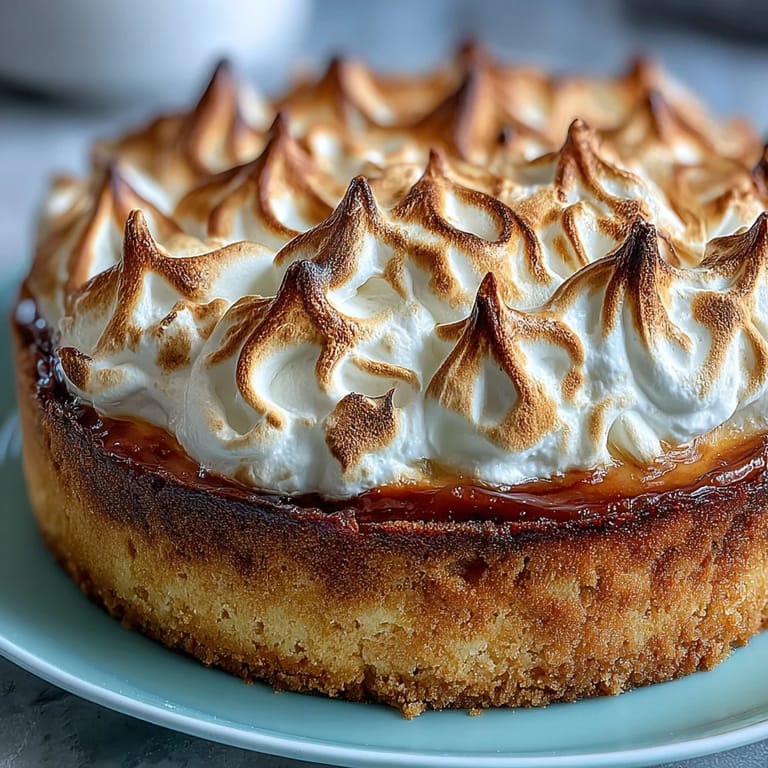
- Bake at 350°F for 15 to 18 minutes until the meringue peaks turn golden brown on their tips. Cool completely to room temperature, then chill for at least 2 hours before slicing so each piece comes away clean and composed.
 Save
Save There was a night I made this pie while my teenage daughter sat at the kitchen counter, and we talked through an entire afternoon while the crust baked and cooled. By the time we sliced into it, the conversation had shifted from surface concerns to something real, and somehow the pie tasted better because of it. That's the thing about recipes that take time—they create space for living alongside the cooking.
The Perfect Crust Matters More Than You Think
A good crust sets the entire tone for this pie, and there's no way around it; you can't have a stellar lemon meringue pie with a soggy, tough, or thin foundation. The secret is in the restraint—don't overwork the dough, keep everything cold, and trust that the ice water will do its job without your constant kneading. After years of practice, I learned that a pastry crust is less about technique and more about respecting the ingredients and giving them time.
Why the Filling Needs Your Attention
The lemon filling is where most people panic, watching it slowly thicken and wondering if it will ever come together, but that moment when it shifts from runny to glossy is worth the wait and the constant stirring. Tempering the egg yolks isn't complicated, just a gentle process that prevents you from serving scrambled eggs with lemon juice, which would be a tragedy. The filling should taste aggressively lemony at this stage; the sweetness of the meringue balances it all out once everything is assembled.
Meringue Secrets and Serving Wisdom
Meringue is delicate but not fragile if you respect the process, and the key is starting with egg whites at room temperature and a perfectly clean bowl—even a speck of yolk will sabotage your peaks. Spreading it onto warm filling helps it cook through more evenly, and sealing the edges to the crust prevents that shrinking that makes a pie look sad and deflated. Chill the pie thoroughly before serving because cold meringue is infinitely better than room temperature, and your slices will thank you.
- A serrated knife dipped in hot water and wiped clean between cuts makes slicing significantly cleaner and more elegant.
- This pie is best eaten within a day or two, but it keeps in the refrigerator for up to three days if you store it covered.
- Pair it with something cold—iced tea, Moscato, or just a glass of cold milk—because the richness needs something to cut through it.
 Save
Save This pie has taught me that good food is often about patience and faith—faith that the butter will cut in right, that the filling will thicken, that the meringue will hold its peaks. Make it for someone, or make it for yourself on an ordinary day when you want something extraordinary.
Recipe FAQ
- → How do I prevent the meringue from weeping?
Spread the meringue over the filling while it's still warm, making sure to seal the edges completely to the crust. This prevents moisture from collecting between layers and causing weeping.
- → Can I make the crust ahead of time?
Yes, you can prepare and bake the crust up to 2 days in advance. Store it covered at room temperature, then fill and top with meringue when ready to serve.
- → Why is my meringue deflating?
Ensure egg whites are at room temperature and your bowl is completely clean and grease-free. Beat until stiff, glossy peaks form, and bake immediately after spreading on the pie.
- → How long does lemon meringue pie last?
The pie is best enjoyed within 2-3 days. Store it loosely covered in the refrigerator. The meringue may soften slightly over time but will still taste delicious.
- → Can I use bottled lemon juice instead of fresh?
Fresh lemon juice is strongly recommended for the best flavor and brightness. Bottled juice often has a flat, bitter taste that won't give you the same vibrant, tangy filling.
- → What's the best way to get clean slices?
Chill the pie thoroughly for at least 2 hours before cutting. Use a sharp knife dipped in hot water and wiped clean between each slice for neat, professional-looking portions.