 Save
Save There's something about the sound of jasmine rice hitting the pot that brings me back to a humid afternoon in my grandmother's kitchen, watching her stir this creamy coconut mixture with the kind of focus people reserve for important things. She never measured anything precisely, just knew when the ratio felt right by how the liquid moved around the grains. Years later, I finally cracked the code on getting that perfect tender texture without turning it into porridge, and now this dish has become my go-to when I need something that feels both indulgent and impossibly simple.
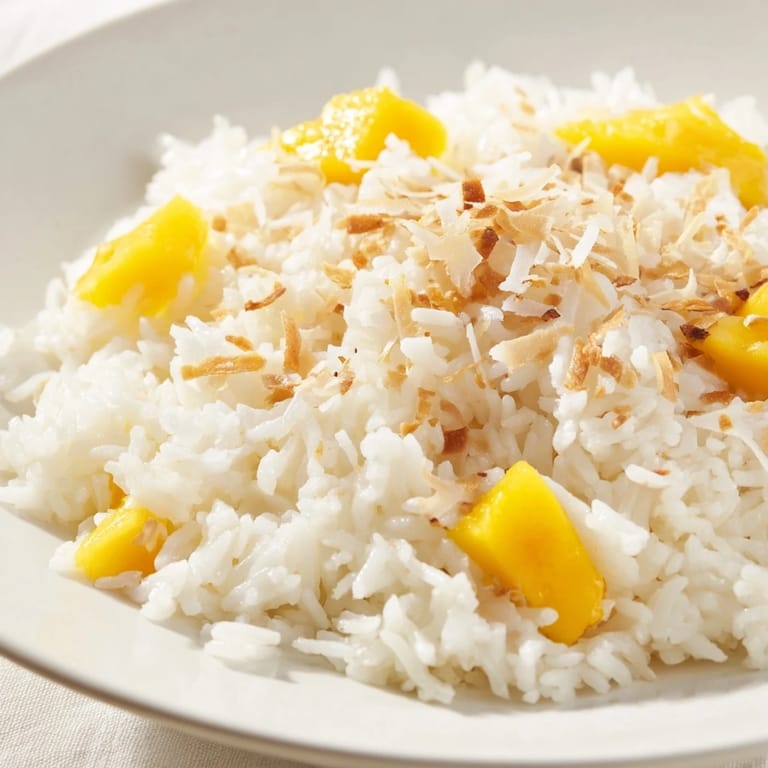
I made this for a friend who was going through a rough week, plating it in her favorite bowl with a sprinkle of toasted coconut on top. She ate it silently for a moment, then looked up and said it tasted like a vacation, and I realized that's exactly what this dish does—it transports you somewhere warm and unhurried with each spoonful.
Ingredients
- Jasmine rice (1 cup, rinsed): This variety matters because jasmine grains stay separate and tender rather than clumping; rinsing removes excess starch that would turn your coconut mixture cloudy.
- Coconut milk (1½ cups, full-fat): Don't reach for the lite version here—the richness is non-negotiable, and full-fat coconut milk creates that silky, cohesive sauce that makes this special.
- Water (1 cup): This keeps the final texture from becoming too dense, letting each rice grain stay distinct instead of fusing into a paste.
- Granulated sugar (⅓ cup): Taste as you go with this; some coconut milks are naturally sweeter than others, so you might adjust downward.
- Salt (¼ teaspoon): A small amount amplifies the coconut flavor and prevents the sweetness from feeling one-dimensional.
- Vanilla extract (1 teaspoon): Added at the end to preserve its delicate perfume, which heat tends to chase away.
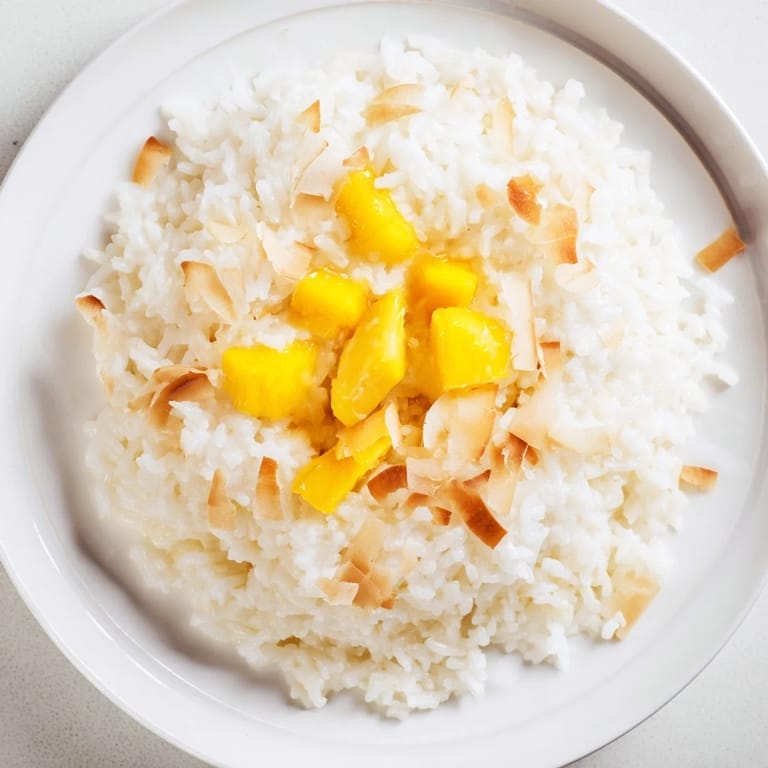
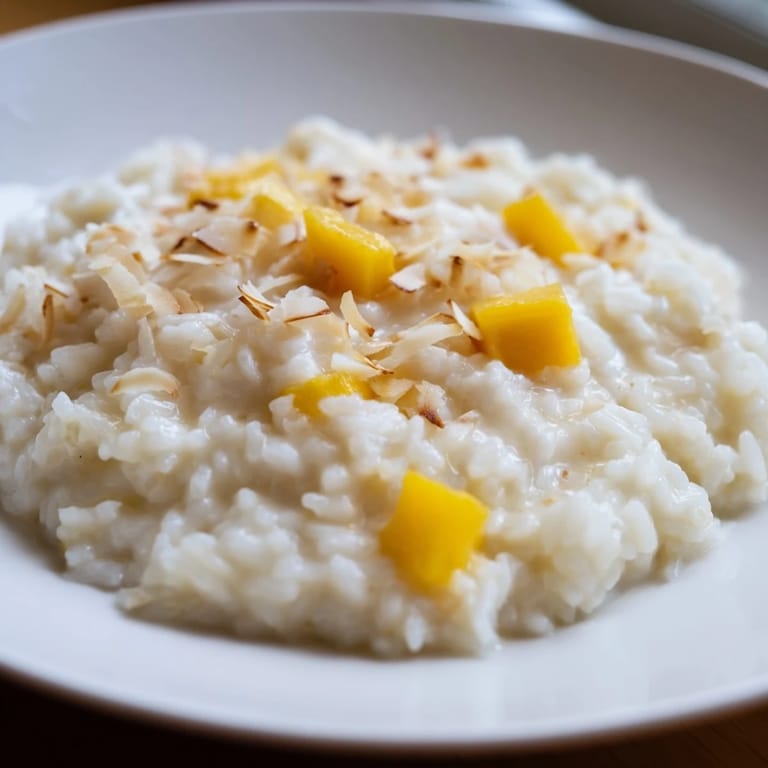
- Toasted coconut flakes (2 tablespoons, optional but encouraged): These add texture and concentrate the coconut flavor with a subtle nuttiness that raw flakes can't deliver.
- Fresh mango or pineapple (1 tablespoon, chopped, optional): Bright fruit cuts through the richness and adds a color contrast that makes the dish feel finished.
Tired of Takeout? 🥡
Get 10 meals you can make faster than delivery arrives. Seriously.
One email. No spam. Unsubscribe anytime.
Instructions
- Gather and rinse your rice:
- Run the jasmine rice under cool water in a fine-mesh strainer, stirring gently with your fingers for about 30 seconds until the water runs mostly clear. This small step prevents your finished dish from becoming gluey.
- Combine everything in the pot:
- Pour the rinsed rice, coconut milk, water, sugar, and salt into your medium saucepan and give it a thorough stir, making sure the sugar dissolves and no rice grains hide at the bottom. This is your moment to taste and adjust sweetness before cooking.
- Bring to a gentle boil:
- Set the heat to medium and let the mixture come to a bubble, stirring occasionally so nothing sticks. You'll notice the coconut milk starts to feel more unified with the liquid—this is when you know you're on track.
- Lower the heat and cover:
- Turn the flame down to low, place the lid on, and let the magic happen for 18–20 minutes. Peek once after 15 minutes to make sure it's still gently bubbling underneath; if it's boiling hard, your heat is too high.
- Finish with vanilla and rest:
- Remove the pot from heat, stir in the vanilla extract, and let it sit covered for 5 minutes—this resting period lets the rice absorb any remaining liquid and firms up the texture slightly. The aroma that rises when you lift that lid is your reward for patience.
- Fluff and serve:
- Use a fork to gently separate the grains, being careful not to mash them. Serve warm or at room temperature, scattered with toasted coconut and fresh fruit if you'd like.
 Save
Save My partner once called this 'the rice that tastes like Saturday morning,' and I think about that description every time I make it. There's something about this dish that signals slowness and care, and somehow that feeling comes through in the taste.
Flavor Variations That Work
The beauty of this recipe is how forgiving it is to small adjustments. I've added a pinch of cardamom or a thin slice of fresh ginger during cooking, and both create subtle depth without overpowering the coconut's natural sweetness. One evening, I stirred in a tablespoon of toasted sesame oil right before serving, and it gave the whole thing a nutty complexity that felt sophisticated without being complicated. Even swapping the vanilla for a tiny splash of rum extract changes the entire mood of the dish.
Why Coconut Milk Matters More Than You Think
Coconut milk isn't just a liquid here—it's the foundation of the entire experience. The creamy coating it creates around each grain is what transforms plain rice into something that feels luxurious and intentional. When I switched to a different brand once, I noticed the difference immediately in how the rice absorbed the flavor. Since then, I've learned to treat coconut milk like a key ingredient rather than a casual substitution, and it's made all the difference in consistency between batches.
Serving Suggestions and Storage
Serve this warm right out of the pot when you want maximum creaminess, or chill it and eat it straight from the fridge on hot days—it's equally good at both temperatures. Leftovers keep for three days in an airtight container, though I find it rarely lasts that long. I like pairing it with fresh lime wedges, a scoop of vanilla ice cream, or nothing at all when I want the coconut flavor to be the star.
- For meal prep, divide into portions and refrigerate in individual containers so you always have a five-minute dessert ready to go.
- Freshly toasted coconut flakes lose their crunch quickly, so add them just before serving for maximum textural contrast.
- This pairs beautifully with strong brewed coffee or iced tea, which cuts through the richness in a way that feels intentional.
 Save
Save This recipe reminded me that sometimes the best dishes are the simplest ones, the ones that let good ingredients speak for themselves without demanding anything complicated or showy. Make it once and you'll have it forever.
Recipe FAQ
- → What type of rice is best for this dish?
Jasmine rice is ideal because of its fragrant aroma and slightly sticky texture, which complements the creamy coconut milk perfectly.
- → Can I use another type of milk instead of coconut milk?
Full-fat coconut milk provides the richest flavor and creaminess, but using all coconut milk without water enhances the taste further.
- → How do I avoid rice sticking to the pan?
Use a medium saucepan with a tight-fitting lid, simmer on low heat, and avoid stirring frequently to prevent sticking during cooking.
- → What can I use to garnish this dish?
Toasted coconut flakes and chopped fresh tropical fruits like mango or pineapple add texture and bright flavors as garnishes.
- → Is there a way to adjust the sweetness?
Yes, the amount of granulated sugar can be adjusted to taste before cooking, allowing you to control the level of sweetness.