 Save
Save The first time I made Kuwaiti biryani, my kitchen filled with such an intoxicating cloud of spices that my neighbor knocked on the door thinking something was burning. It wasn't—it was that glorious moment when cardamom, cinnamon, and saffron finally came together. I'd watched my aunt make this dish years ago, but only recently decided to recreate it, and that's when I understood why people get nostalgic about rice cooked this way. There's something about layering meat, rice, and golden onions in a single pot that feels like you're building something sacred. Now, whenever I make it, I find myself moving slower, wanting to savor each step.
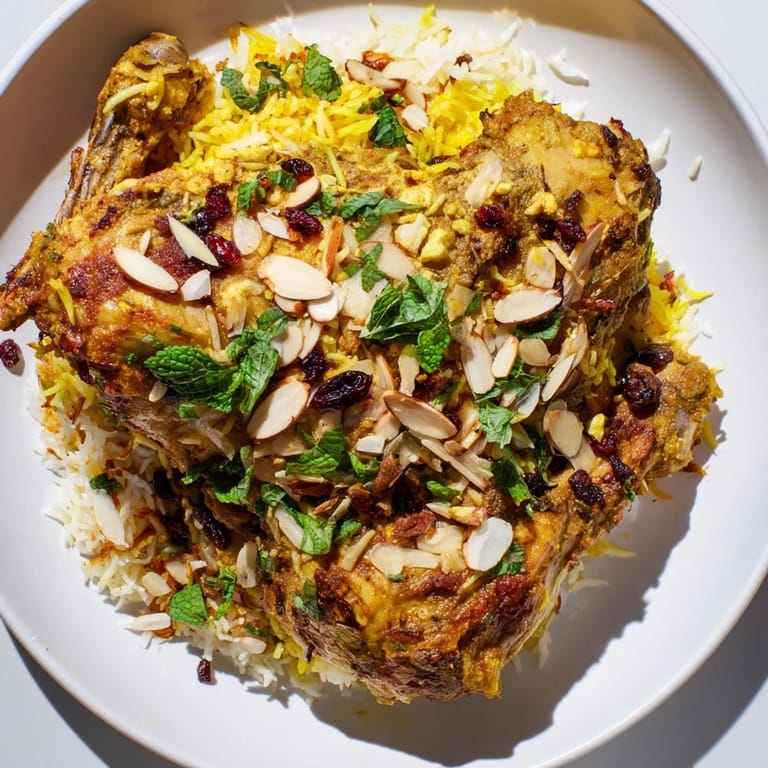
I served this to my partner's family during their first visit to our place, and I was genuinely nervous. Biryani has a reputation—it's not something you casually throw together. But as I lifted that foil off the pot and the steam rose up like a curtain revealing something beautiful, everyone leaned in. My mother-in-law took one bite and said nothing for a moment, and that silence told me everything. That's when I realized this dish had become my kitchen signature.
Ingredients
- Bone-in chicken or lamb (900g): Bone-in pieces stay juicier and add depth to the cooking liquid; don't use boneless—the bones are where the flavor lives.
- Plain yogurt (1 cup): This is your tenderizer and flavor anchor; full-fat yogurt makes a difference in the final texture.
- Lemon juice (2 tbsp): Brightens the marinade and helps break down the meat fibers without making it mushy.
- Ginger-garlic paste (1 tbsp): The backbone of the marinade; if you're making your own, freshly ground tastes incomparably better than jarred.
- Ground turmeric, cumin, coriander (1 tsp each, 1.5 tsp each): These aren't interchangeable—each brings its own warmth and earthiness; toast them lightly in a dry pan before grinding if you're using whole spices.
- Chili powder and garam masala (1 tsp each): Adjust these to your heat preference; garam masala ties all the spices together in a warm embrace.
- Basmati rice (3 cups): Long-grain basmati is essential—it stays separate and fluffy, never mushy.
- Ghee (2-3 tbsp total): Ghee over butter every time if you can get it; the flavor is deeper and it browns onions more beautifully.
- Whole spices for rice (cloves, cardamom, cinnamon, bay leaf): These infuse the rice with fragrance without overpowering it; fish them out before serving if guests prefer.
- Large onions (2): Slice them thin and don't rush the browning—caramelized onions are non-negotiable.
- Fresh coriander and mint (1/2 cup and 1/4 cup): Fresh herbs are the brightness that keeps this dish from feeling heavy; dried won't give you the same lift.
- Saffron threads (pinch): Soak in warm milk; this step is worth it and makes a visual and flavor difference that's unmistakable.
- Almonds or cashews, toasted (1/4 cup): Toasting them first brings out their natural sweetness and crunch.
Tired of Takeout? 🥡
Get 10 meals you can make faster than delivery arrives. Seriously.
One email. No spam. Unsubscribe anytime.
Instructions
- Make the marinade and season the meat:
- Whisk together yogurt, lemon juice, ginger-garlic paste, and all the ground spices in a bowl. The mixture should smell assertive and warm. Add your meat pieces and coat them thoroughly, then cover and let them sit in the fridge for at least an hour—overnight is even better because the spices have time to really penetrate.
- Prepare the rice:
- Rinse your basmati rice under cold water until the water runs clear; this removes excess starch and prevents clumping. Soak it for 30 minutes, then drain well.
- Par-cook the rice:
- Bring a large pot of salted water to a rolling boil, add the soaked rice along with your whole spices (cloves, cardamom, cinnamon, bay leaf), and let it cook for just 6–7 minutes. The rice should still have a slight firmness in the center—it will finish cooking in the oven. Drain it immediately and set aside.
- Preheat and prepare the cooking vessel:
- Set your oven to 180°C (350°F). Use an ovenproof Dutch oven or heavy pot with a tight-fitting lid—this is where the magic happens.
- Caramelize the onions:
- Heat ghee or oil in your pot over medium heat and add the thinly sliced onions. Let them cook slowly until they turn deep golden and slightly crispy at the edges, about 12–15 minutes; this patience is what separates good biryani from exceptional biryani. Remove half the onions to use as garnish later.
- Cook the marinated meat:
- Place the marinated meat with its yogurt coating into the pot with the remaining onions. Sear it for 5–7 minutes to develop color, then reduce heat to low, cover, and let it cook gently for 20–25 minutes if using chicken or 35–40 minutes if using lamb, until the meat is just tender. Add a splash of water if the bottom looks dry.
- Layer the biryani:
- Sprinkle half your fresh herbs, raisins, and toasted nuts over the meat. Then add half the par-cooked rice in an even layer. Top with the remaining herbs, raisins, and nuts, and finish with the rest of the rice. This layering is what creates those pockets of flavor throughout.
- Add the saffron milk and seal:
- Drizzle the saffron-infused milk evenly over the top rice layer and dot with small pieces of ghee or butter. Cover the pot with foil first, then place the lid on top—the foil ensures steam stays trapped inside.
- Bake until everything melds:
- Place in the oven for 30–35 minutes. You'll hear gentle bubbling sounds—that's the signal that everything is cooking in perfect harmony. Resist the urge to peek.
- Rest and serve:
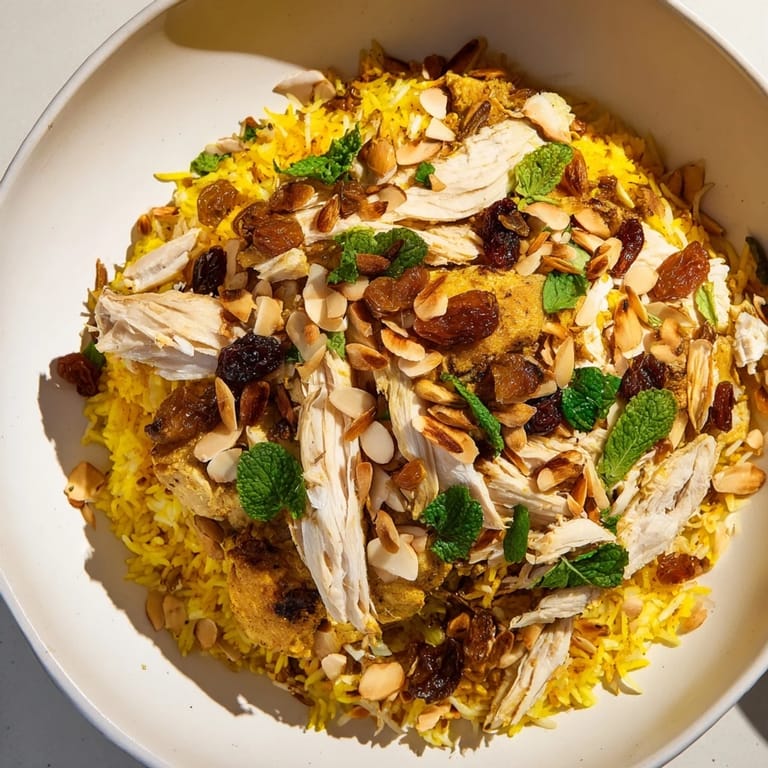
- Remove from the oven and let it sit, covered, for 10 minutes. This allows the flavors to settle and the rice to firm up slightly. Gently fluff with a fork, garnish with the reserved caramelized onions and fried onions, and serve immediately.
 Save
Save I'll never forget the quiet moment after everyone finished eating, when my uncle asked for the recipe with genuine interest. He's not usually one for asking for recipes, but something about this dish made him want to recreate it at home. That's when I understood that food cooked with care and intention speaks a language that transcends ingredients and technique.
The Soul of Proper Layering
Biryani is fundamentally about layers working in concert. When you place that first layer of rice over the meat, you're not just stacking ingredients—you're creating a vessel where steam carries flavors upward and spices migrate through the grains. I learned this the hard way when I once stirred everything together instead of layering it, and the result was good but flat, missing that complexity that makes you close your eyes between bites. The layers keep the meat moist, allow the rice to stay fluffy, and let each component maintain its integrity while becoming part of something greater. Every time I layer a biryani now, I'm more intentional, treating each layer like it matters—because it does.
Why Saffron and Milk Matter
The saffron milk seems like a luxury, something you might skip if you're in a hurry. But those threads soaked in warm milk are actually doing profound work—they're adding color, a delicate floral note, and a richness that ties the whole dish together. When I was first learning to make biryani, I once skipped the saffron thinking it was purely for show. The result was still delicious, but it lacked that signature warmth, that subtle complexity that makes people stop and notice. Now I understand that saffron isn't a garnish; it's a foundation, a whisper of luxury that reminds you this meal was made with intention.
Timing, Temperature, and Trust
The oven time for biryani is surprisingly short compared to other baked rice dishes, and this is intentional. You're not trying to cook everything from scratch in the oven—the meat is already cooked, the rice is already partially cooked. You're just bringing it all together in a gentle heat, letting steam do the final work of melding flavors and finishing the rice. The first few times I made this, I opened the oven door to check on it, and my biryani suffered slightly each time. Now I trust the process, set a timer, and walk away. That confidence comes from understanding what's happening inside: the layers are breathing, flavors are migrating, and steam is creating an environment where everything becomes more than itself. The closed pot is its own small universe.
- If your kitchen is particularly cold or your oven runs cool, add an extra 5 minutes to the baking time rather than increasing the temperature.
- Use an ovenproof Dutch oven or heavy-bottomed pot—thin pots create hot spots that can burn the bottom layer.
- The 10-minute rest after baking is as important as the baking itself; it lets everything settle and makes fluffing easier without breaking the grains.
 Save
Save Every time someone asks for this recipe now, I smile because I know they're about to experience something that's so much more than rice and meat cooked together. It's a meditation on flavor, patience, and the quiet joy of feeding people something that tastes like it was made with real care.
Recipe FAQ
- → What type of meat works best for this biryani?
Bone-in chicken or lamb pieces are ideal as they absorb the marinade and remain tender after slow cooking.
- → How do I achieve the signature layered texture?
Par-cook the basmati rice until slightly firm, then layer it alternately with the marinated meat, herbs, nuts, and raisins before baking.
- → What spices provide the distinct aroma?
Turmeric, cumin, coriander, chili powder, garam masala, along with whole cloves, cardamom, cinnamon, and bay leaf contribute to the rich fragrance.
- → Can saffron be substituted?
While saffron adds a unique aroma and color, turmeric or a pinch of paprika can be used as alternatives for a similar effect.
- → How to garnish for best presentation?
Top the biryani with fried onions, toasted almonds or cashews, and fresh chopped coriander and mint leaves for added flavor and visual appeal.