 Save
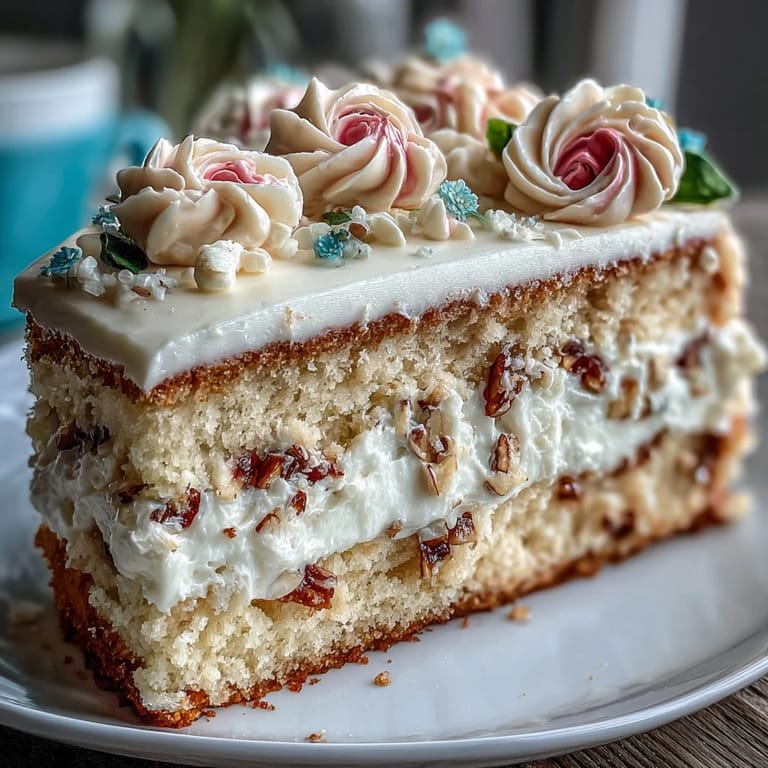
Save My hands were shaking the first time I piped buttercream flowers onto a cake for someone else's celebration. It was a Saturday morning, the kitchen still cool and quiet, and I'd chosen this vanilla sheet cake as my canvas because it felt honest—not fussy, just genuinely delicious. The softness of the crumb, the way the buttercream would anchor those delicate rosettes I'd practiced on parchment the night before, it all came together like a small promise: that something homemade could feel both elegant and utterly approachable.
There's something about presenting a cake you've decorated yourself to a room full of people. I watched a young girl's face light up when she saw the pale pink and cream flowers scattered across the top, and her mother pulled me aside later to ask how long I'd been a pastry chef. I laughed and told her the truth: I'd only started learning six months ago, and half my piping bags are still slightly bent from nervous grips. That's when it clicked—this cake wasn't special because it was perfect, it was special because it was made with intention.
Ingredients
- All-purpose flour (2 ½ cups): The foundation of everything; sift it if you have time, but honestly, whisking it thoroughly does the job just as well and prevents those stubborn lumps.
- Baking powder (2 ½ tsp): This is your lift, your promise of a tender crumb; don't skip or halve it, and check the date on the tin because old baking powder makes for dense, disappointing cakes.
- Salt (½ tsp): A tiny pinch that makes all the vanilla notes sing louder, even though no one will taste it directly.
- Unsalted butter (1 cup for cake, 1 ½ cups for frosting): Room temperature is non-negotiable here; cold butter won't cream properly and you'll end up with a grainy, sad mixture instead of the fluffy cloud you're after.
- Granulated sugar (2 cups): The beating time with butter matters more than you'd think; this is where air gets incorporated, and that air becomes the tender crumb.
- Eggs (4 large): Room temperature eggs emulsify smoothly into the butter, while cold ones can cause the batter to look broken and separate.
- Pure vanilla extract (1 tbsp for cake, 2 tsp for frosting): The soul of this cake; use the real thing because imitation vanilla tastes like cardboard against good ingredients.
- Whole milk (1 cup for cake, ¼ cup for frosting): Room temperature milk prevents the batter from seizing up when it hits the warm butter mixture.
- Powdered sugar (6 cups): Sifting it before mixing saves you from lumpy, gritty frosting and makes beating so much easier.
- Food coloring (gel preferred): Gel colors don't thin out the buttercream like liquid colors do, so your frosting stays the right consistency for piping those flowers.
Tired of Takeout? 🥡
Get 10 meals you can make faster than delivery arrives. Seriously.
One email. No spam. Unsubscribe anytime.
Instructions
- Set your stage:
- Preheat the oven to 350°F and grease your 9x13-inch pan generously, then line it with parchment paper so the cake slides out without drama. Having everything prepped and ready means you won't be scrambling when the batter is ready to bake.
- Dry ingredients unite:
- Whisk together the flour, baking powder, and salt in a medium bowl until they're evenly distributed. This whisking step is faster than sifting and just as effective at breaking up any clumps.
- Cream the butter and sugar:
- In your largest bowl, beat softened butter and granulated sugar together with an electric mixer for about three minutes until the mixture looks pale, fluffy, and noticeably lighter than when you started. This is where the magic of air incorporation happens, and it takes longer than you'd think.
- Add eggs one by one:
- Drop in one egg at a time, beating well after each addition so everything stays emulsified and smooth. If the mixture looks slightly separated at any point, don't panic; it usually comes back together as you keep beating.
- Blend in the vanilla:
- Pour in the vanilla extract and mix until it's fully incorporated. You'll smell that beautiful vanilla fragrance fill the kitchen, which is a good sign everything is working.
- Alternate flour and milk:
- Add the flour mixture in three parts, alternating with the milk and starting and ending with flour; this alternating method keeps the batter from becoming tough and overmixed. Stir just until combined after each addition, resisting the urge to beat it into submission.
- Pour and smooth:
- Spread the batter evenly into your prepared pan and use a spatula to smooth the top. A level bake is an even bake, so take a moment here to get it right.
- Bake with confidence:
- Bake for 28 to 32 minutes; the top should spring back gently when you touch it, and a toothpick inserted in the center should come out clean or with just a crumb or two. Ovens vary, so start checking around the 25-minute mark if you have a particularly aggressive one.
- Cool properly:
- Let the cake rest in the pan for 10 minutes, then carefully turn it out onto a wire rack to cool completely. Cooling completely is essential before frosting or the buttercream will melt into puddles.
- Make your frosting:
- Beat the softened butter until it's creamy and pale, then gradually add the sifted powdered sugar in batches, alternating with the milk to keep things smooth and light. Add the vanilla and beat until the whole mixture looks fluffy and spreadable, like clouds you could actually eat.
- Tint with intention:
- Divide the buttercream into small bowls and add gel food coloring a drop at a time, stirring until you reach your desired shade. Gel coloring is gentler and doesn't thin out the frosting the way liquid coloring does.
- Frost the base:
- Spread a generous, even layer of plain buttercream across the cooled cake to create your canvas. This base layer is what all those flowers will rest on.
- Pipe your flowers:
- Fit piping bags with your favorite decorating tips—flower tips for blooms, leaf tips for greenery—fill them with colored buttercream, and pipe designs across the cake with confidence, focusing on corners and edges for a balanced look. Piping flowers takes practice, so don't aim for perfection; clustered, slightly imperfect flowers actually look more charming and real.
- Add the message:
- If desired, use a small round tip and white or contrasting-colored buttercream to pipe a cross or write a First Communion blessing or name. This personal touch is what transforms a beautiful cake into a treasured memory.
 Save
Save Years later, I still have a photo of that first celebration cake, slightly blurry and taken with a phone camera that didn't do the colors justice. But what it captures perfectly is the moment between baking and serving, that quiet pride of knowing you'd made something meaningful with your own two hands. Cakes can be bought, but they're never quite the same as one you've stood in your kitchen and built from butter and eggs and intention.
Timing and Storage Secrets
The beauty of this cake is its flexibility with time. Bake it the day before your celebration, wrap it loosely in plastic wrap, and store it at room temperature where it will actually get more tender and moist as it sits overnight. The buttercream also prefers room temperature storage, and both cake and frosting can live happily together at room temperature for up to two days before serving.
Flavor Variations and Personal Touches
While vanilla is classic for celebrations, I've experimented with adding a ½ teaspoon of almond extract to the batter, which adds a subtle floral note that feels a little more sophisticated without changing the character of the cake. You can also infuse the buttercream with almond extract, lemon zest, or even a touch of rose water if you want to hint at different flavor directions. The pale buttercream base is also a perfect canvas for any color scheme you're imagining.
Decorating Like You Mean It
Piping flowers seems intimidating until you realize that most people are just happy to see something homemade and decorated with care. Practice piping on parchment paper the night before if you're nervous; this gives you a no-pressure way to get comfortable with the motion and build confidence. Start with one simple flower shape, master it, and then layer in more complexity as you go around the cake.
- Pipe larger flowers in corners and smaller ones in between for depth and visual balance that feels intentional rather than random.
- Leave some bare spots of buttercream showing through so the cake doesn't look overly decorated; pastry chefs call this restraint, and it's the difference between elegant and overdone.
- If you make a mistake, gently smooth it away with an offset spatula or the back of a knife; buttercream is forgiving and erasable, unlike frosting disasters in other media.
 Save
Save This cake has become my default celebration dessert because it never fails and it always feels special. Whether you're marking a First Communion or simply want to bake something beautiful for someone you love, this is the recipe that proves you don't need to be a professional baker to create something that tastes homemade and looks like it came from a dream.
Recipe FAQ
- → What makes this sheet cake tender and moist?
The combination of softened butter, whole milk, and proper mixing ensures a tender crumb and moist texture.
- → How do I get smooth buttercream for piping flowers?
Beat unsalted butter until creamy before gradually adding powdered sugar and milk, then tint with food coloring for smooth piping consistency.
- → Can I prepare the cake ahead of time?
Yes, the cake can be baked a day in advance and stored covered at room temperature before decorating.
- → What pans are best for baking this cake?
A greased and parchment-lined 9x13-inch baking pan helps achieve even baking and easy removal.
- → How do I prevent the buttercream colors from running?
Use gel food coloring to maintain vibrant colors and prevent runny textures.