 Save
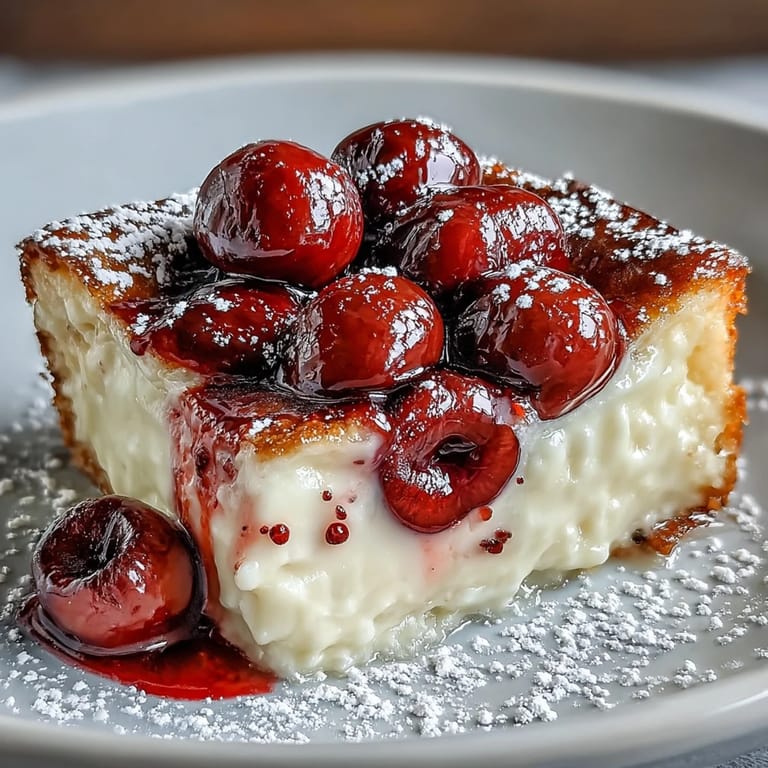
Save The first time I baked a cherry clafoutis, the summer air was thick with the scent of ripe fruit drifting in through the kitchen window. My hands still carried a faint blush from pitting a ridiculous amount of cherries. It all felt a little haphazard: a dusting of flour on my shirt, laughter from the next room threatening to distract me. With vanilla bean perfuming the custard, I was more curious than confident, but that faint uncertainty just made the experience brighter.
I once brought this clafoutis to a late picnic in the park, still a bit warm and wrapped in a tea towel, and everyone began guessing which city square I’d hidden a French bakery in. Someone declared it was the kind of dessert you eat with your eyes closed, listening for birdsong and forks scraping plates. It felt like summer had decided to stay a little longer.
Ingredients
- Fresh cherries: Make sure they're sweet and ripe – pitting them is a gentle, messy job that I like to do over the sink to save my counters.
- Eggs: Bring them to room temperature for a fluffier custard and easier whisking.
- Granulated sugar: Choose superfine if you want the smoothest batter, but regular sugar works just as well.
- Vanilla bean: Scraping vanilla seeds straight from the pod makes the flavor far more fragrant than extract, and those little black flecks look beautiful in the bake.
- All-purpose flour: Sift if you have the patience – it stops lumps, but a good whisk usually does the trick on rushed days.
- Salt: Just a pinch sharpens all the sweet notes; don't skip it.
- Whole milk: Full-fat milk gives a silky, tender custard – low-fat makes it less luxurious.
- Heavy cream: Adds richness and a hint of decadence that sets the clafoutis apart from pancake territory.
- Unsalted butter: Melting and cooling it before adding makes the final bake lush without being greasy.
- Butter for greasing: Be generous for those crispy edges everyone wants to claim.
- Powdered sugar: A final gentle snow; it turns a homey bake into something fit for celebration.
Tired of Takeout? 🥡
Get 10 meals you can make faster than delivery arrives. Seriously.
One email. No spam. Unsubscribe anytime.
Instructions
- Prep Your Dish and Oven:
- Set your oven to 180°C (350°F) and coat your baking dish liberally with butter, taking time to get into every curve for that perfect release.
- Arrange the Cherries:
- Tumble the cherries into the pan, hearing them clatter and roll until they evenly blanket the base.
- Make the Custard Base:
- In a big mixing bowl, whisk the eggs and sugar energetically until the mixture goes pale and fluffy—it should almost double in volume.
- Add Flavor and Structure:
- Scatter in the vanilla seeds, whisk in the flour and salt gently, and don't fret over a stray lump—the batter loves patience.
- Finish the Batter:
- Slowly pour in the milk, cream, and melted butter, whisking until the mix feels silky and smooth with no streaks left behind.
- Assemble:
- Pour your custardy batter gently over the cherries, watching it seep into every gap and surround the fruit.
- Bake:
- Slide the pan into the oven, bake for 35–40 minutes, and look for the clafoutis to puff up and turn lightly golden, with the center just set and barely wobbling.
- Cool and Finish:
- Let it cool on the counter for about 15 minutes—the aroma will drive you wild—then dust with powdered sugar for a pretty finish.
- Serve:
- Spoon it out while warm or let it reach room temperature, either way it's irresistible.
 Save
Save The day this dessert quietly became special was when my notoriously picky uncle asked for seconds, then thirds, during a sun-drenched Sunday lunch. It suddenly felt less like a recipe and more like a family tradition in the making.
Choosing and Pitting Cherries Without Tears
There's no way around it: pitting cherries is a messy, slightly meditative task. I tried every method—paper clips, chopsticks, and even an old hairpin in a pinch—before landing on a sturdy cherry pitter. Chilled cherries pit easier and stain less, and working in small batches over a big bowl saves your shirt and sanity.
The Beauty of Vanilla Bean Seeds
Scraping a vanilla bean always feels a little indulgent. The aroma hits first, instantly upgrading your kitchen to a patisserie, and those tiny specks make every bite feel more luxurious. Don’t toss the scraped pod – I tuck it into my sugar jar for naturally scented sugar that lasts for weeks.
From Oven to Table: Best Serving Moments
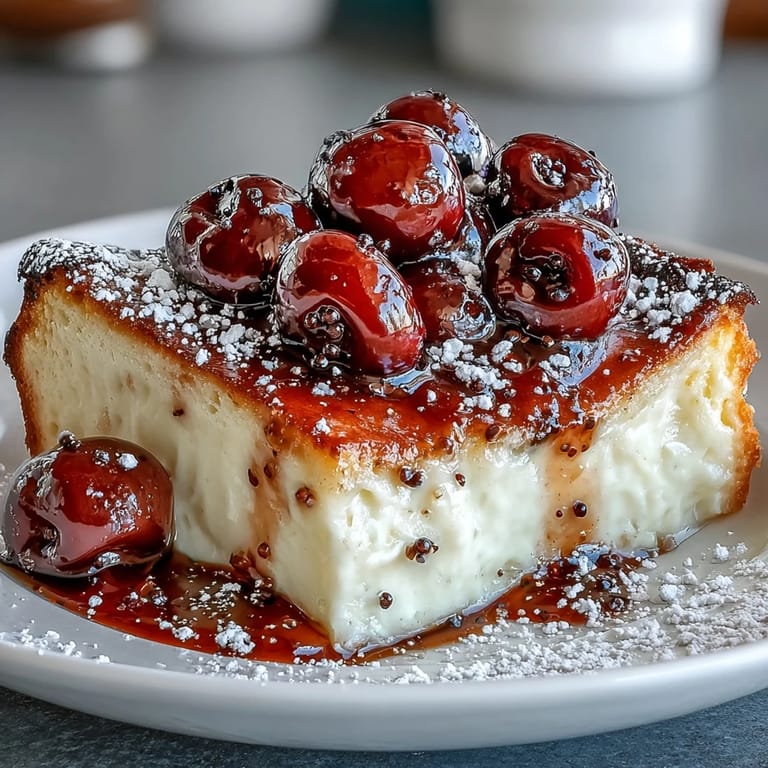
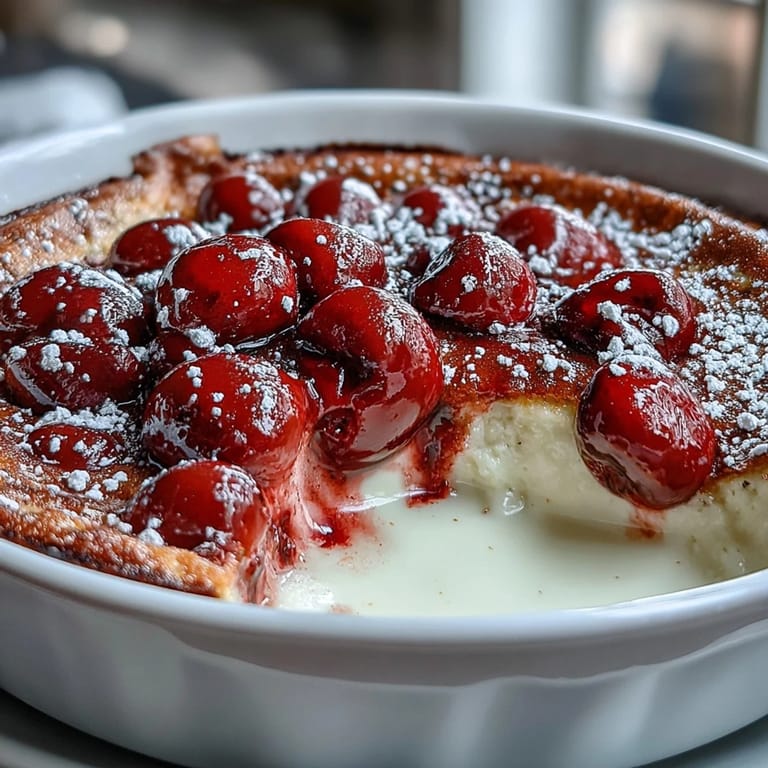
Right after baking, the clafoutis is all puffed up and golden, begging you to dig in while it’s just warm and the cherries are still juicy. It’s equally good at room temp, maybe even better for picnics or dinner parties when the custard sets a bit more. If you want to turn leftovers into breakfast, a dollop of Greek yogurt and a strong coffee hit the spot.
- Let it cool slightly to help the custard set before serving.
- For a rustic look, serve straight from the baking dish.
- Always dust just before serving—the sugar melts fast on a hot clafoutis.
 Save
Save This cherry clafoutis never fails to draw everyone to the table with its comforting scent and beautiful simplicity. Sharing it, forkful by forkful, feels like offering up a little bit of French summer—no passport required.
Recipe FAQ
- → Should cherries be pitted or left whole?
Pitting cherries makes eating easier and is common for convenience, but leaving pits gives a subtle almond-like aroma and a more traditional finish. If leaving pits, warn diners to avoid biting into them.
- → How do I tell when the custard is set?
The clafoutis should be puffed and lightly golden at the edges; the center will be just set with a slight wobble. It firms up as it cools, so avoid overbaking to keep it tender.
- → Can I use other fruits instead of cherries?
Yes. Stone fruits like apricots or plums work well; peel firmer fruits if needed and adjust bake time slightly for juicier fillings. Halved berries can also be used, though texture will differ.
- → Any tips for a smooth batter?
Whisk eggs and sugar until slightly thickened, then add flour and salt before gradually incorporating milk and cream to prevent lumps. A brief rest allows the flour to hydrate for a silkier custard.
- → Can it be made ahead and reheated?
Yes. Cool completely, cover and refrigerate up to 48 hours. Rewarm gently in a low oven (about 160°C/325°F) until heated through, or serve chilled for a different texture.
- → How should I prepare the pan?
Generously butter a 24 cm (9–10 inch) round dish to prevent sticking and encourage even browning. A light dusting of flour is optional but not necessary with ample butter.