 Save
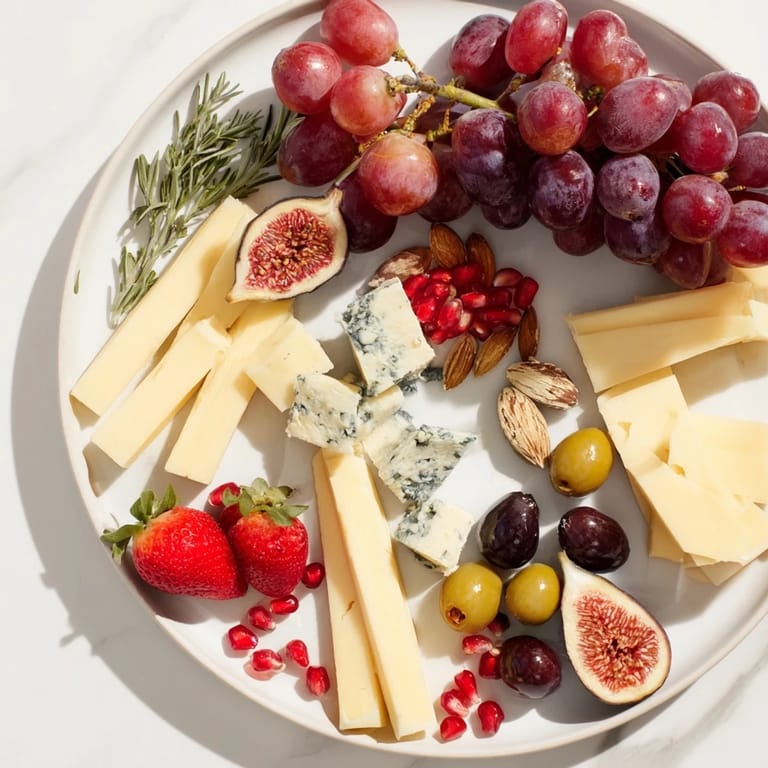
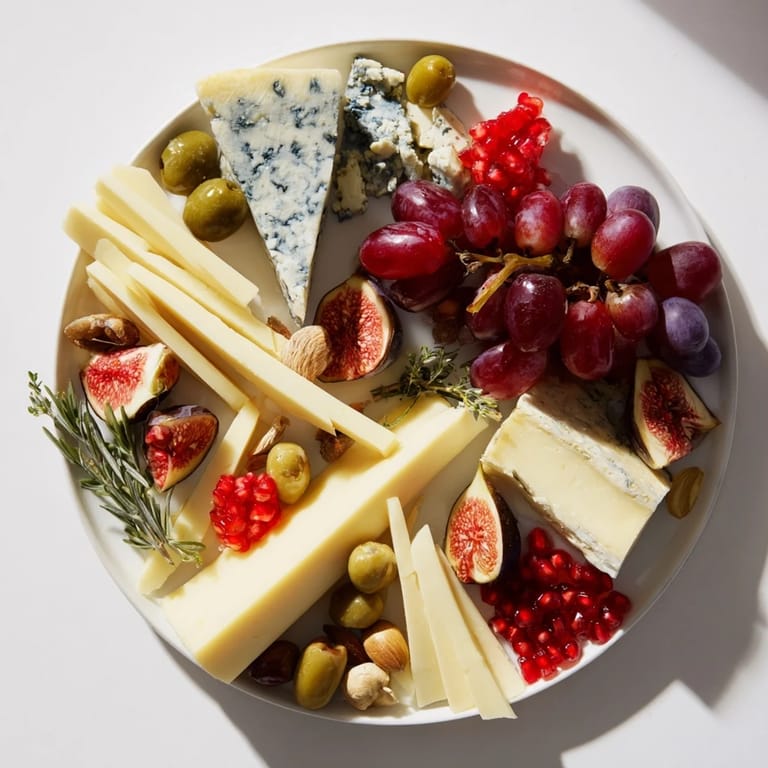
Save There's something theatrical about a grazing board that spills over its edges like velvet curtains at final bow. I discovered this approach at a gallery opening where someone had arranged cheeses and fruit with such dramatic flair that guests couldn't help but gather around it first, before even looking at the art. The simple trick of letting ingredients cascade over the board's edge transformed what could have been an ordinary spread into something that felt like an event in itself. Now whenever I want to make a moment feel special, I reach for a beautiful board and remember that permission to be a little theatrical with food.
I made this for the first time for my sister's small gallery show, panicking because I had almost no time to prepare but wanted something that felt intentional. Instead of stress, the cascading board ended up being the most commented-on element of the entire evening, with people asking how long it took me to arrange it. When I admitted it was barely twenty minutes, someone laughed and said I'd discovered the secret to looking effortlessly elegant. That's when I realized the drama isn't about complexity—it's about confidence in placement and letting things have room to breathe.
Ingredients
- Brie, sliced into wedges (150 g): The soft, creamy anchor of the board that melts slightly as it sits, becoming more decadent as the gathering unfolds.
- Aged Cheddar, cut into sticks (150 g): These hold their shape beautifully and provide a sharp, satisfying bite that cuts through the richness.
- Blue Cheese, broken into chunks (120 g): The bold flavor that makes people pause and say "oh, that's interesting," adding complexity to every bite.
- Prosciutto, loosely draped (100 g): Don't fold it too tightly—the looser, more romantic the drape, the better it catches the light and falls over the edge.
- Soppressata, folded (100 g): Its deeper color creates visual contrast and brings a peppery warmth that bridges cheese and fruit beautifully.
- Red Grapes on the stem (1 cup): Keep them clustered and the stems visible for instant elegance and a refreshing sweetness.
- Fresh Figs, halved (1 cup): Their jewel-like centers add color and a subtle sophistication that feels a bit luxurious.
- Strawberries, halved (1 cup): Slice them just before serving so they stay bright and don't weep into the board.
- Pomegranate seeds (1 cup): These scatter like tiny rubies and add tartness and a surprising pop of texture.
- Baguette, sliced (1): Toast lightly if you want them to hold up better, or serve them fresh if your crowd will move quickly through the board.
- Seeded Crackers (150 g): Choose ones sturdy enough to support cheese and toppings without crumbling instantly under the pressure of eager hands.
- Fig Jam (1/2 cup): The sweet-savory bridge that makes strangers and aged cheddar suddenly become best friends.
- Honey (1/4 cup): Drizzle it near the blue cheese for a classic pairing that feels both simple and indulgent.
- Marcona Almonds (1/2 cup): Their buttery flavor and slightly crispy texture add richness and crunch in all the right moments.
- Olives, green and black, pitted (1/2 cup): Mix the varieties so every reach into the bowl brings something slightly different.
- Fresh herbs like rosemary and thyme: Tuck whole sprigs between ingredients not just for flavor but for the fragrant, garden-like impression they create.
Tired of Takeout? 🥡
Get 10 meals you can make faster than delivery arrives. Seriously.
One email. No spam. Unsubscribe anytime.
Instructions
- Set Your Stage:
- Position your large wooden or marble board near the edge of your table, leaving room for it to breathe and for those pieces to cascade gracefully toward the floor. The placement itself is part of the theater.
- Anchor with Cheese:
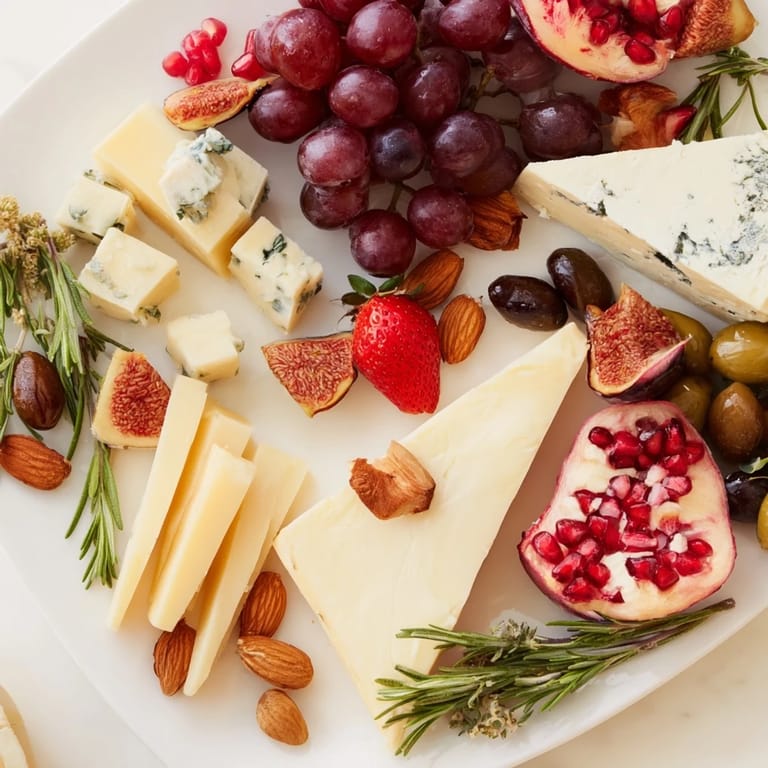
- Begin with your cheeses, arranging wedges and sticks so some pieces naturally spill over the board's edge like fabric folds. Think of them as actors taking their final bows—some stepping off the stage.
- Layer the Charcuterie:
- Fold and drape your prosciutto and soppressata so they create movement and depth, allowing them to tumble down the sides. The looser and more organic the arrangement, the more theatrical it becomes.
- Scatter the Fruit:
- Tuck grapes, figs, strawberries, and pomegranate seeds into the spaces between cheeses, letting some trail over the edge for a flowing, cascading effect. The fruit adds both visual warmth and freshness.
- Position Bread and Crackers:
- Fan bread slices and arrange crackers alongside the cheeses, allowing them to slightly overhang the board's edge. They become both functional and part of the visual drama.
- Nestle the Bowls:
- Place small bowls of fig jam, honey, olives, and almonds directly on the board, tucking them among the other ingredients so they feel integrated, not like an afterthought. Leave negative space around them.
- Crown with Herbs:
- Tuck fresh rosemary and thyme sprigs between ingredients, letting them stand slightly above the surface. They add fragrance, color, and a sense of intentional gardening.
- Serve with Intention:
- Step back, breathe, and encourage your guests to graze freely, moving from one element to the next like they're discovering a landscape. This is meant to be enjoyed slowly, conversationally, with hands reaching in all directions.
 Save
Save The moment someone's face lights up when they see the board for the first time is worth every second of arrangement. I watched my friend's mother pause at the edge of the table, smile, and then immediately reach for a piece of cheese—no hesitation, no uncertainty. That's when I knew it had worked: a board that looked so inviting it needed no introduction.
The Art of Arrangement
Grazing boards are less about rules and more about confidence. The best arrangements come from trusting your instincts about color, balance, and flow rather than trying to create perfect symmetry. I've learned that leaving some empty space is actually more visually striking than filling every inch, and that asymmetry is more interesting than a mirror image. Think of it like composing a photograph—the negative space matters as much as the subject.
Pairing and Flavor Harmony
The magic happens when you understand how flavors dance together on one board. Soft cheese paired with bright fruit, sharp cheddar balanced by sweet jam, salty charcuterie refreshed by grapes—every combination should feel intentional. I discovered this while tasting my way through arrangements, realizing that blue cheese and honey are a pairing whispered about for centuries, but blue cheese with pomegranate is an equal revelation. The board becomes a flavor exploration where every guest finds their own favorite combinations.
Making It Personal
The most memorable boards are the ones that tell a story about the person making them and the people gathering around them. If someone loves mushrooms, add marinated ones; if there's a vegetarian in the group, load up on seasonal vegetables and plant-based cheeses; if you're in summer, lean into berries and lighter herbs like mint and basil. Your preferences and choices are what transform a beautiful arrangement into an experience that feels like it was made specifically for the people at your table.
- Consider dietary preferences and allergies when planning your ingredient list, because inclusion is part of hospitality.
- Shop for ingredients the day of serving to ensure maximum freshness and visual vibrancy.
- Remember that the board will be picked at gradually, so arrange it expecting it to get messier—that's part of its charm.
 Save
Save Every time I make this board, I'm reminded that feeding people is partly about nourishment and partly about creating an moment they'll remember. The simplest preparations, arranged with intention and a bit of theatrical flair, often become the most beloved parts of any gathering.
Recipe FAQ
- → What cheeses work best for this board?
Soft and creamy brie, aged cheddar, and crumbly blue cheese create a balanced and flavorful cheese selection ideal for this arrangement.
- → Can this board be made vegetarian?
Yes, simply omit the prosciutto and soppressata and consider plant-based cheese options, maintaining the fresh fruits and nuts for variety.
- → How should I arrange the ingredients for the dramatic effect?
Arrange cheeses and charcuterie so pieces cascade over the board edge, and tuck fruit and nuts among them for a flowing, theatrical presentation.
- → What accompaniments pair well with this board?
A crisp rosé or sparkling wine complements the sweet and savory elements, enhancing the overall tasting experience.
- → How long does the board stay fresh once prepared?
Best served immediately, but can be held covered at cool room temperature for up to 1 hour without quality loss.