 Save
Save My sister called me in a panic the week before Easter, asking if I could bring something special to our family brunch. She wanted carrot cake but also craved cheesecake, and honestly, I was tired of choosing. That afternoon, standing in my kitchen with cream cheese softening on the counter and fresh carrots waiting to be grated, I decided to stop splitting the difference and just make both. The result was these bars—spiced, creamy, swirled together like they were always meant to be one thing.
I'll never forget watching my grandmother's face when she took that first bite at brunch. She closed her eyes like she was solving a puzzle, and then looked at me and said, 'This tastes like spring.' That moment, with the morning light coming through the kitchen window and everyone reaching for seconds, made me realize this wasn't just a dessert—it was proof that sometimes the best ideas come from refusing to compromise.
Ingredients
- All-purpose flour (1 cup, 130 g): This is your structural backbone, and it needs to work quietly with the baking soda and powder to give you a tender crumb.
- Baking powder and baking soda (1/2 tsp and 1/4 tsp): Don't skip the baking soda—it reacts with the acidic buttermilk-like qualities in the eggs and brown sugar to create lift and a subtle tang.
- Ground cinnamon and ginger (1/2 tsp and 1/4 tsp): These are the soul of the carrot cake layer, so use fresh spices if you can; old ones taste dusty and defeated.
- Granulated and brown sugars (1/2 cup and 1/3 cup): The combination gives you sweetness plus moisture from the molasses in brown sugar, which keeps these bars tender for days.
- Eggs (3 total: 2 for cake, 1 for cheesecake): Room temperature eggs blend more smoothly, creating a velvety texture throughout.
- Vegetable oil (1/2 cup, 120 ml): Oil keeps the carrot cake layer moist and tender longer than butter would.
- Grated carrots (1 cup, about 2 medium): Grate them fine so they distribute evenly and add subtle sweetness and moisture; don't squeeze them dry.
- Cream cheese (16 oz total: 12 oz for filling, 4 oz for frosting): Let it soften completely at room temperature so it beats smooth without lumps or air pockets.
- Powdered sugar (1 cup, 120 g): Sift it if you have time to avoid little granules in your frosting, but if you don't, just mix it in slowly.
- Walnuts or pecans (1/3 cup, optional): Chopped fine, they add texture and a subtle earthiness that complements the spices beautifully.
Tired of Takeout? 🥡
Get 10 meals you can make faster than delivery arrives. Seriously.
One email. No spam. Unsubscribe anytime.
Instructions
- Prepare your pan and preheat:
- Line that 8-inch square pan with parchment paper, leaving some overhang so you can lift the whole thing out later without crumbling the edges. Set your oven to 350°F and let it warm while you gather your ingredients.
- Mix the dry carrot cake ingredients:
- In a medium bowl, whisk flour, baking powder, baking soda, cinnamon, ginger, and salt together. This distribution of leavening and spice is crucial—whisking prevents lumps and ensures even rising.
- Combine wet ingredients and carrots:
- In a large bowl, whisk together both sugars, eggs, oil, and vanilla until it looks smooth and pale. The mixture should come together easily because oil blends differently than butter does.
- Stir in carrots and fold in flour:
- Add your grated carrots and nuts to the wet mixture, then gently fold in the flour blend just until combined. Overmixing here will make the cake layer tough, so stop as soon as you don't see white streaks.
- Spread the carrot cake base:
- Pour about two-thirds of the batter into your prepared pan and spread it evenly to the edges. This creates a foundation that will frame the creamy cheesecake.
- Beat the cheesecake layer:
- In a clean bowl, beat softened cream cheese and sugar until completely smooth and creamy, about 2 minutes. Add the egg and vanilla, mixing just until combined—overbeating incorporates air bubbles that can crack the surface.
- Layer the cheesecake:
- Pour the cheesecake mixture over the carrot cake base and spread gently to the edges. This delicate layer is what makes the bars special, so take your time.
- Create the marbled effect:
- Dollop the remaining carrot cake batter across the cheesecake, then take a knife and swirl it gently through both layers a few times. You're not trying to fully blend them—just create those beautiful streaks.
- Bake until just set:
- Bake for 40 to 45 minutes until the center feels barely firm and a toothpick comes out with just a few moist crumbs. The cheesecake will continue to set as it cools, so don't overbake.
- Cool completely before frosting:
- Let the bars cool in the pan to room temperature, then refrigerate for at least an hour. This cooling time is non-negotiable—warm bars won't hold frosting well.
- Make and spread the frosting:
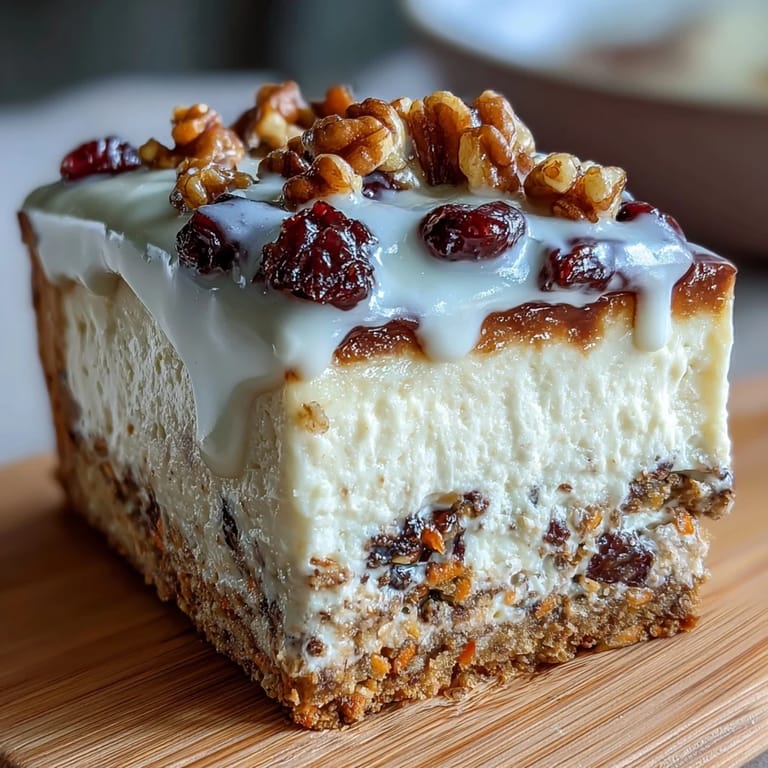
- Beat softened cream cheese and butter until fluffy, then gradually add powdered sugar and vanilla, mixing until smooth. Add milk a teaspoon at a time until it's spreadable but not runny, then frost the cooled bars and chill for another hour.
 Save
Save The best part about making these bars is that they taste even better the next day, when the flavors have had time to meld and the texture becomes almost fudgy. I've started making them on Thursdays for Sunday gatherings, letting them live in my refrigerator like little edible promises.
The Magic of Layering
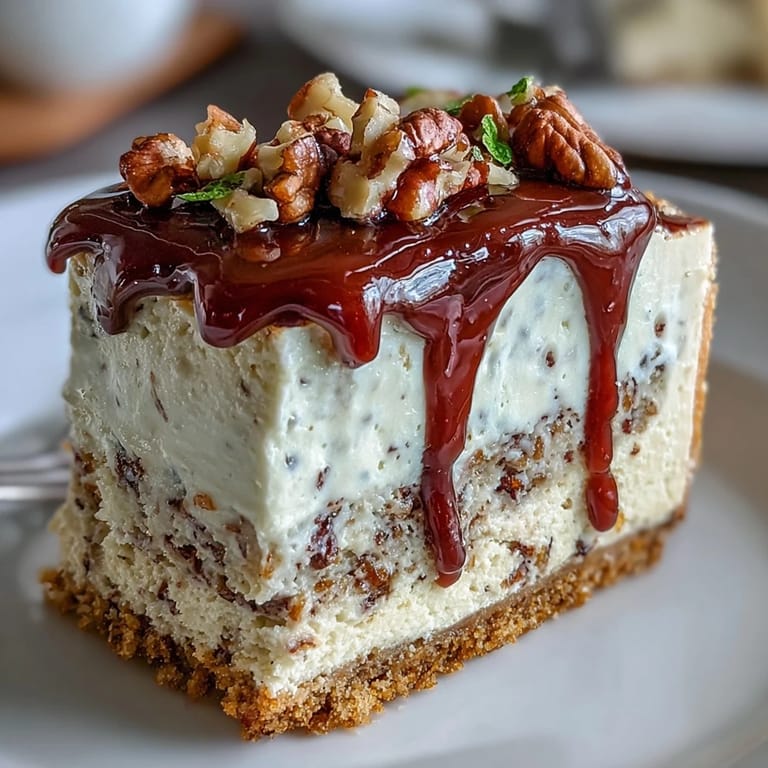
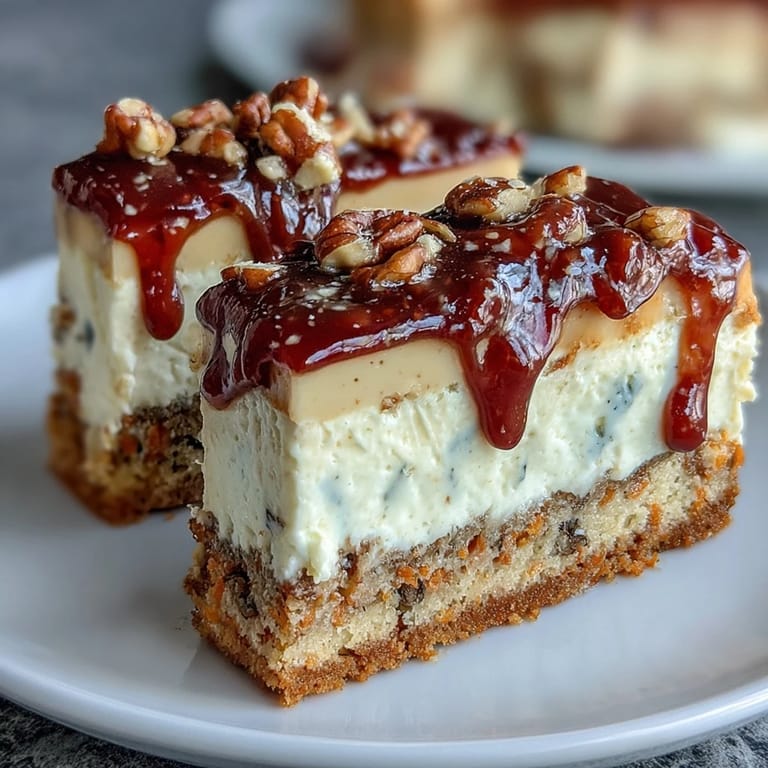
What makes these bars work is the interplay between three distinct textures that somehow feel like one unified dessert. The carrot cake layer stays moist and spiced, the cheesecake offers cool creaminess, and the frosting ties everything together with a subtle sweetness. Learning to layer confidently—not rushing, not overworking—changed how I approach other composed desserts.
Timing and Temperature Matter
I learned the hard way that cold cream cheese and room-temperature eggs aren't negotiable here. One afternoon, I tried to speed up the process with cold cream cheese, and my cheesecake layer came out grainy and separated, which taught me that patience with ingredients pays off in texture. Letting everything come to room temperature takes maybe 30 minutes but saves your entire dessert.
Storage and Make-Ahead Magic
These bars actually improve as they sit, the spices deepening and the layers melding into something greater than their parts. They keep beautifully refrigerated for up to five days, which is why I often make a pan on Sunday to have something special ready for the week.
- Store the bars in an airtight container in the refrigerator, and they stay moist and perfect for days.
- You can bake and frost them up to two days ahead if you're preparing for a gathering, then simply slice and serve cold.
- If you want to add raisins for extra texture, soak them in warm water for 10 minutes first so they plump up and stay tender.
 Save
Save Every time I make these, I'm reminded that the best desserts are the ones that bring people together and make them ask for the recipe. These bars do exactly that, and I hope they become part of your spring and summer celebrations too.
Recipe FAQ
- → Can I use other nuts instead of walnuts?
Yes, pecans or walnuts work well, and you may also omit nuts for a nut-free option without affecting texture much.
- → How do I achieve the marbled effect?
After layering the carrot batter and cheesecake mixture, dollop remaining batter on top and gently swirl with a knife before baking.
- → What is the best storage method?
Store the bars chilled in an airtight container; they keep fresh for up to five days.
- → Can I add raisins for extra flavor?
Yes, adding about 1/4 cup of raisins to the carrot batter enhances texture and sweetness nicely.
- → What size pan is recommended?
Use an 8-inch square baking pan lined with parchment paper for easy removal and even baking.
- → How thick should the frosting be?
The frosting should be creamy yet spreadable; adjust milk quantity to achieve a smooth consistency.