 Save
Save My first encounter with saltah happened in a cramped Sana'a kitchen, steam rising from a clay pot while someone's grandmother quietly whipped fenugreek foam with the confidence of decades. The dish isn't just food—it's a ritual of layering, where each component waits for its moment. I've since made it countless times, and it never fails to transform an ordinary evening into something ceremonial.
Years ago, I served this to a friend who'd never tried Yemeni food before, and watching them navigate the bowl—discovering how each layer needed that gentle mixing—felt like sharing something precious. They came back asking for the recipe the very next week, which told me everything about why this dish endures.
Ingredients
- Beef or lamb (500 g, cubed): The meat should be cut into uniform 2 cm pieces so it cooks evenly; lamb gives a deeper, more aromatic result, while beef is slightly leaner.
- Vegetable oil (2 tbsp): Just enough to build the base without making the stew greasy.
- Onion and garlic: These form the aromatic foundation that makes everything else taste more like itself.
- Tomatoes (2 medium, chopped): Fresh tomatoes add brightness; canned works if yours lack flavor, but use less liquid to compensate.
- Green chili (optional): If you use it, the heat should whisper, not shout—adjust to your tolerance.
- Potato and carrot: They soften into the broth while adding body; don't cut them too small or they'll disappear.
- Water or beef broth (4 cups): Broth deepens everything, but water lets the spices shine if that's what you prefer.
- Spice blend (cumin, coriander, black pepper, turmeric, fenugreek): Toast whole seeds briefly in a dry pan before grinding if you have time—the flavor difference is real.
- Ground fenugreek seeds (2 tbsp for hulbah): This is the signature; don't skip it or substitute; nothing else creates that specific earthiness and foam.
- Flatbread (2 large Yemeni): Malawah or lahoh are traditional, but pita works in a pinch—the bread's job is to soak without falling apart.
Tired of Takeout? 🥡
Get 10 meals you can make faster than delivery arrives. Seriously.
One email. No spam. Unsubscribe anytime.
Instructions
- Heat and build the base:
- Warm oil in a large pot, add onions, and let them turn golden—this takes patience but creates the foundation everything else rests on. Once they soften, add garlic and chili, stirring until fragrant, about a minute.
- Brown the meat properly:
- Add meat cubes and let them sit undisturbed for a moment before stirring—you want a light crust, not gray boiled meat. Work in batches if needed; crowding the pot steams instead of sears.
- Build layers of flavor:
- Stir in tomatoes, potato, carrot, and all the spices. Let everything cook together for 5 minutes so the spices release their oils and the vegetables begin to soften before liquid hits.
- Simmer until tender:
- Pour in your broth or water, bring to a boil, then drop the heat to low and cover. The stew needs 1 to 1.5 hours—the longer, slower cook makes meat silky and vegetables meld into the broth rather than staying separate.
- Whip the fenugreek foam:
- While the stew simmers, soak ground fenugreek in cold water for an hour; the longer soak matters because it allows the seeds to fully hydrate and whip into genuine foam. After soaking, drain excess water and whisk or beat vigorously with a fork—your arm will feel it, but the result should be light and airy, almost like meringue.
- Fold in fresh elements:
- Once the foam forms, gently fold in diced tomato, cilantro, chili, lemon juice, and salt; don't overmix or you'll deflate what you just worked to create.
- Layer and serve:
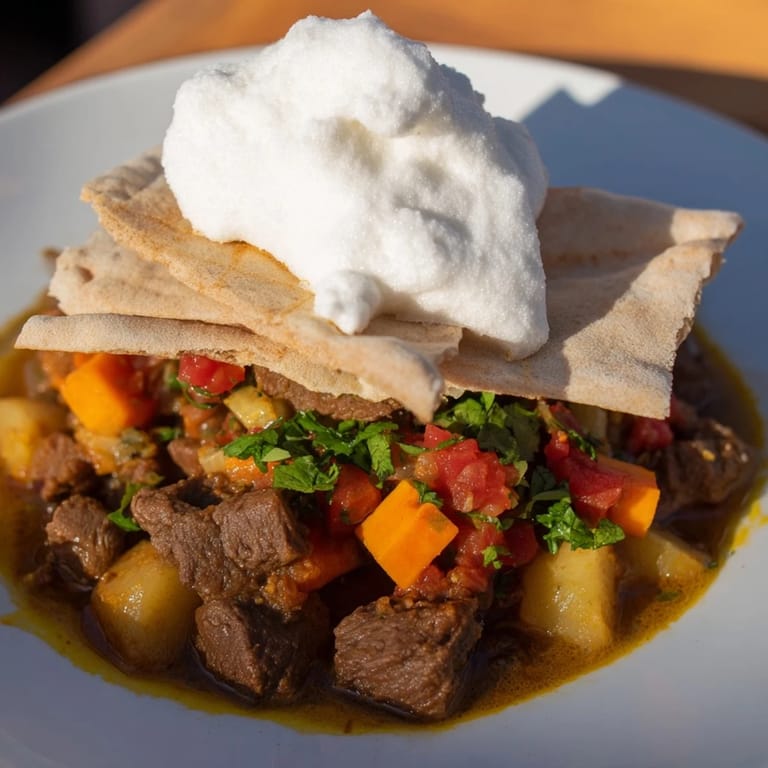
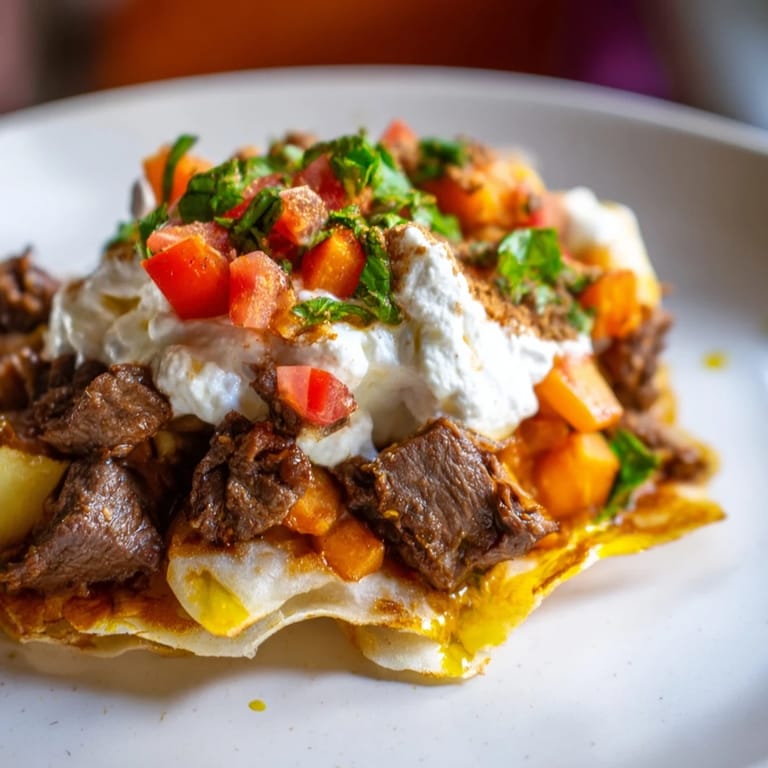
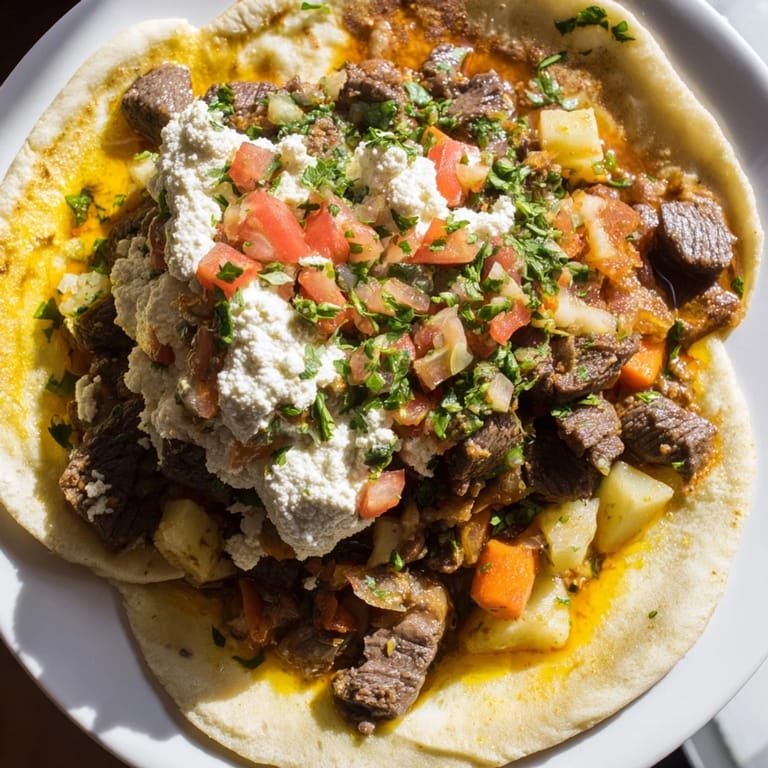
- Tear flatbread into pieces, spread in serving bowls, ladle hot stew generously over it—the bread should be soaked but still have some structure—then crown each bowl with a generous spoonful of hulbah foam.
 Save
Save There's a moment when you finish plating and someone takes that first bite, pausing to let the layers settle on their tongue. That small quiet tells you the dish has done its job—it's both familiar and revelatory, grounding and transporting.
The Soul of Saltah
Saltah isn't hurried food. Every step—the browning, the simmering, the whisking—asks you to be present, to smell when garlic softens, to listen for the boil before turning down the flame. This pacing is intentional. The dish rewards attention because it's built on the belief that meals bring people together, and rushing that breaks the whole point.
Building Flavor Without Shortcut
Each spice has a reason. Turmeric adds color and warmth, cumin brings earthiness, coriander lifts everything with subtle brightness, and fenugreek—in both the stew and the hulbah—ties it all together with a flavor that's distinctly Yemeni. You could skip steps, but the dish knows. The broth tells the story of what was given time and what was rushed.
Adapting Without Losing Soul
If lamb isn't available, beef works fine; if you can't find traditional flatbread, pita will carry the stew adequately; if cilantro bothers you, leave it out. But the fenugreek—both the ground seeds in the broth and especially the whipped hulbah topping—that's the non-negotiable heart. Remove it and you have a good stew; keep it and you have saltah.
- For vegetarian saltah, double the vegetables and add beans or lentils for protein and substance.
- Zhug (a bright, spicy Yemeni sauce of cilantro, lime, and garlic) makes an excellent side if someone wants extra heat.
- Make the hulbah just before serving; even 15 minutes of sitting will cause it to deflate and lose its signature texture.
 Save
Save Saltah asks you to slow down and respect the ingredients. Make it once and you'll understand why families keep returning to this same bowl, generation after generation.
Recipe FAQ
- → What cut of meat works best for this dish?
Beef or lamb cut into 2 cm cubes is ideal, as it stews well and becomes tender without drying out.
- → How is the fenugreek foam prepared?
Ground fenugreek seeds are soaked in water for an hour, then whisked vigorously until a fluffy foam forms, combined with tomato, cilantro, lemon juice, and optional chili.
- → Can I substitute the flatbread used in layering?
Yes, Yemeni flatbreads like malawah or lahoh work best, but pita or naan can be used as alternatives.
- → What spices give the stew its distinct flavor?
Cumin, coriander, black pepper, turmeric, and fenugreek create the stew's warm, aromatic profile.
- → Is there a vegetarian version of this dish?
Omitting meat and increasing root vegetables or adding beans allows for a flavorful vegetarian alternative.