 Save
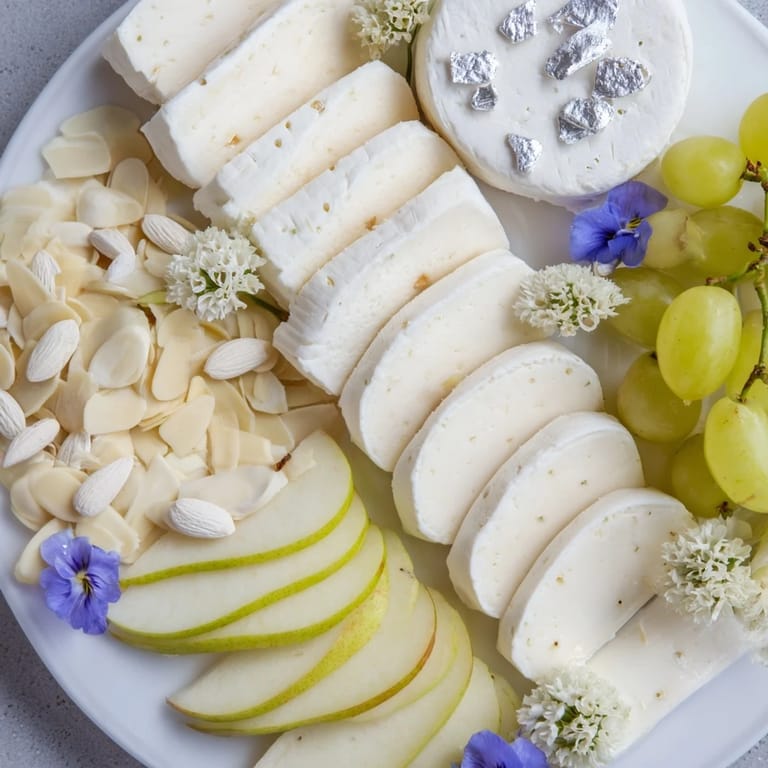
Save I'll never forget the winter evening when my friend Sarah walked into my kitchen and gasped at the appetizer board I'd been nervously arranging for our holiday gathering. The afternoon light caught the edible silver leaf I'd just placed on the creamy white cheeses, and suddenly it didn't feel like just food anymore—it felt like we'd brought a piece of a frozen landscape indoors. That moment taught me that sometimes the most memorable dishes aren't complicated; they're the ones that make people pause and simply appreciate beauty before they even taste anything.
I remember my sister asking me if I'd hired a professional caterer when she first saw this platter at my winter solstice dinner. The combination of creamy, nutty, and crisp textures with those little pops of blue from the edible flowers created such a complete sensory experience that people kept coming back to it throughout the evening. That's when I realized this wasn't just pretty—it was genuinely delicious.
Ingredients
- Fresh goat cheese log: This is your canvas—the mild, creamy texture pairs beautifully with everything else. Keep it chilled until the last moment; I learned this the hard way when mine got too soft and lost its definition
- Triple-cream brie or camembert: The pure white appearance matters here, so trim that rind away carefully. These cheeses are richer than you might expect, so thin slices go a long way
- White cheddar: It provides a subtle sharpness that balances the sweetness of the fruits and chocolate
- Blanched almonds: Their pale color and subtle flavor keep the palette cohesive without overwhelming anything else
- Macadamia nuts: These are optional but absolutely worth including if you can—they add a buttery luxury that guests notice
- White water crackers and rice crackers: Choose quality here; cheaper crackers turn to dust. I keep mine in small individual stacks so they don't shatter
- Mini breadsticks: They provide height and visual interest, plus they're sturdy enough to hold generous cheese portions
- Seedless white grapes: Dry them thoroughly between paper towels—moisture is the enemy of a beautiful presentation
- Asian pear: Its delicate sweetness and juicy crunch make it my favorite fruit for this board. Slice it just before serving to prevent browning
- Dried white figs: They add chewy texture and concentrated sweetness; halving them makes them easier for guests to enjoy
- White chocolate shards: These are your secret indulgence element. I break them into irregular pieces for a more organic look
- Edible silver leaf or glitter: Use only food-safe versions—this detail transforms everything from nice to enchanting
- Edible flowers and fresh rosemary: These should be the freshest ingredients you can find; they're what bring the whole winter theme to life
Tired of Takeout? 🥡
Get 10 meals you can make faster than delivery arrives. Seriously.
One email. No spam. Unsubscribe anytime.
Instructions
- Chill your stage:
- Select a large white, silver, or marble platter—at least 16 inches across—and pop it in the refrigerator for 15 minutes. You want it cold so the cheeses and fruits stay fresh and appetizing throughout your gathering. This is a small step that makes a surprisingly big difference.
- Compose your cheeses like a still life:
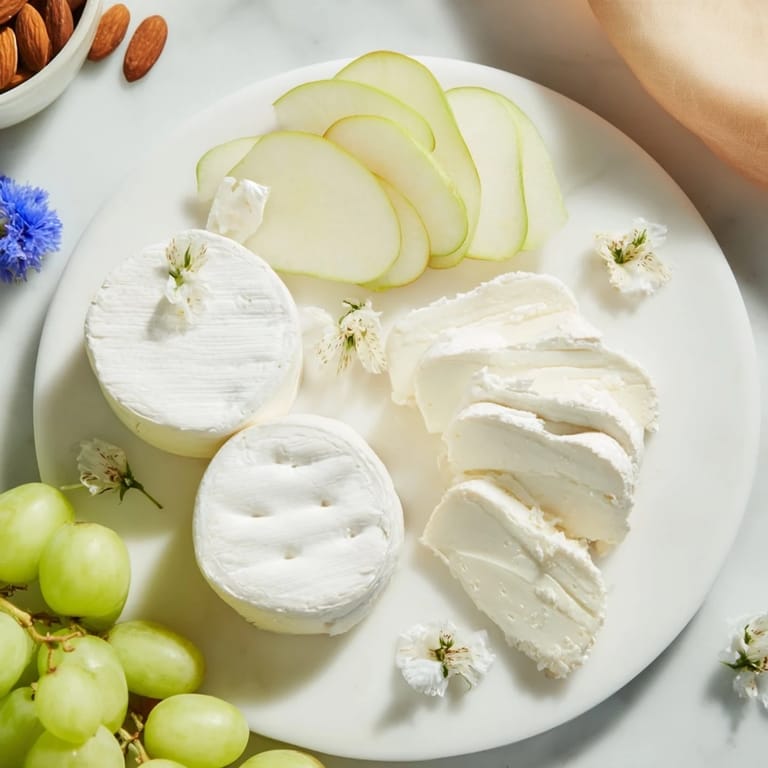
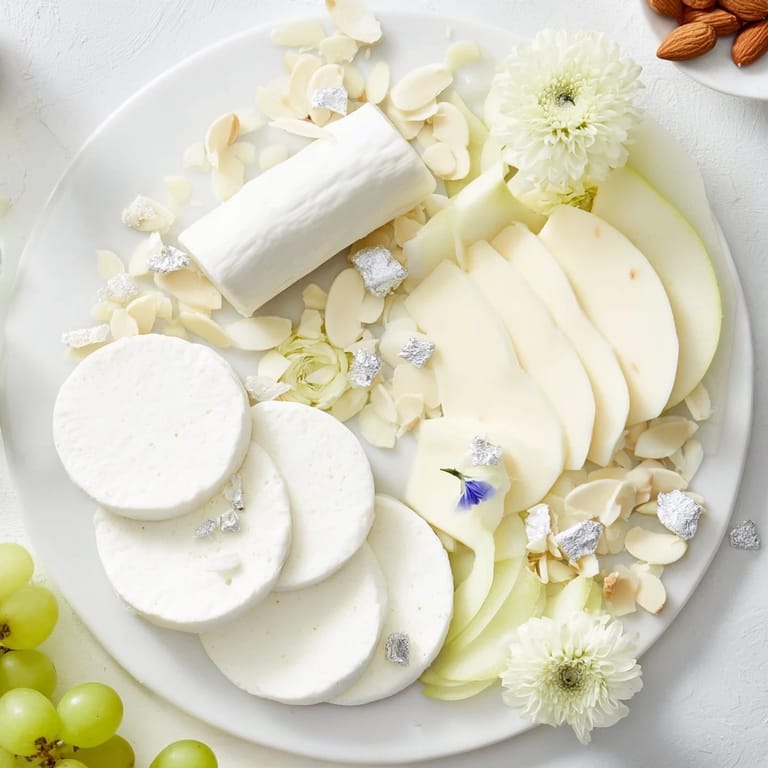
- Slice the goat cheese into thin 1-centimeter rounds using a clean, slightly warm knife. Arrange these in a gentle crescent along one side of your board—this creates natural flow for guests' eyes. Fan out the trimmed brie slices next to them, then add your white cheddar. Take a moment to wipe away any smudges with a paper towel; pristine surfaces are what make this board sing visually.
- Create structure with crackers:
- Arrange your water crackers and rice crackers in neat, overlapping arcs opposite your cheeses, like you're building a landscape. Tuck your breadsticks into a small diagonal bundle in one corner for height and visual variety. Leave generous gaps between everything—this keeps the platter feeling airy and elegant rather than crowded.
- Paint with fruits in a natural rhythm:
- Fan out your Asian pear slices in overlapping rows in the center, creating what I think of as a snowdrift effect. Cluster white grapes in one spot, then scatter a few individuals here and there for a casual, gathered look. Tuck the dried fig halves near your cheeses where they can mingle naturally with the creamier elements.
- Scatter your textural accents:
- Place blanched almonds and macadamia nuts in small white or silver bowls, or tuck small handfuls into empty spaces—this prevents nuts from rolling around and mixing with other elements. Nestle white chocolate shards between cheeses and crackers like delicate jewels. Sprinkle a few silver dragées in strategic spots, ensuring they're clearly the edible kind so no one mistakes them for decoration.
- Add the magic with garnishes:
- This is where the winter wonderland comes alive. Dust fresh rosemary sprigs with confectioners' sugar by holding them over a baking tray and sifting sugar over them—they'll look perfectly frosted. Gently place edible flowers and fresh blueberries in pockets throughout the board for little pops of soft blue. Use tweezers to apply tiny flecks of edible silver leaf to cheese surfaces or white chocolate shards for that enchanted shimmer. Be sparing here; less is more elegant.
- Review and serve with confidence:
- Step back and take a moment to look at your creation as a whole. Check that colors are balanced, that no single element dominates, and that there's movement and interest across the entire platter. Serve it chilled immediately, or cover it loosely with plastic wrap and refrigerate for up to 30 minutes. The cold temperature keeps everything at its best.
 Save
Save I realized something important while watching my grandmother pick through this board at a family gathering—she slowed down. Everyone slowed down. People stood around the kitchen island and actually talked to each other instead of rushing through appetizers. The careful arrangement gave the moment permission to linger, and that's when I understood that a beautiful platter is really about giving people permission to savor both the food and the company.
The Art of Platter Design
What I've learned over multiple iterations of this board is that design principles matter as much as ingredients. Think of your platter like you're creating a landscape—you need different heights (breadsticks tall, grapes nestled low), different textures (creamy against crisp, soft against crunchy), and a color story that flows naturally from element to element. The white-on-white-on-blue theme isn't restrictive; it's actually liberating because every element supports every other element. When I first made this, I worried the monochromatic approach would be boring, but the opposite happened. The restraint in color drew attention to shape, arrangement, and the subtle interplay of textures. That's when the platter becomes art.
Timing and Temperature Secrets
The hidden magic of this platter is that you can prepare almost everything in advance—cheeses sliced, fruits arranged, even garnishes prepped—as long as you understand the temperature timeline. Cheeses actually show their best when they're properly chilled but not ice-cold; they'll have a silkier mouthfeel and cleaner taste. I've found that assembling the whole board about 30 minutes before guests arrive, then refrigerating it loosely covered, gives you the best of both worlds. Everything stays fresh and cold, but it's one less thing to worry about when people arrive. The moment that shifts the energy of an evening from stressful to joyful is when you can greet your guests with a drink in hand instead of frantically arranging things at the last minute.
Customization and Personal Touches
This framework is really just a starting point for your own creativity. I've made versions of this board dozens of different ways depending on what I have available and what story I want to tell with that particular gathering. Some thoughts from my kitchen experiments over the years:
- Substitute white radishes or cauliflower florets if you want to add extra crunch and a subtle peppery note that's surprisingly elegant
- Use white chocolate-covered pretzels instead of breadsticks for guests who love that sweet-salty combination, or cashew-based cheese for vegan friends
- Change your edible flowers with the seasons—white pansies in winter feel different than white borage flowers in summer, even though they create the same effect
 Save
Save Building a beautiful platter is really just an act of love in edible form. I hope this one brings as much joy to your table as it has to mine.
Recipe FAQ
- → What cheeses work best for this platter?
Soft and creamy varieties like goat cheese, triple-cream brie, and mild white cheddar create both a rich texture and a cohesive color theme.
- → How should I prepare the fruits for best presentation?
Slice the Asian pear thinly and fan the pieces, wash and dry the white grapes thoroughly, and halve dried figs to balance sweetness and freshness visually.
- → Can the nuts be substituted or omitted?
Blanched almonds and macadamia nuts add texture and color; you can omit or replace them with similar light-colored nuts, keeping overall harmony.
- → What is the ideal way to arrange the crackers and breadsticks?
Arrange crackers in neat arcs or stacks opposite the cheeses and place breadsticks diagonally to add height and prevent crowding.
- → How do edible garnishes enhance this platter?
Elements like edible silver leaf, white chocolate shards, and lightly sugared rosemary add sparkle, sweetness, and a frosted winter effect that elevate the presentation.
- → What serving tips keep the platter fresh?
Chill the platter beforehand and serve immediately or keep refrigerated up to 30 minutes to maintain crispness and freshness.