 Save
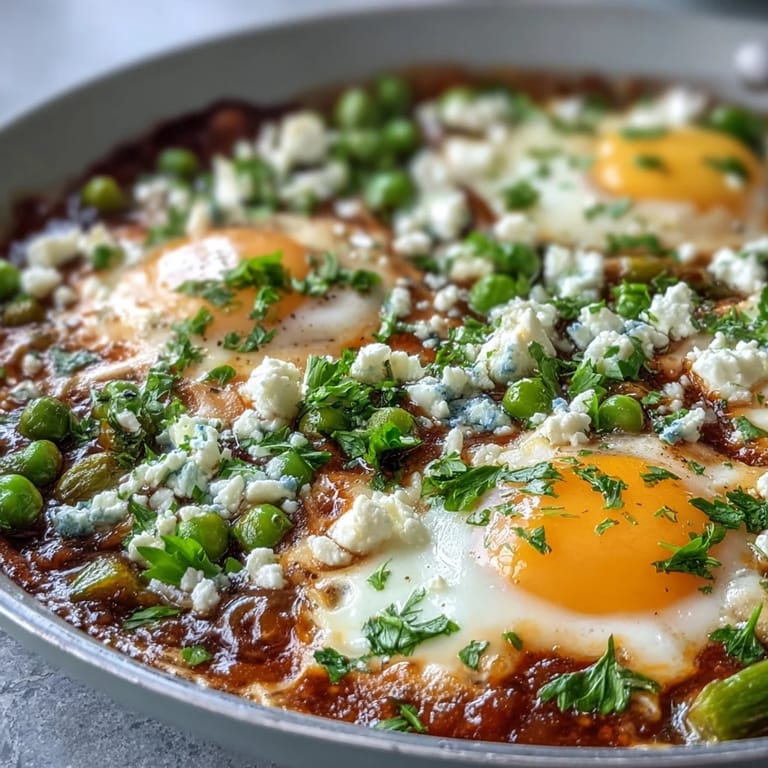
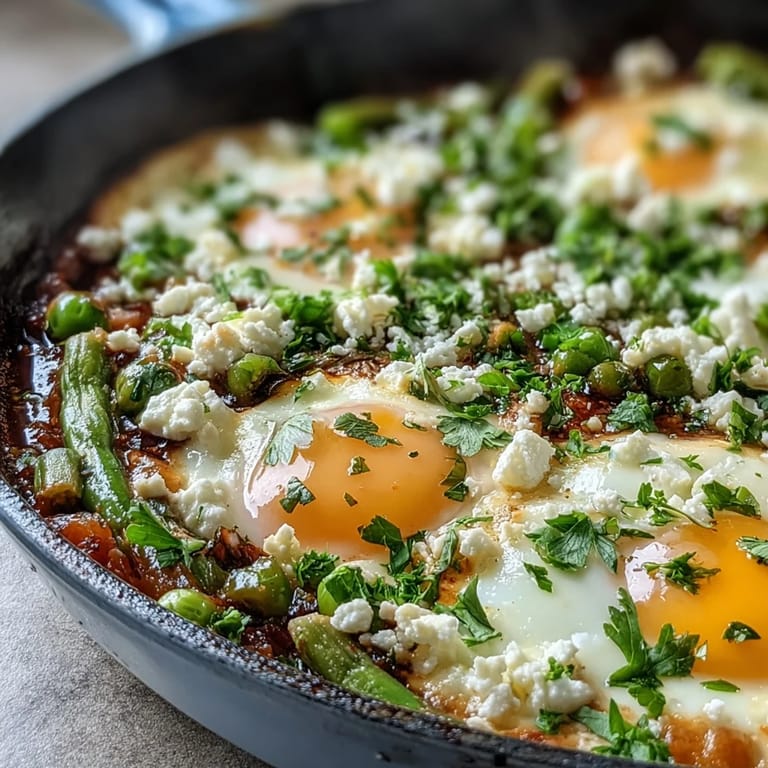
Save Last spring, I was sorting through my farmer's market haul when I noticed the asparagus bundles looked particularly plump, and a friend mentioned she'd never tried shakshuka before. That afternoon, watching her face light up as she broke into a runny yolk nestled among bright green peas felt like discovering the dish all over again. This version isn't the traditional Middle Eastern version I grew up with, but something lighter and more celebratory, built entirely around what spring offers. The tender vegetables practically dissolved into the spiced tomato sauce, and the eggs just tied everything together like a warm embrace.
I made this for four people on a Sunday morning when everyone was tired and hungry but nobody wanted something heavy. The smell of cumin and smoked paprika wafting through the kitchen changed the entire mood, and by the time the eggs were cooking, we were all hovering around the stove like it was a campfire. Watching people scoop up the silky eggs with bread became my favorite part of cooking it, even more than the technical bits.
Ingredients
- Fresh or frozen peas: Use frozen if fresh aren't available; they hold their sweetness and texture beautifully, and you'll skip the blanching step anyway.
- Broad beans: If you're using fresh ones, yes, they need double-podding (removing them from the outer pod, then slipping off the papery skin), but trust me, the tender result is worth those five minutes of fiddling.
- Asparagus: Cut into 2-inch pieces so they cook evenly and don't overshadow the other vegetables; thinner stalks are more forgiving.
- Medium onion: Chopped finely so it melts into the sauce rather than announcing itself in every bite.
- Red bell pepper: Its natural sweetness balances the spices, and the color makes the whole pan look alive.
- Garlic cloves: Minced small so the flavor disperses evenly and you don't end up with sharp, raw bites.
- Can of chopped tomatoes: Quality matters here because this sauce is built on tomatoes; acidic tinned ones will make the whole dish taste tinny.
- Tomato paste: Two tablespoons add depth and slight acidity that makes the vegetables sing.
- Ground cumin: Toasted briefly in the pan, it smells like warmth and Middle Eastern markets.
- Smoked paprika: This is the one spice that gives the dish its signature flavor; don't skip it or substitute with regular paprika.
- Ground coriander: Half a teaspoon provides an almost floral note that softens the earthiness of the beans.
- Chili flakes: Optional, but I always add them because a whisper of heat makes all the other flavors pop.
- Large eggs: Fresher eggs hold their shape better when you crack them into the simmering sauce, so check your dates.
- Crumbled feta cheese: The salty tang is essential; it cuts through the richness of the yolks and brightens everything.
- Fresh parsley or mint: Mint is more unusual but feels more spring-like; use whichever feels right in your kitchen.
- Extra virgin olive oil: For the final drizzle, because the raw fruitiness of good oil matters more at the end than during cooking.
Tired of Takeout? 🥡
Get 10 meals you can make faster than delivery arrives. Seriously.
One email. No spam. Unsubscribe anytime.
Instructions
- Blanch the beans:
- Bring a pot of salted water to a rolling boil and drop in the peas and broad beans for exactly 2 minutes, then fish them out with a slotted spoon and plunge them into ice water to stop the cooking. This preserves their bright color and tender texture.
- Build your flavor base:
- Heat olive oil in your largest, deepest skillet over medium heat and let the onion and red bell pepper soften for about 5 minutes, stirring occasionally so they don't brown. You're looking for them to become soft enough that they practically melt into the sauce.
- Toast the spices:
- Add the minced garlic along with the cumin, smoked paprika, coriander, and chili flakes, and let them cook for exactly 1 minute, stirring constantly. This blooms the spices and makes the kitchen smell incredible.
- Create the sauce:
- Stir in the tomato paste first, letting it cook for about 30 seconds, then add your can of chopped tomatoes and let everything simmer for 10 minutes. You want the sauce to thicken slightly and the flavors to marry together.
- Add the vegetables:
- Fold in your blanched peas and broad beans along with the asparagus pieces, then season carefully with salt and pepper. Simmer for 5 to 7 minutes until the asparagus is tender but still has a slight bite.
- Make wells for the eggs:
- Using the back of a spoon, create four small indentations in the vegetable mixture, spacing them evenly so each egg gets its own pocket of sauce. This is where the magic happens.
- Add the eggs:
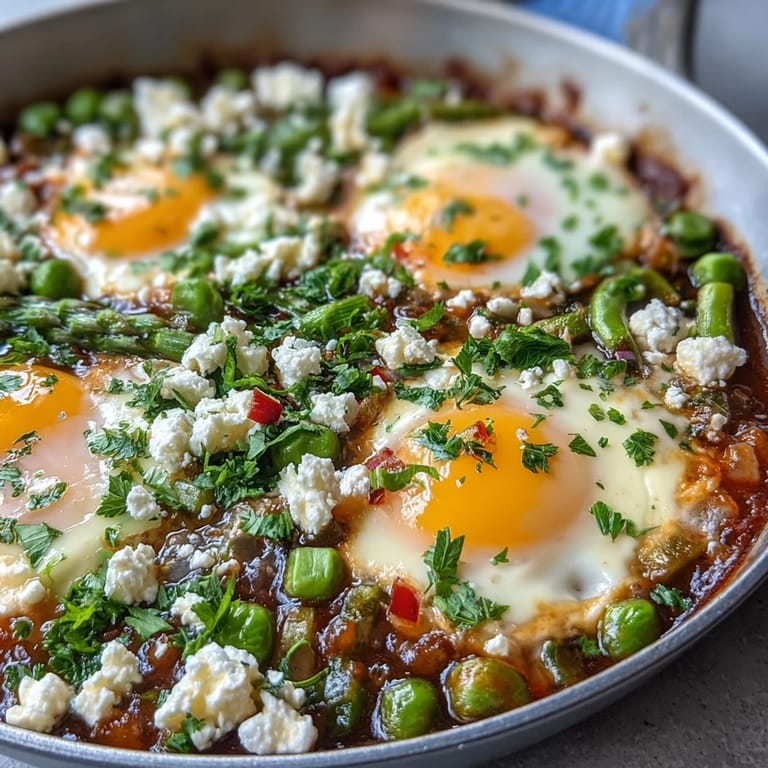
- Crack an egg into each well, then cover the pan and turn the heat to low, cooking for 7 to 10 minutes until the whites are set but the yolks still jiggle slightly when you move the pan. The residual heat will continue cooking them even after you remove it from the burner.
- Finish and serve:
- Scatter the crumbled feta and fresh herbs over everything, drizzle generously with extra virgin olive oil, and serve directly from the pan with crusty bread or flatbread for scooping.
 Save
Save There's something about eating directly from a shared pan that makes people slow down and talk more. The first time I served this, everyone went quiet for a moment, then started asking questions about the spices and where the broad beans came from, and suddenly we were talking about farmers' markets and spring and seasons changing. That's when I realized this dish had become more than dinner.
Variations and Flexibility
This shakshuka is genuinely flexible without falling apart. You can substitute the asparagus with spring onions, baby spinach, or even zucchini if that's what your market has. The broad beans and peas are the stars, so keep those, but everything else can shift based on season and what you have at home.
Making It Vegan
Leave out the eggs and feta entirely, and instead add a can of chickpeas (drained and rinsed) at the same point you'd add the other vegetables. The chickpeas pick up all the spice flavors and provide that protein element that makes the dish substantial enough to be a real meal.
Pairing and Serving
Serve this with crusty bread or flatbreads for scooping, because the sauce is too good to leave in the pan. A crisp white wine cuts through the richness, or if you're going non-alcoholic, sparkling water with lemon feels just as celebratory. For heat lovers, have harissa or chili oil on the table so people can add exactly as much fire as they want.
- Make sure your bread is good enough to eat on its own because you'll definitely be dunking it into that sauce.
- This dish is best served immediately while the eggs are still warm and the feta hasn't started sweating into the sauce.
- Leftover sauce keeps for three days and makes an excellent base for tomorrow's lunch, though the eggs won't, so plan accordingly.
 Save
Save This is the kind of dish that reminds you why cooking matters, not because it's complicated, but because it brings people together so naturally. Make it when spring finally arrives, or when you need to remind yourself that good food doesn't have to be fussy to be memorable.
Recipe FAQ
- → What makes this shakshuka special?
The addition of fresh spring vegetables like sweet peas, broad beans, and tender asparagus transforms this traditional dish into a vibrant, seasonal celebration while keeping the beloved spiced tomato base and perfectly cooked eggs.
- → Can I make this ahead of time?
Prepare the vegetable and tomato sauce base up to a day in advance and store it in the refrigerator. When ready to serve, reheat gently, create the wells, and add the eggs for the final cooking stage.
- → How do I know when the eggs are perfectly cooked?
Cover the pan and cook on low heat for 7-10 minutes. The whites should be fully set and opaque while the yolks remain slightly runny and jiggly when you gently shake the pan.
- → What should I serve with this dish?
Crusty bread, flatbreads, or pita are perfect for soaking up the flavorful sauce and runny yolks. A crisp green salad or roasted vegetables make excellent accompaniments.
- → Can I use frozen vegetables?
Absolutely! Frozen peas and broad beans work beautifully in this dish. Simply blanch them briefly before adding to the sauce. No need to thaw asparagus ahead—add it frozen and extend the simmering time by a few minutes.
- → How can I make this vegan?
Omit the eggs and feta cheese. Add a can of drained chickpeas or white beans during the final simmer for protein, and finish with a sprinkle of nutritional yeast or chopped nuts instead of feta.