 Save
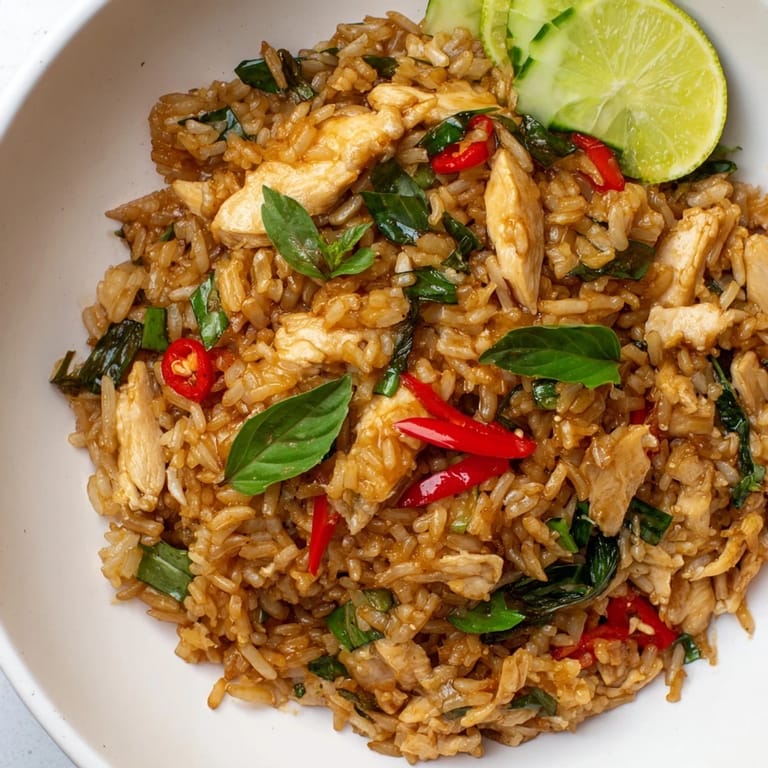
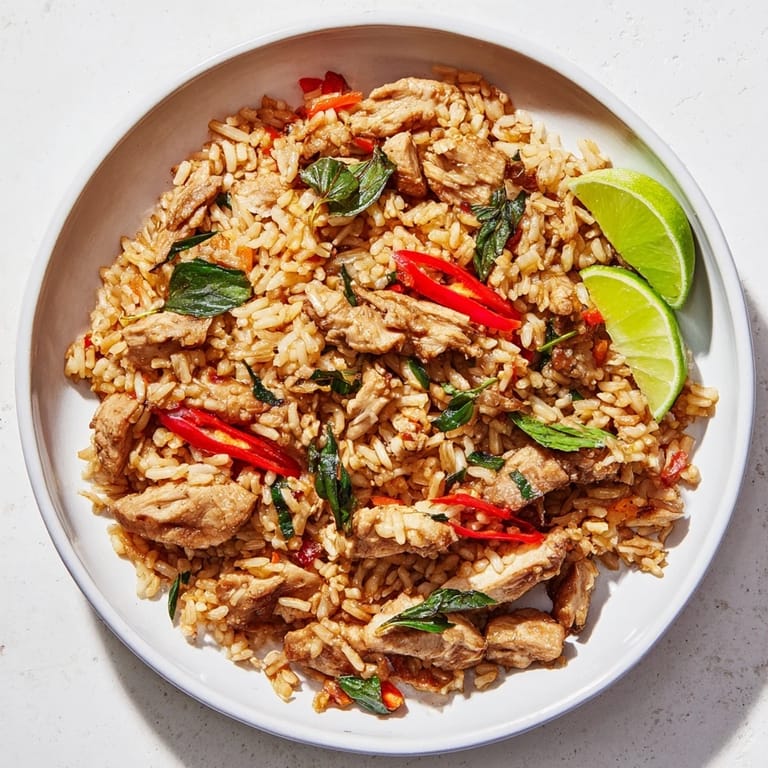
Save One humid Bangkok evening, I watched a street vendor work their wok with such casual precision that I couldn't look away. The way they tossed that rice, the exact moment they added the basil so it wouldn't wilt into nothing—it was a lesson in timing and respect for ingredients. That night, I came home determined to recreate that magic, and what emerged was this Thai basil chicken fried rice, a dish that somehow captures both the speed of street food and the soul of a home-cooked meal.
I made this for my roommate on a Tuesday night when she'd had one of those days, and she sat at the counter eating straight from the pan while telling me about everything that had gone wrong. By the third bite, she stopped talking and just smiled. That's when I knew this recipe had staying power—it's the kind of food that doesn't need fanfare, just a good appetite and someone to share it with.
Ingredients
- Boneless, skinless chicken thighs or breasts (400 g, thinly sliced): Thighs stay juicier if you're not paying perfect attention, but breasts are leaner and cook faster; either way, slice them thin so they cook through in those few crucial minutes.
- Cooked jasmine rice (4 cups, preferably day-old): Day-old rice is non-negotiable—fresh rice will steam and clump no matter how hard you toss it, but rice that's spent a night in the fridge separates beautifully.
- Medium onion, finely chopped: The sweetness here balances the heat and fish sauce, so don't skip it or use it sparingly.
- Garlic (3 cloves, minced): Minced, not sliced, because you want it to disappear into the oil and flavor everything evenly.
- Thai red chilies (2–3, finely sliced): These are milder than bird's eye chilies but still pack personality; adjust based on your heat tolerance and how you're feeling that day.
- Holy basil leaves (1 cup): This is the secret ingredient that makes everything taste like Thailand—Thai basil works if you can't find holy basil, but they're not quite the same.
- Red bell pepper (1 medium, sliced, optional): A little color and sweetness, but truly optional if your pepper situation is dire.
- Soy sauce (2 tbsp): Use a good one; the cheap stuff tastes thin and metallic.
- Oyster sauce (1 tbsp): This adds umami depth that soy sauce alone can't reach.
- Fish sauce (1 tbsp): I know it smells like a fishing dock, but trust it—it's the backbone of the whole dish.
- Sugar (1 tsp): Just enough to round the edges and let the savory flavors shine.
- White pepper (½ tsp): Use white, not black, because it dissolves into the rice rather than sitting as visible specks.
- Vegetable oil (2 tbsp): You need enough to coat the wok and keep the rice from sticking, but not so much that it becomes greasy.
Tired of Takeout? 🥡
Get 10 meals you can make faster than delivery arrives. Seriously.
One email. No spam. Unsubscribe anytime.
Instructions
- Heat your wok properly:
- Get that oil hot enough that it shimmers and moves like water, not like it's just sitting there. This is where the magic starts—too cool and your food will steam instead of sear.
- Build the flavor base:
- Garlic and chilies go in first, just 30 seconds until the kitchen smells unreal. Don't let the garlic brown or it turns bitter and ruins the whole thing.
- Cook the chicken through:
- Keep the heat high and stir constantly for 3 to 4 minutes until there's no pink left. If you let it sit, it'll stick to the wok and brown unevenly.
- Add the vegetables:
- Onion and bell pepper go in now and need about 2 minutes to soften slightly but stay with a little bite. They should smell sweet and fragrant, not mushy.
- Incorporate the rice:
- Break up any clumps with your spatula as you toss; this is your moment to really mix everything together so no grain stays separate. It should take 2 to 3 minutes of constant tossing.
- Season everything:
- Pour in all the sauces, sugar, and white pepper at once, then toss for another minute so every single grain gets coated. Taste a grain if you can—it should be balanced between salty, savory, and just slightly sweet.
- Finish with basil:
- Remove from heat, scatter the basil leaves on top, and fold gently for just 20 to 30 seconds so they wilt but keep their perfume. If you cook them, they lose their magic.
- Plate and serve:
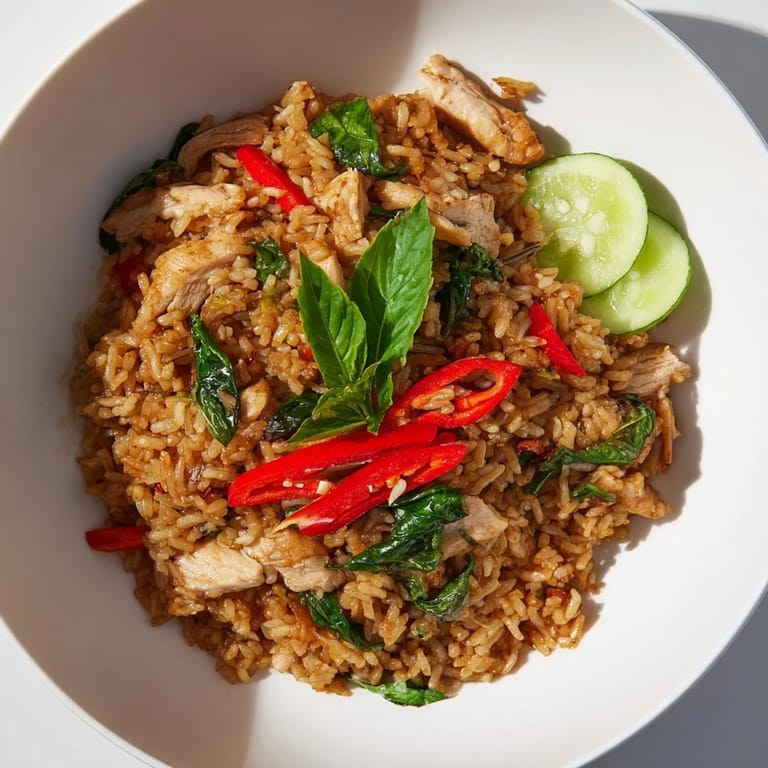
- This needs to hit the table while it's still hot and the basil still smells alive. Wedge of lime, some cucumber slices, and you're done.
 Save
Save I learned the basil lesson the hard way, tossing it in with the rice like it was just another vegetable, and watching it turn into gray-brown sadness. Now I add it at the end, and my kitchen fills with this bright, almost medicinal aroma that tells me everything is about to be delicious. That small timing shift made all the difference between good fried rice and the kind you actually crave.
Why This Works So Well
The heat builds in waves—first the quick spice from the chilies and garlic, then the gentle warmth that lingers from the white pepper. The holy basil arrives like a surprise guest that changes the whole tone of the meal, bringing freshness to something rich and savory. It's a dish that respects your palate instead of just hammering it with one note.
Making It Your Own
Shrimp, tofu, or pork all work beautifully if chicken isn't your thing, and they cook in roughly the same time. I've made versions with cashews tossed in at the very end, with a fried egg on top for richness, even with leftover roasted vegetables when the fridge needed clearing. The structure is flexible; the discipline is in respecting the timing and heat control.
Final Thoughts and Tweaks
This is the kind of recipe that rewards confidence and high heat—it's not delicate or forgiving, so trust your instincts and don't second-guess the temperature. If you want more heat, add a drizzle of chili oil or extra chilies before the rice goes in, but do it gradually so you can taste as you go. The lime is essential at the table, not optional, because that brightness is the final note that ties everything together.
- Keep everything prepped and lined up before you start because once the wok is hot, you're moving fast with no time to chop.
- If your rice is fresh and clumpy, steam it separately for a minute or toss it in the wok with just a tiny splash of water to loosen it up.
- Taste and adjust the sauces as you go—every brand is slightly different, and you might need an extra pinch of sugar or a tiny bit more fish sauce depending on what you're using.
 Save
Save This dish has a way of making you feel like a better cook than you actually are, which is maybe the highest compliment a recipe can earn. Make it when you need dinner fast, or make it when you need to impress someone without pretending you've been slaving away all day.
Recipe FAQ
- → What is the best type of rice to use?
Day-old jasmine rice works best to prevent clumping and achieve a fluffy fried rice texture.
- → Can the holy basil be substituted?
Thai basil can be a good alternative if holy basil is unavailable, though the flavor will be slightly different.
- → How can I adjust the spiciness?
Modify the amount of Thai red chilies or add chili oil to increase heat to your preference.
- → Is there a vegetarian alternative?
Substitute chicken with tofu or additional vegetables for a plant-based option.
- → What cooking tools are required?
A wok or large skillet, spatula, and basic knife and chopping board are all you need.
- → How should the sauces be combined?
Soy sauce, oyster sauce, and fish sauce are stirred in together to evenly coat the rice and chicken.