 Save
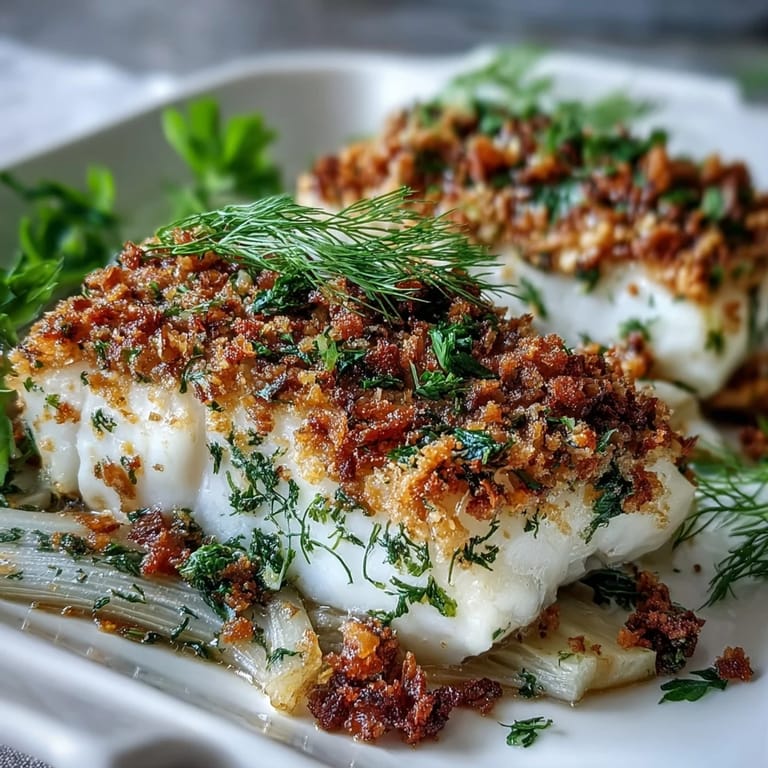
Save There's something about watching halibut turn from translucent to opaque under the oven's heat that makes you feel like you've mastered something genuinely elegant. I stumbled onto this combination while standing in front of my fishmonger's counter on a Thursday, wanting something that felt special but wouldn't trap me in the kitchen for hours. The fennel caught my eye, pale and layered like something you'd find in a still life painting, and suddenly the whole dish clicked into place.
I made this for my sister's book club night, nervous because one guest had just returned from a fishing trip in Iceland raving about halibut. As I pulled it from the oven, the kitchen smelled like toasted walnuts and bright lemon, and when everyone took their first bite, the conversation genuinely stopped for a moment, which never happens with that crowd. That's when I knew this dish had something real going for it.
Ingredients
- Halibut fillets: Choose ones that are roughly the same thickness so they cook evenly, and don't skip the skinless request because the skin gets tough and nobody wants to wrestle with it.
- Fennel bulb: Slice it thin enough to see light through it, which takes maybe five minutes with a sharp knife and makes all the difference in how it softens.
- Lemon: Use a zester or microplane for the zest, which gives you those bright little flecks instead of the bitter pith that a box grater sometimes pulls.
- Olive oil: You'll use it three times in this dish, so grab something you actually like tasting, not the bottom-shelf bottle.
- Fresh breadcrumbs: Tear rustic bread into pieces and pulse it yourself if you can, because store-bought panko turns gritty instead of staying crispy.
- Walnuts: Chop them finely so they toast evenly and create that satisfying crunch without being aggressively chunky.
Tired of Takeout? 🥡
Get 10 meals you can make faster than delivery arrives. Seriously.
One email. No spam. Unsubscribe anytime.
Instructions
- Set the stage:
- Heat your oven to 200°C and lightly oil a baking dish that fits your fillets snugly in a single layer. This takes the guesswork out of cooking time because the fish won't be crowded and steaming itself.
- Build your base:
- Scatter the sliced fennel across the dish, drizzle it with half the lemon juice and a tablespoon of olive oil, then season gently with salt and pepper. This step matters because the fennel releases its juices and becomes the bed your fish sits on, infusing everything with subtle anise sweetness.
- Nestle the fish:
- Lay your halibut fillets on top of the fennel, then drizzle with the remaining oil and lemon juice, sprinkle half the zest. The fish looks pale and unassuming now, but trust that it's about to transform into something tender and flaky.
- Toast the topping:
- In a skillet over medium heat, warm olive oil and add the minced garlic, letting it perfume the oil for about thirty seconds before stirring in the breadcrumbs. Toast until they're golden and smell like toasted grain, which takes about three minutes, then add the walnuts for another minute so they become fragrant without burning.
- Finish the pangrattato:
- Remove from heat and stir in the parsley and remaining lemon zest, creating a bright, crunchy mixture that smells incredibly good. This cooling-off moment matters because if you dump hot pangrattato on the fish, some of it will stick to the pan instead of the fillets.
- Crown the fish:
- Spoon the walnut mixture generously over each fillet, pressing it down gently so it stays put instead of sliding off during baking. You want each bite to include both the crispy topping and the tender fish beneath it.
- Bake until perfect:
- Slide the dish into the oven for 12 to 15 minutes, checking at twelve because ovens vary and fish goes from perfect to dry faster than you'd think. The halibut is done when it flakes easily with a fork and the pangrattato has turned an even deeper gold.
 Save
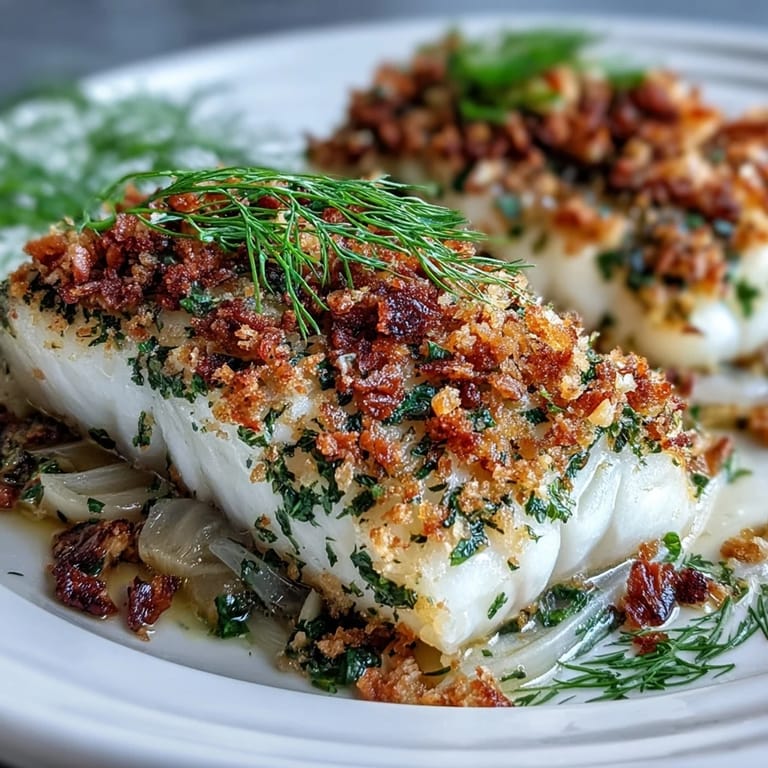
Save There's a moment during dinner when someone asks for the recipe, and you realize you've created something people actually want to replicate in their own kitchens. That's when this dish stops being just dinner and becomes a small gift you're giving to people you care about.
Why Fennel Becomes Your Secret Weapon
Fennel intimidates people because it smells aggressively of anise when raw, but the oven performs actual magic on it, transforming it into something mild and almost caramelized. The first time I baked fennel, I expected the dish to taste like licorice, but instead it tasted like sweetness and butter without any of the bitter edge that worries you when the bulb is raw. It also softens enough that it becomes almost invisible in the final dish, serving as the moisture source for the fish and the flavor base that ties everything together.
The Pangrattato Philosophy
Pangrattato exists in that magical space between a breading and a topping, adding textural interest without making the fish feel heavy or fried. I learned this technique watching a cook make it in a restaurant kitchen, and it changed how I think about finishing simple dishes. The walnut version feels elevated without being pretentious, and because you control how much you add, you can adjust the crunch-to-fish ratio based on your mood that night.
Timing and Temperature Matters
The thirty-minute total time is genuine, which means this dish lives in that sweet spot between weeknight accessible and special-occasion-worthy. I stopped overthinking timing when I realized that watching the fish is more important than watching the clock, because ovens vary wildly and a fillet at 12 minutes in one oven might need 15 in another. That's why I always peek at the 12-minute mark and look for that telltale opaqueness that means the fish is done.
- Use a fork to gently press the thickest part of the fillet; if it flakes, you're done cooking.
- The pangrattato should be golden but not dark brown, which happens faster than you'd expect.
- Let the dish rest for two minutes after removing it from the oven so the fish firms up slightly and the flavors settle.
 Save
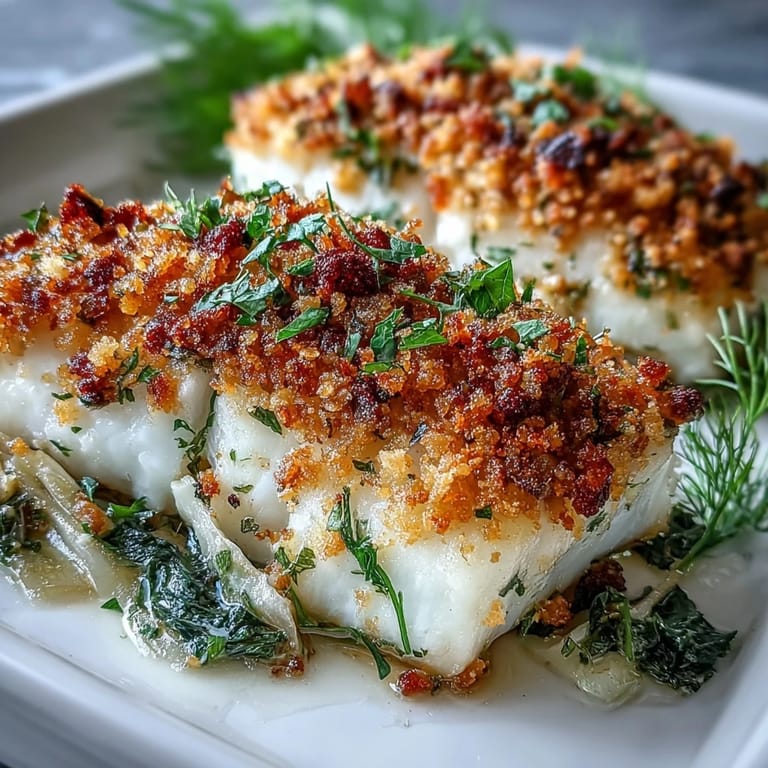
Save This dish proves that elegant doesn't require complexity, and restaurant-worthy doesn't require stress. Make it once for yourself, then make it again for someone you want to impress.
Recipe FAQ
- → Can I substitute another fish for halibut?
Absolutely! Cod, haddock, or sea bass work beautifully in this preparation. Choose firm, white fish fillets of similar thickness to ensure even cooking.
- → How do I know when the halibut is fully cooked?
The fish is ready when it turns opaque throughout and flakes easily when tested with a fork. Internal temperature should reach 63°C (145°F) for safe consumption.
- → Can I make the pangrattato topping ahead of time?
Yes, you can prepare the breadcrumb mixture up to 2 days ahead. Store it in an airtight container at room temperature, then sprinkle over the fish just before baking.
- → What wine pairs best with this dish?
A chilled Sauvignon Blanc or Vermentino complements the delicate fish and bright citrus flavors beautifully. The crisp acidity cuts through the richness of the walnuts perfectly.
- → Is this suitable for meal prep?
While best enjoyed fresh, you can prep the components separately. Slice the fennel and make the pangrattato ahead, then assemble and bake just before serving for optimal texture.
- → What should I serve alongside this halibut?
A crisp green salad, steamed baby potatoes, or roasted vegetables make excellent accompaniments. Keep sides simple to let the fish shine as the star of the plate.