 Save
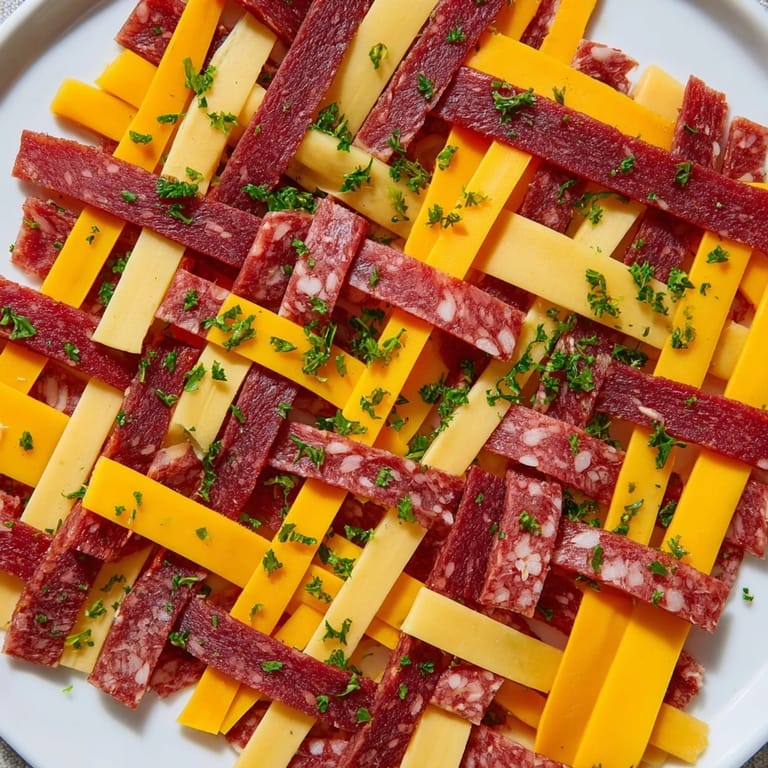
Save I discovered this appetizer by accident at a friend's dinner party when I was arranging a charcuterie board and realized the jerky strips and cheese slices kept catching the light differently as they overlapped. Something about the interplay of textures and colors sparked the idea—what if I actually wove them together like fabric? The first attempt was wobbly and imperfect, but guests were so charmed by the visual that they kept asking how I'd managed it. Now it's become my secret weapon for making people pause and smile before they even taste it.
I remember serving this at a potluck where everyone brought store-bought sides, and watching people's faces light up when they realized the plaid wasn't printed on paper but was actual layered food was worth every minute of arrangement. One guest kept examining it from different angles like it was art, and honestly, that's when I knew this wasn't just a snack—it was a conversation starter that happened to be delicious.
Ingredients
- Beef jerky: Two ounces cut into thin, even strips—the earthiness is your anchor flavor, so don't skimp on quality here.
- Turkey jerky: Milder and slightly sweeter, it creates visual contrast and balances the richness of the beef and pork.
- Pork jerky: This one has a subtle smokiness that ties everything together and adds unexpected depth.
- Sharp cheddar cheese: Sliced thin so it weaves without cracking; the sharpness cuts through the salt of the jerky beautifully.
- Monterey Jack cheese: Creamy and buttery, it softens the intensity and adds a pale golden line to your pattern.
- Smoked gouda: The wild card that brings a whisper of oak and complexity; don't skip it just because it's fancy.
- Fresh parsley or chives: Optional but worth it—a tiny pinch of green reminds everyone that this is still, at its heart, food made with care.
Tired of Takeout? 🥡
Get 10 meals you can make faster than delivery arrives. Seriously.
One email. No spam. Unsubscribe anytime.
Instructions
- Set your stage:
- Choose a clean cutting board or platter that's large enough to give you breathing room—at least twelve by twelve inches. The surface should be smooth and dry so nothing slips as you work.
- Lay your foundation:
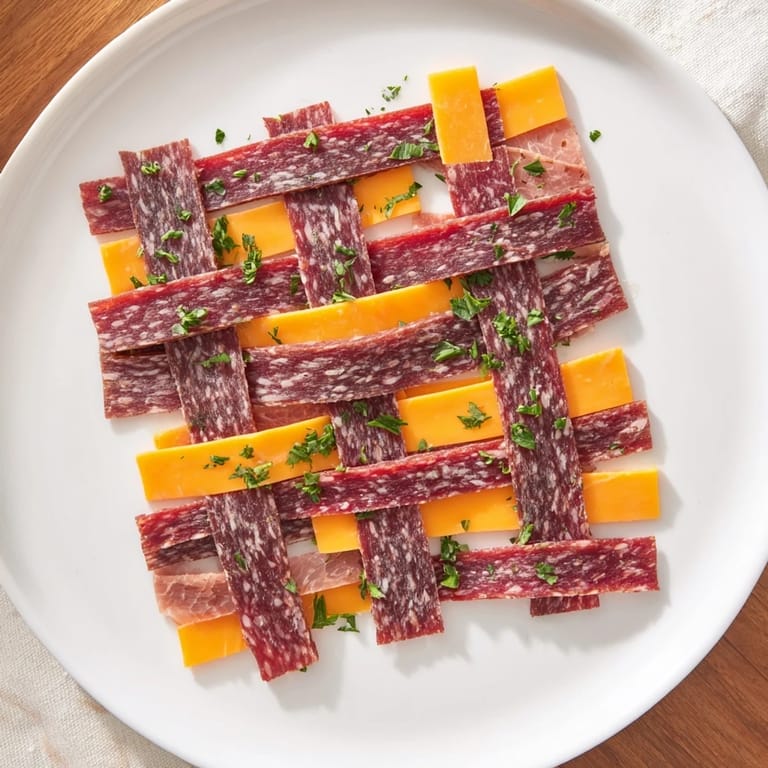
- Arrange half of your jerky strips vertically, alternating between beef, turkey, and pork to create a striped base. Keep the strips parallel and close enough that they're almost touching but not overlapping yet.
- Weave the cheese in:
- Starting at one edge, take a strip of sharp cheddar and weave it over and under your vertical jerky strips, alternating the pattern as you go. Think of it like the simplest basketweave you learned as a child, except your loom is delicious and protein-rich.
- Build your plaid:
- Continue adding horizontal cheese strips, switching between Monterey Jack and smoked gouda to create visual rhythm. As you go, you'll add more vertical strips of jerky on top, alternating their position so the pattern locks together like a real tartan.
- Press and settle:
- Once all your strips are woven, gently press the entire arrangement with your hand or the flat side of a knife to help everything nestle together and hold its shape. It won't be rigid—that's fine; it should have a slight give.
- Tidy up:
- If the edges are wild and raggy, trim them with a sharp knife for a polished look. This step is purely aesthetic but it does make a difference in how people perceive your effort.
- Finish and serve:
- Sprinkle your chopped parsley or chives over the top if you're using them—they add a fresh, almost spring-like counterpoint to all that savory richness. Serve it whole and let people tear off pieces, or cut it into neat squares for a more formal presentation.
 Save
Save The moment that made me keep coming back to this recipe wasn't at a party—it was a quiet Tuesday when I was stress-eating at my kitchen counter and decided to arrange some leftover jerky and cheese into a tiny plaid just for myself. Something about the process of weaving, the small repetitive motions, the knowledge that something beautiful was being built bit by bit, made me feel less frazzled than when I started. Food as meditation, honestly.
Choosing Your Proteins
Not all jerky is created equal, and this dish will show off whatever you choose. I've experimented with everything from super spicy ghost pepper jerky to mild teriyaki, and each version tells a different story on the board. The beef-turkey-pork combination is my baseline because it gives you a range of flavors in one bite, but if you're drawn to just one type, go for it—you'll get deeper flavor and a more cohesive look. One thing to avoid: jerky that's too thick or too tough to chew when layered, because you want this to be effortless to eat, not a workout.
The Cheese Equation
The three cheeses I've chosen offer a tasting journey from sharp to creamy to smoky, and they're all firm enough to slice thin without falling apart. If you want to swap one out, look for cheeses that have similar texture—something sliceable that won't crumble or tear. Soft cheeses like brie or mozzarella won't work here because they'll smush and lose definition as you weave. I've also learned that cheese straight from the fridge is easier to slice than cheese at room temperature, so pull it out just five minutes before you start cutting.
Plating and Presentation
This dish lives or dies by its presentation, so think about your backdrop. A dark slate board makes the colors pop, while a light wooden one gives a warmer, more rustic feel. I once served this on white ceramic and it looked sterile, so surface matters more than you'd think. The garnish of fresh herbs isn't decorative fluff—it breaks up the salt-and-fat monotony and adds a whisper of brightness.
- If you're making this ahead, cover it loosely with plastic wrap and refrigerate for up to two hours; any longer and the jerky starts to soften in an unpleasant way.
- Cut it into squares or serve it whole depending on your crowd—formal dinner guests appreciate squares, casual hangouts prefer the rip-and-tear experience.
- Pair it with something crisp and light like a dry white wine, pale ale, or even apple cider to cut through the richness.
 Save
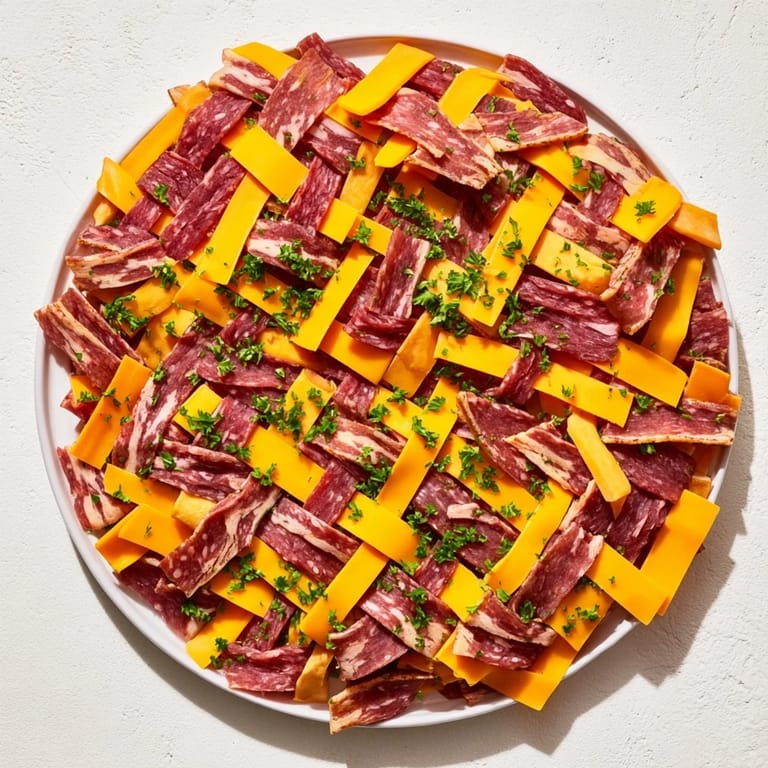
Save This is the kind of appetizer that makes people feel seen, like you did something thoughtful just for them. It's proof that simple ingredients and a little playful arrangement can turn snack time into something memorable.
Recipe FAQ
- → How do I create the tartan pattern?
Alternate jerky strips vertically by color, then weave different cheese strips horizontally over and under the jerky, alternating types to mimic the plaid design.
- → Can I substitute the jerky for vegetarian options?
Yes, vegetarian jerky or smoked tofu strips can replace traditional jerky while maintaining texture and color contrast.
- → What cheeses work best for this layering?
Sharp cheddar, Monterey Jack, and smoked gouda provide distinct colors and flavors that complement each other well.
- → How should I store leftovers?
Cover tightly with plastic wrap and refrigerate for up to 2 hours to keep the textures and flavors fresh.
- → What beverages pair well with this dish?
Light beers, dry white wines, or crisp apple cider balance the savory and creamy layers nicely.