 Save
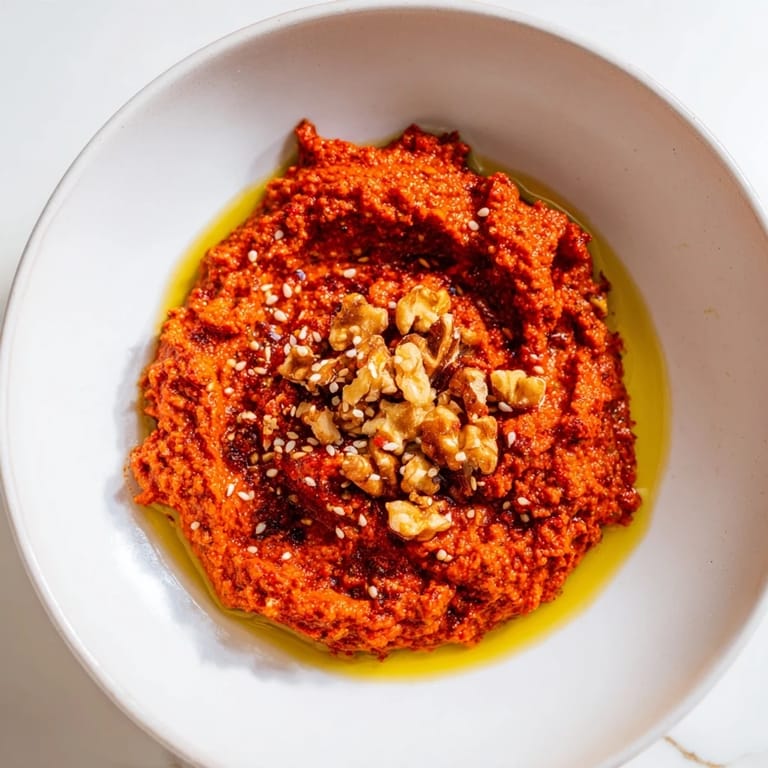
Save The first time I tasted muhammara, I was standing in a cramped kitchen in Aleppo, watching my neighbor's hands work the food processor with the kind of confidence that comes from making something a hundred times. She didn't measure anything—just tossed in roasted peppers, walnuts, and pomegranate molasses like she was conducting an orchestra. What struck me most wasn't the explosion of flavors, but how she smiled when I closed my eyes to taste it. That dip became my obsession, and now whenever I roast red peppers, their charred skin reminds me of that kitchen and her patient laugh when I asked a hundred questions.
I made this for a potluck once, nervous it would get lost among the safer dips, and watched it disappear first while people gathered around asking for the recipe. One friend went back three times with pita, and later admitted she'd been craving something that tasted like travel without leaving her kitchen.
Ingredients
- Red bell peppers (3 large): The foundation of everything—look for peppers that feel heavy and have thin, smooth skin, as they'll roast faster and more evenly than thick-walled ones.
- Walnuts (1 cup, lightly toasted): Toasting them yourself, even for just a few minutes, wakes up their flavor in a way that changes the entire dip from decent to memorable.
- Garlic (2 cloves): Fresh and raw here, so it stays sharp and cuts through the sweetness of the peppers without getting mellow.
- Breadcrumbs (2 tbsp): The secret thickener that gives the dip body and helps it cling to pita without tasting floury—use gluten-free if you need to.
- Pomegranate molasses (2 tbsp): The ingredient that makes people pause and ask what that complexity is; it's the tart, sweet soul of this dip.
- Ground cumin (1 tsp): Warm and earthy, it whispers rather than shouts, grounding everything in Middle Eastern tradition.
- Smoked paprika (1/2 tsp): Adds a gentle suggestion of fire without actual heat, giving depth even when the peppers are already roasted.
- Aleppo pepper or red chili flakes (1/2 tsp): Adjust this based on your crowd and comfort—it's the dial you turn to make it your own.
- Extra virgin olive oil (2 tbsp, plus more for drizzling): Use something good here; this dip is simple enough that the oil matters.
- Lemon juice (1–2 tbsp): Brighten and balance everything; taste as you go because citrus varies wildly from lemon to lemon.
- Toasted sesame seeds (1 tbsp, optional): A finisher that adds nuttiness and a gentle crunch when you garnish the top.
Tired of Takeout? 🥡
Get 10 meals you can make faster than delivery arrives. Seriously.
One email. No spam. Unsubscribe anytime.
Instructions
- Char the peppers until they blister:
- Set your oven to 220°C and let the peppers sit on a baking tray for twenty to twenty-five minutes, turning them halfway through so every side gets charred and blistered. You'll know they're ready when the skins are spotted black and the peppers have collapsed slightly, releasing a smell that fills your whole kitchen.
- Steam them until the skins slip off:
- Transfer the hot peppers to a bowl and cover it tightly—let them sit for ten minutes while the steam loosens the skin from the flesh. When you uncover the bowl, the smell will be intoxicating; this is when you know you're doing it right.
- Build the base in your food processor:
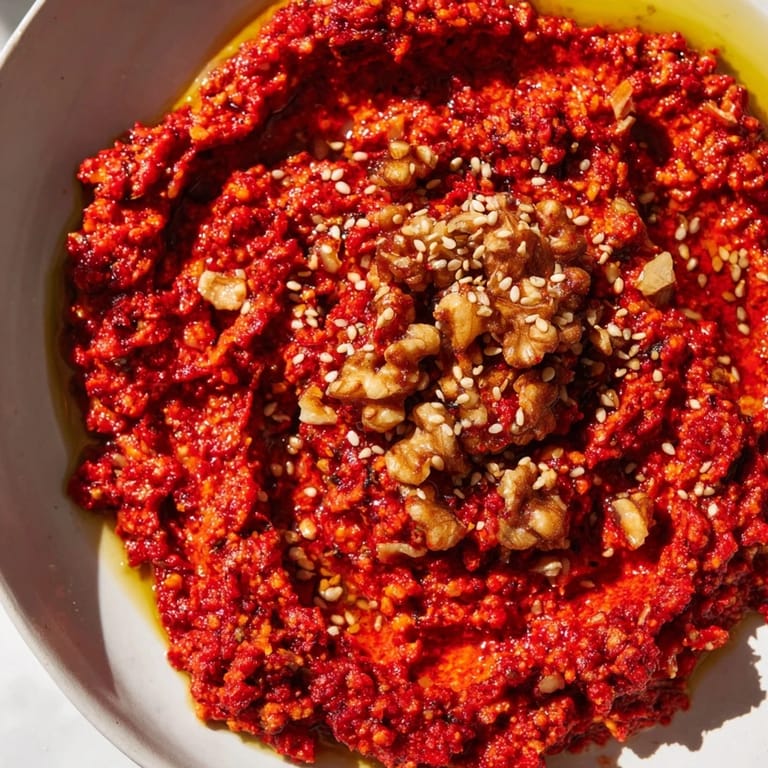
- Combine the peeled peppers, toasted walnuts, garlic, breadcrumbs, cumin, smoked paprika, Aleppo pepper, salt, and black pepper, then pulse until the mixture is coarse and textured. You want to see little flecks of walnut and pepper still visible, not a smooth paste.
- Finish with the wet ingredients:
- Add the pomegranate molasses, olive oil, and lemon juice, and process until the dip is smooth but still holds some texture. Taste as you go—this is where you make it yours, adjusting the molasses or lemon until it sings.
- Present it like you mean it:
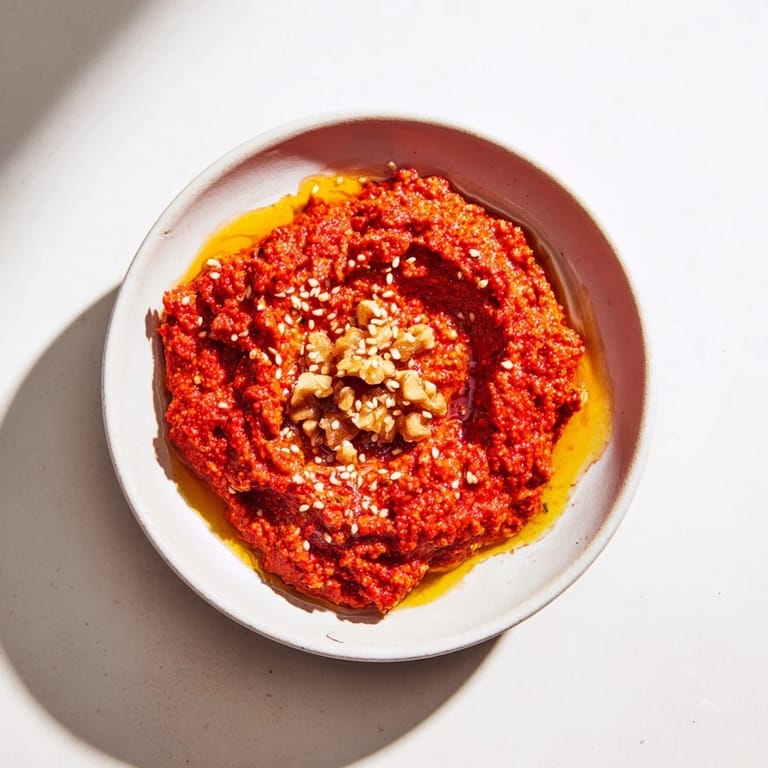
- Spread the muhammara into a shallow bowl, drizzle generously with olive oil, and scatter toasted sesame seeds across the top if you're using them. Let it sit at room temperature for a few minutes so the flavors settle before serving.
 Save
Save There's a moment when you taste this dip for the first time and everything clicks—the smoke from the peppers, the subtle crunch of walnut, the tartness of pomegranate that makes your mouth come alive. That moment is why I keep making it.
The Magic of Roasting Red Peppers
Roasting isn't just cooking; it's transformation. The heat caramelizes the natural sugars in the peppers and chars the skin, creating a smoky complexity that raw peppers could never give you. When you roast them, the peppers become sweet and tender instead of crisp and bright, which is why this dip has such depth. I learned this the hard way by trying to make muhammara with raw peppers once—it was sharp and grassy, nothing like the real thing.
Why Pomegranate Molasses Changes Everything
Pomegranate molasses is the secret ingredient that separates this dip from any red pepper spread. It's tart without being sour, sweet without being sugary, and it adds a complexity that makes people ask what they're tasting. If you can't find it, you can simulate it by reducing pomegranate juice with a little sugar, but nothing quite replaces the real thing. The molasses doesn't announce itself—instead, it works quietly in the background, making everything else taste more like itself.
Serving and Storage
Muhammara is at its best when it's had time to sit and let the flavors meld together—if you can make it an hour or two before serving, even better. It keeps in the refrigerator for up to five days in an airtight container, though the color may fade slightly; the flavor doesn't. I serve it with warm pita that's still soft enough to tear, fresh vegetables for dipping, and always as part of a mezze platter alongside hummus and baba ghanoush.
- Let the dip come to room temperature before serving so the flavors are clearest.
- If it seems thick after sitting, a drizzle of olive oil loosens it back up.
- Make extra and freeze it for moments when you want something that tastes homemade but takes no time at all.
 Save
Save This dip is proof that the simplest dishes, made with intention and good ingredients, are often the ones people remember. Make it once and you'll understand why.
Recipe FAQ
- → What gives this dip its smoky flavor?
The smoky taste comes from roasting the red bell peppers until charred, which enhances their natural sweetness and smokiness.
- → Can I substitute walnuts with other nuts?
Walnuts provide a rich, earthy flavor and texture, but pecans or almonds can be used as alternatives for a similar nutty profile.
- → How spicy is the dip and can it be adjusted?
The heat level is mild to medium, controlled by Aleppo pepper or red chili flakes, which can be added more or less depending on preference.
- → What is the purpose of pomegranate molasses in this dish?
Pomegranate molasses adds a tangy sweetness that balances the smoky peppers and nuts, providing depth and a pleasant acidity.
- → How should this dip be stored and how long does it last?
Keep refrigerated in an airtight container for up to five days to maintain freshness and flavor.