 Save
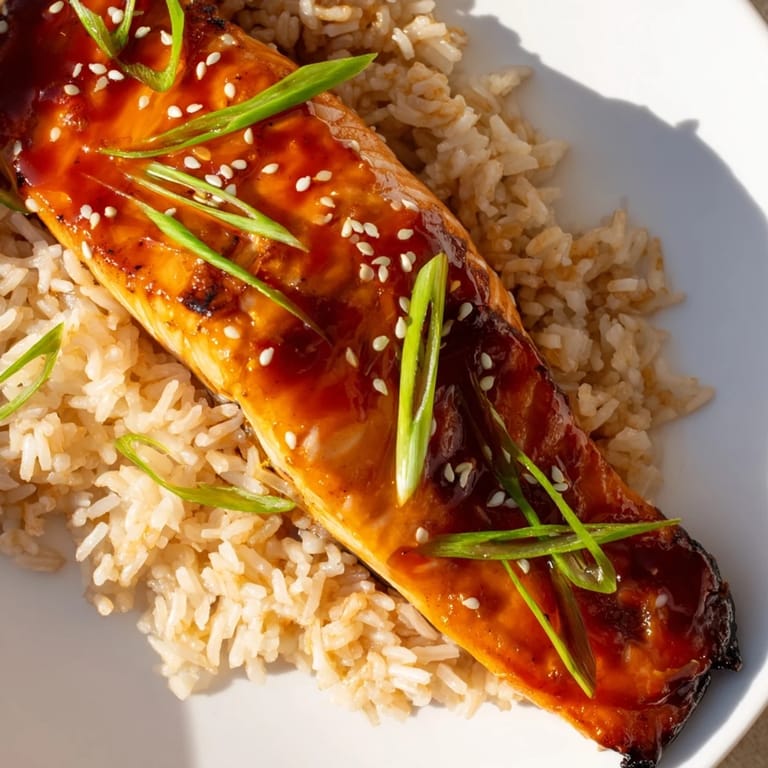
Save There's something about the smell of salmon hitting a hot pan that makes you feel like you're actually cooking something special, even on a Tuesday night. I stumbled onto this sticky orange salmon combination by accident—I had gochujang in the fridge, a couple of sad-looking oranges on the counter, and absolutely no plan. The glaze came together in minutes, and when I pulled that caramelized salmon out from under the broiler, the kitchen filled with this incredible tangy-sweet aroma that made my roommate actually ask what I was making instead of just ordering takeout.
I made this for my sister on a Sunday afternoon when she was stressed about her new job, and watching her face light up when she tasted it was the whole point. She asked for the recipe immediately, which meant I actually had to figure out what I'd done. The buttery rice catching those little drips of caramelized glaze, the freshness of the scallions cutting through all that richness—it became her go-to dinner whenever she needed to feel like things were under control.
Ingredients
- Skin-on salmon fillets (4, about 150 g each): The skin becomes crispy and helps keep the flesh moist, plus it's where some of the best flavor lives if you don't overthink it.
- Gochujang (2 tablespoons): This Korean chili paste brings umami and heat that orange juice alone could never achieve—it's the secret weapon here.
- Fresh orange juice (1/4 cup): Squeeze it yourself if you can; bottled juice tastes flat and thin compared to the brightness of fresh citrus.
- Soy sauce (2 tablespoons): Use regular soy sauce, not tamari, unless you need gluten-free; the depth matters.
- Honey (2 tablespoons): This balances the heat and creates that sticky, caramelized surface when it hits the heat.
- Rice vinegar (1 tablespoon): Don't skip it—this keeps the glaze from becoming one-note sweet and adds a subtle sharpness.
- Fresh ginger (1 teaspoon grated): Grate it on a microplane right before using so it stays bright and doesn't oxidize.
- Garlic (1 clove, minced): One clove is enough; you want to taste it but not be knocked over by it.
- Sesame oil (1 teaspoon): This is a finishing oil, not a cooking oil—a little goes a long way and it smells incredible.
- Jasmine rice (1 1/2 cups): The grains stay separate and have a slight natural sweetness that pairs beautifully with the glaze.
- Water (3 cups): Use filtered water if your tap water is heavily chlorinated; it affects the taste more than you'd think.
- Unsalted butter (2 tablespoons): This makes the rice taste like actual food instead of filler, and you control the salt level.
- Salt (1/2 teaspoon): Add to the rice water—it's easier to season it as it cooks than trying to fix it afterward.
- Scallions (3, thinly sliced): Use both the white and green parts; the white adds a sharper onion bite and the green brings freshness.
- Toasted sesame seeds (1 teaspoon, optional): These add a nutty crunch that makes the difference between good and memorable.
- Orange zest (optional): A fine grater or microplane works best; you want thin ribbons, not chunks.
Tired of Takeout? 🥡
Get 10 meals you can make faster than delivery arrives. Seriously.
One email. No spam. Unsubscribe anytime.
Instructions
- Make the glaze:
- Whisk gochujang, orange juice, soy sauce, honey, rice vinegar, ginger, garlic, and sesame oil in a medium bowl until smooth—the gochujang will resist at first but break down as you whisk. Taste it and adjust; if it's too spicy, add a touch more honey; if it's flat, squeeze in a bit more orange juice.
- Prepare the salmon:
- Pat the salmon fillets completely dry with paper towels—moisture is the enemy of crispy skin. Place them in a shallow dish, spoon 2 tablespoons of glaze over each, and turn them gently to coat both sides, then leave them alone for 10 minutes while you start the rice.
- Cook the rice:
- Rinse the jasmine rice under cold water, stirring gently with your fingers, until the water runs clear—this removes excess starch and prevents mushiness. In a medium saucepan, combine the rinsed rice, water, butter, and salt, bring it to a boil, then cover, reduce heat to low, and let it bubble away undisturbed for exactly 15 minutes. After 15 minutes, remove it from heat and let it sit covered for 5 more minutes—this finishes the cooking gently and keeps the grains intact.
- Set up for broiling:
- Turn your broiler to high and line a baking sheet with foil, then lightly oil it with a neutral oil so the salmon doesn't stick. This is also a good time to open a window because broiling creates some smoke, and you want that smell to stay exciting, not acrid.
- Broil the salmon:
- Place the marinated salmon fillets skin-side down on the prepared baking sheet and position them 5 to 7 inches from your broiler element. Broil for about 3 minutes, then brush with more glaze, broil for another 3 to 5 minutes, brush again, and broil until the edges are caramelized and the thickest part flakes easily when you test it with a fork—you're aiming for an internal temperature of 125 to 130°F if you have a thermometer, but honestly, it's hard to overcook salmon this quickly.
- Finish the sauce:
- Pour any remaining glaze into a small saucepan and let it bubble gently over medium heat for 2 to 3 minutes, stirring occasionally, until it thickens slightly and coats the back of a spoon. This concentrate is where the final flavor bomb lives.
- Plate and serve:
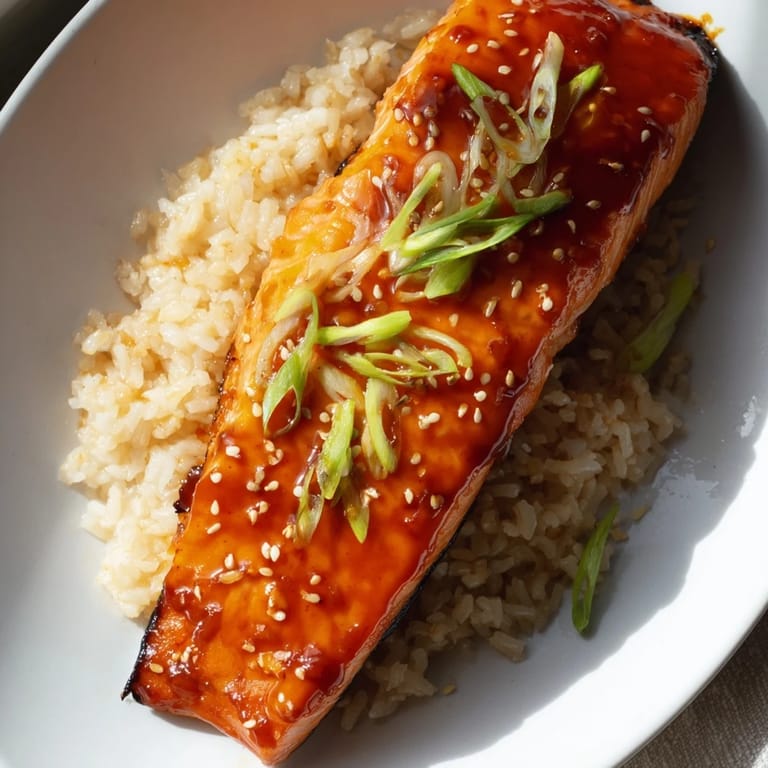
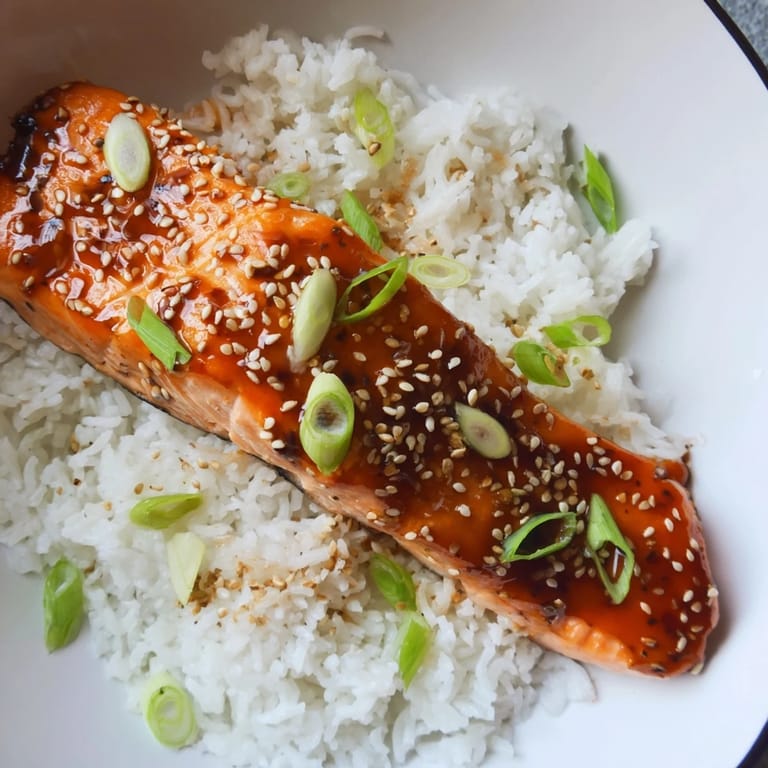
- Divide the fluffy buttery rice among bowls, top each portion with a glazed salmon fillet, drizzle with that thickened sauce, and scatter scallions, sesame seeds, and a bit of orange zest over the top. Serve immediately while the salmon is still warm and the rice is steaming.
 Save
Save The first time I made this for actual guests, I was nervous about the broiler part—I kept peeking, which I probably shouldn't have done, but the moment I served it, everyone went quiet in that way that means the food is genuinely good. One person said it tasted like something from a restaurant, and I let them think that was a huge compliment, even though it was really just good ingredients treated with respect and a little patience.
Why the Broiler Method Works
Broiling salmon instead of pan-searing or baking does something special—the direct, intense heat caramelizes the glaze into this lacquered, jammy coating while the gentle heat underneath keeps the flesh moist and tender. You avoid the mess of splattering oil, you get restaurant-quality color without a fancy sear, and the whole thing is done in under 10 minutes. The heat also concentrates the flavors in the glaze, making everything taste more intentional.
Jasmine Rice as a Canvas
Jasmine rice absorbs flavors without disappearing into itself—it's slightly sweet, naturally fragrant, and those grains stay visibly separate instead of turning into paste. The butter in the cooking water transforms it into something luxurious that's completely different from plain rice, and it becomes an active part of the meal instead of just a vehicle. If jasmine isn't your thing, brown rice works too but needs an extra 15 minutes of cooking time, and somehow the glaze tastes even more special against the nuttiness.
Building Layers of Flavor
This dish works because every component has its own voice—the salmon, the glaze, the rice, the brightness of the scallions—and they all speak at once without fighting. The gochujang brings heat and depth, the orange adds brightness and acid, the honey creates sweetness and stickiness, and the ginger and garlic tie it all together. The key is not overcomplicate any single element; let each one do what it does best.
- If you want more heat, add a pinch of chili flakes to the glaze right at the beginning.
- For a lighter version, use brown rice or quinoa instead of jasmine, and the glaze will still work beautifully.
- Leftover salmon and rice keep for 3 days in the fridge and taste even better the next day as the flavors meld.
 Save
Save This salmon has become one of those meals I make when I want to feel accomplished without spending hours in the kitchen, or when someone needs a little reminder that food made with care tastes different. It's the kind of recipe that works for a quiet Tuesday dinner and for the moments when you want to show up for people you love.
Recipe FAQ
- → How do I make the orange glaze for the salmon?
Whisk together gochujang, freshly squeezed orange juice, soy sauce, honey, rice vinegar, grated ginger, minced garlic, and sesame oil until smooth and well combined.
- → What is the best way to cook the salmon for this dish?
After marinating, broil the salmon skin-side down for 6–8 minutes, brushing with glaze midway, until caramelized and cooked to medium doneness.
- → How should I prepare the rice to serve with the salmon?
Rinse jasmine rice until water runs clear, then simmer with water, butter, and salt until tender. Let it stand covered before fluffing with a fork.
- → Can I substitute the jasmine rice with another grain?
Yes, brown rice or quinoa can be used as alternatives for a different texture and nutritional profile.
- → What garnishes complement the sticky salmon and rice dish?
Thinly sliced scallions, toasted sesame seeds, and optional orange zest provide fresh, nutty, and citrus notes that brighten the meal.
- → Is this dish suitable for those following a pescatarian diet?
Yes, this meal features salmon and plant-based ingredients, fitting well within pescatarian guidelines.