 Save
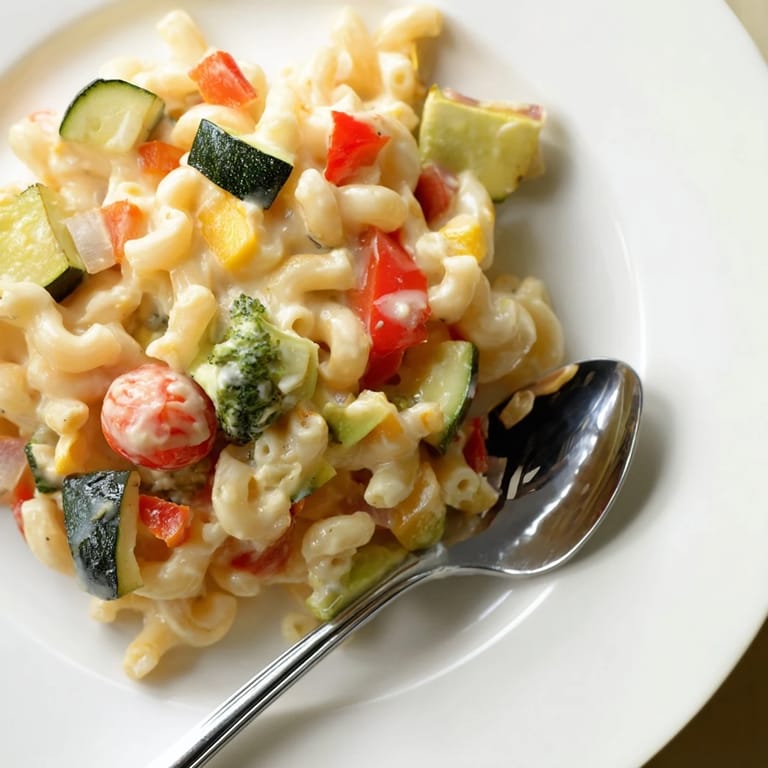
Save My daughter stood on her stepstool, peering into the oven as the vegetables started to caramelize. She wrinkled her nose at the broccoli but couldn't look away from the bubbling cherry tomatoes. That night, she ate every bite of her mac and cheese, vegetables included, and I realized I'd stumbled onto something bigger than dinner. Sometimes the best recipes aren't about hiding what's good for us, they're about making it irresistible.
I started making this after a particularly gray February when we all needed color on our plates. The kitchen filled with the smell of caramelizing onions and sweet peppers, and my husband wandered in asking what smelled so good. When I told him it was mac and cheese, he laughed, but then he saw the baking sheet. The vegetables were turning golden at the edges, the tomatoes had burst into jammy pools, and suddenly dinner felt like an event.
Ingredients
- Elbow macaroni: The classic shape holds onto cheese sauce in every curve, though shells or cavatappi work beautifully if that's what you have.
- Red bell pepper: Roasting brings out a natural sweetness that plays perfectly against the sharp cheddar, and the color makes the whole dish come alive.
- Zucchini: Dice it into small pieces so it nearly melts into the sauce, adding moisture without making anything watery.
- Red onion: The edges get crispy and slightly charred while the centers stay tender and sweet.
- Cherry tomatoes: They burst in the oven and create little pockets of tangy brightness throughout the dish.
- Broccoli florets: Choose small ones that will cook evenly and get those crispy, almost nutty edges.
- Olive oil: Don't skimp here, it helps everything caramelize properly and keeps vegetables from sticking.
- Unsalted butter: The base of your roux, and using unsalted lets you control the seasoning perfectly.
- All-purpose flour: This thickens the sauce just enough to coat everything without feeling heavy.
- Whole milk: The fat content is crucial for a silky sauce that doesn't break or feel thin.
- Sharp cheddar cheese: This is your flavor powerhouse, providing that classic mac and cheese tang.
- Mozzarella cheese: Adds stretch and creaminess without overwhelming the other flavors.
- Parmesan cheese: A little goes a long way, adding depth and a subtle nuttiness.
- Mustard powder: The secret ingredient that makes people ask what makes this taste so good.
- Garlic powder: Just enough to add warmth without competing with the vegetables.
Tired of Takeout? 🥡
Get 10 meals you can make faster than delivery arrives. Seriously.
One email. No spam. Unsubscribe anytime.
Instructions
- Get the oven ready:
- Preheat to 220°C (425°F) and line your baking sheet with parchment paper to save yourself from scrubbing later. A hot oven is essential for getting those caramelized edges on your vegetables.
- Prep and season the vegetables:
- Toss all your diced vegetables with olive oil, salt, and pepper in a large bowl until everything glistens. Spread them in a single layer on the baking sheet so they roast instead of steam.
- Roast until golden:
- Slide the pan into the oven for 20 to 25 minutes, giving everything a good stir halfway through. You're looking for tender vegetables with crispy, slightly charred edges and tomatoes that have started to collapse.
- Cook the pasta:
- While the vegetables roast, boil your macaroni in well salted water until al dente, following the package timing. Drain it well and set aside, letting some of the steam escape so it doesn't water down your sauce.
- Start the cheese sauce:
- Melt butter in a large saucepan over medium heat, then whisk in the flour and cook for about a minute until it smells toasty. This cooks out the raw flour taste and creates the base for a smooth sauce.
- Add the milk:
- Pour in the milk gradually while whisking constantly to avoid lumps, then keep stirring for 3 to 5 minutes until the mixture thickens slightly. You'll feel it coat the back of your spoon when it's ready.
- Melt in the cheeses:
- Lower the heat and add all three cheeses, stirring until everything melts into a smooth, glossy sauce. Mix in the mustard powder and garlic powder, then taste and adjust the salt and pepper.
- Bring it all together:
- Add your cooked macaroni and roasted vegetables to the cheese sauce, folding gently until every piece is coated. Let it heat through for a minute or two, stirring occasionally.
- Serve warm:
- Spoon into bowls while it's still steaming and top with extra Parmesan if you're feeling generous. This is best enjoyed immediately while the sauce is at its creamiest.
 Save
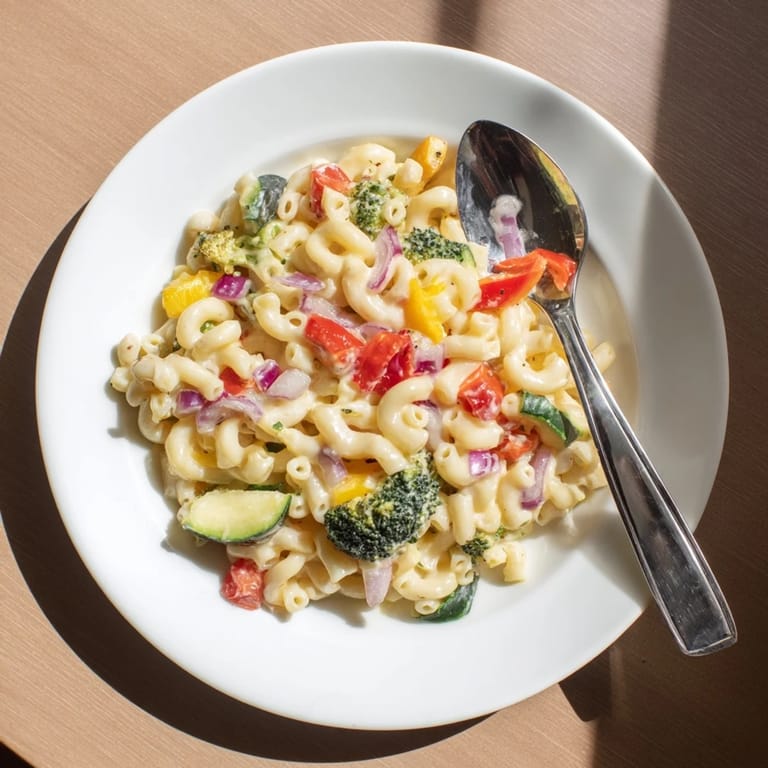
Save This dish showed up at a potluck once and I watched someone who claimed to hate vegetables go back for seconds. She asked me what I did to make broccoli taste good, and I realized it wasn't magic, just a hot oven and good cheese. Now when friends ask for the recipe, I tell them it's really about giving vegetables the same love we give the pasta.
Making It Your Own
The vegetable combination here is just a starting point, and I've switched things up depending on what looked good at the market or what was lurking in my crisper drawer. Mushrooms add an earthy richness, carrots bring extra sweetness, and a handful of spinach stirred in at the end wilts perfectly into the hot sauce. In autumn, I've roasted butternut squash cubes with the other vegetables and it felt like the coziest possible version. The key is cutting everything roughly the same size so it all finishes roasting at the same time.
The Crispy Top Situation
If you want to take this from stovetop to showstopper, transfer everything to a baking dish, top it with panko breadcrumbs mixed with a little melted butter and Parmesan, then broil for 2 to 3 minutes. Watch it closely because the line between golden and burnt is surprisingly thin. I learned this the hard way when I got distracted by a phone call and came back to a smoking broiler. The crispy top adds textural contrast that makes this feel more special, perfect for when you want to impress someone or just treat yourself on a Friday night.
Storage and Reheating Wisdom
Leftovers keep in the fridge for up to four days in an airtight container, and honestly, I sometimes think they taste better the next day after all the flavors have mingled. Reheat gently on the stovetop with a splash of milk to loosen the sauce, stirring frequently over medium low heat. The microwave works in a pinch, but add a tablespoon of milk and cover it to keep everything from drying out.
- If the sauce seems too thick after storing, thin it with milk or even a splash of pasta water.
- You can freeze portions for up to two months, though the texture of some vegetables may soften slightly.
- Sprinkle fresh Parmesan on top when reheating to make it taste freshly made.
 Save
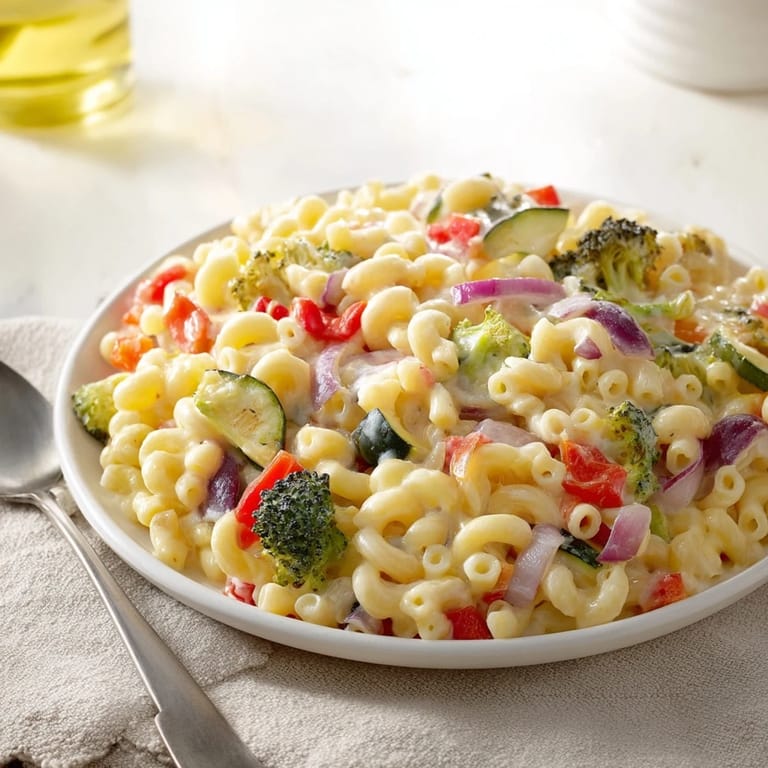
Save This recipe has become my answer to dreary weeknights and picky eaters, proving that comfort food doesn't have to choose between delicious and nourishing. Every time I make it, someone asks for the recipe, and I love knowing it might become part of their regular rotation too.
Recipe FAQ
- → Can I prepare this ahead of time?
Yes, you can roast the vegetables and make the cheese sauce in advance. Store separately in the refrigerator for up to 2 days. Warm gently before combining with freshly cooked pasta.
- → What vegetables work best for roasting?
Bell peppers, zucchini, broccoli, cherry tomatoes, and red onion work wonderfully. You can also use carrots, mushrooms, cauliflower, or spinach. Choose vegetables with similar cooking times for even roasting.
- → How do I prevent a lumpy cheese sauce?
Cook the roux for at least 1 minute before adding milk. Add milk gradually while whisking constantly. Keep heat at medium to avoid scorching. If lumps form, strain through a fine sieve.
- → Can I use different types of cheese?
Absolutely. Try combinations like gruyere, fontina, or gouda. Avoid pre-shredded cheese with anti-caking agents when possible, as it may not melt as smoothly as freshly shredded cheese.
- → How do I make this crispier?
Transfer the finished dish to a baking dish, top with breadcrumbs mixed with melted butter, and broil for 2-3 minutes until golden. This adds a satisfying crunchy texture.
- → Is this suitable for dairy-free diets?
Traditional preparation contains dairy. For dairy-free versions, substitute plant-based milk, dairy-free cheese alternatives, and vegan butter. Results vary by brand, so test before serving.