 Save
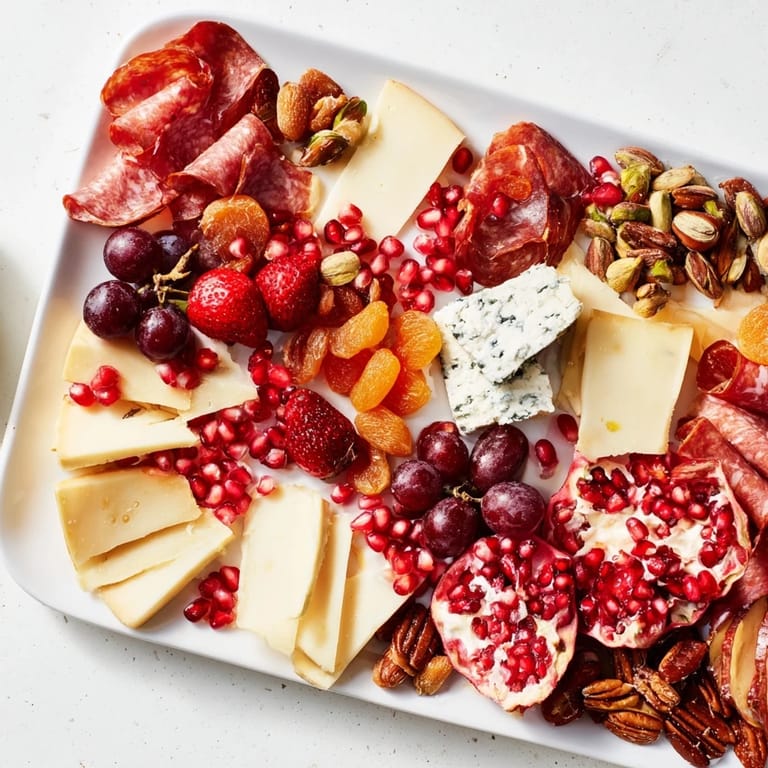
Save I remember the first time I arranged a pomegranate grazing board was for my sister's engagement party on a sun-drenched afternoon. As I scattered those ruby-red seeds across the cascading line of cheeses and fruits, something magical happened—the board transformed into pure edible art. The pomegranate jewels caught the light like tiny lanterns, and I watched guests' faces light up before they even tasted a single bite. That's when I realized: the most memorable meals aren't just about flavor; they're about creating a moment people want to linger in.
I'll never forget when my friend Marcus, who claims he doesn't like "fancy appetizers," reached for his third handful of this board, pomegranate seeds staining his fingers ruby red as he paired creamy goat cheese with candied pecans. Watching someone discover that food can be both beautiful and genuinely delicious—that's what this board does. It's a conversation starter, a flavor journey, and proof that sometimes the simplest approach creates the most lasting impression.
Ingredients
- Brie cheese (150g): This is your creamy anchor—when brought to room temperature, it becomes silky and luxurious. The mild, buttery flavor bridges between bold blues and delicate goat cheese. Always chill it beforehand so it holds its shape when sliced into wedges.
- Manchego cheese (150g): Spain's gift to the board—nutty, slightly salty, and firm enough to slice cleanly. It adds sophistication without stealing focus from the other elements.
- Blue cheese (100g): Use this sparingly; a little transforms the entire experience. The sharp, salty complexity makes it the flavor anchor that makes people pause and appreciate.
- Goat cheese log (100g): Mild and tangy, this becomes a creamy canvas for honey drizzles and fig jam. The texture contrast against crackers is essential.
- Prosciutto (150g): Thinly sliced and draped loosely, it adds umami depth and a delicate crispness. Let it air slightly before serving for the best texture.
- Salami (150g): Choose a variety with visible spice or herb flecks—it adds visual interest and a savory punch that balances the sweetness of dried fruits.
- Pomegranate (1 large): The star of the show. Fresh pomegranate seeds are worth the effort to extract; they're tart, juicy, and provide that signature jeweled shine. The bitterness of the pith changes everything, so remove it carefully.
- Red grapes (1 cup): Their natural sweetness bridges the gap between savory and sweet. Keep them in small clusters for visual appeal and easier eating.
- Strawberries (1 cup): Fresh berries add brightness and moisture. Hull them carefully and halve just before serving to prevent them from weeping.
- Dried apricots (1/2 cup): Chewy and naturally sweet, they provide textural contrast and a subtle stone-fruit flavor that complements aged cheeses perfectly.
- Dried figs (1/2 cup): Halve these for bite-sized pieces. They're sweet enough to pair with blue cheese but substantial enough to hold their own against the board's heavier elements.
- Roasted almonds (1/2 cup): Their slight saltiness and firm crunch add textural variety. Roasted versions have more depth than raw.
- Pistachios (1/2 cup): Beautiful green color and subtle richness. Shelled versions are easier for guests and look cleaner on the board.
- Candied pecans (1/2 cup): These are the addictive element—sweet, crunchy, and somehow people can't stop reaching for them. They tie sweet and savory together.
- Assorted crackers (1 cup): Choose a mix of textures: some sturdy enough for creamy cheese, some delicate for subtle flavors. Water crackers, seed crackers, and herb varieties create visual and textural interest.
- Baguette (1/2 sliced and toasted): Toasting is essential—it prevents sogginess and adds a subtle crunch. The slight char brings out the bread's natural sweetness.
- Honey (1/4 cup): Serve in a small dish for drizzling. It softens salty elements and adds a glossy sheen to goat cheese.
- Fig jam (1/4 cup): This is the bridge between savory and sweet. Spread it on crackers with blue cheese for an explosion of complementary flavors.
- Fresh mint: Don't underestimate this. It adds aromatics and visual brightness, and it's a subtle nod to the board's Mediterranean inspiration.
Tired of Takeout? 🥡
Get 10 meals you can make faster than delivery arrives. Seriously.
One email. No spam. Unsubscribe anytime.
Instructions
- Set Up Your Stage:
- Select your board—think large, think dramatic. I use a 20 by 14-inch marble board, but wood or ceramic work just as beautifully. Place it in the spot where it will live for the party; this is too beautiful to move once assembled. Gather every ingredient and tool around you. This isn't just efficiency; it's about getting into the rhythm of creation. Your workspace should feel calm and clear, like you're about to paint rather than arrange food.
- Prepare the Cheeses with Intention:
- Take your chilled cheeses out and let them sit at room temperature while you handle other tasks. Slice the brie and manchego into thin, elegant wedges—about 1/4-inch thick. Cut the blue cheese into small, rustic chunks; irregularity here looks intentional and elegant. Slice the goat cheese log into coins about 1/2-inch thick. The cheese should be cool enough to hold its shape but warm enough to feel slightly yielding when you touch it. If it's too cold, it will look dull and feel waxy. If it's too warm, it will lose definition.
- Coax the Pomegranate Seeds Into Freedom:
- This step requires patience and a gentle hand. Cut your pomegranate in half and hold one half cut-side down over a bowl. Using a wooden spoon, tap the back of the pomegranate skin gently and rhythmically. You'll hear the soft plink-plink of seeds falling. The sound is oddly meditative. Work over the bowl so you catch every precious seed. When you've released all the seeds, float them in a bowl of cool water and use your fingers to separate any clinging pith—this is the white, bitter stuff that would ruin the taste. Pat the seeds dry on paper towels. They should glisten like tiny rubies.
- Prepare the Fruits with Freshness in Mind:
- Wash your strawberries and pat them completely dry. Hull them gently and halve them. Look them over and discard any with soft spots—they're flavor thieves. Separate your grapes into small clusters of 3-5 berries; these are easier to pick up and look more intentional than individual grapes. Halve your dried figs so each piece is a single bite. Everything should feel like you're curating rather than dumping.
- Imagine and Draw Your Diagonal:
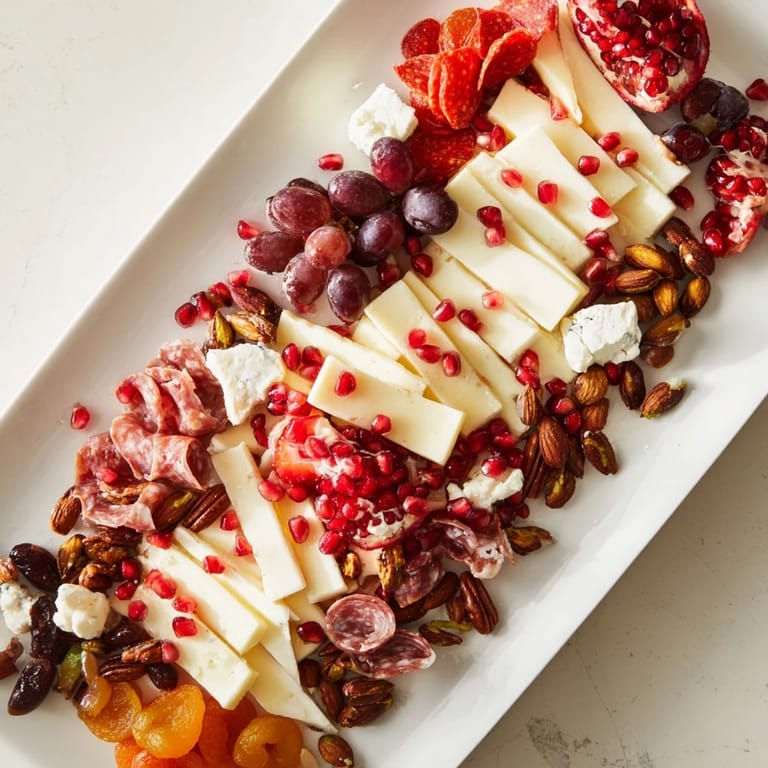
- This is where the magic of design happens. Visualize a diagonal line running from top-left to bottom-right across your board—or go the opposite direction. Don't actually draw it, but let it guide your eye. This diagonal is the story your board tells; everything flows along it like a waterfall.
- Establish Your Anchors:
- Place your small ramekins of honey and fig jam along this imaginary diagonal, slightly offset. These are your guideposts. Now begin placing your cheeses along the same path, alternating types. A wedge of brie, then manchego, then a cluster of blue cheese. Leave space between each element—this isn't a puzzle to fill completely. The white space is as important as the food; it lets each element breathe and shine.
- Drape the Proteins with Drama:
- Loosely arrange your prosciutto and salami along the cascade. Let them fold naturally; don't spread them flat. This creates height and movement. The way light plays on the folds of prosciutto is part of the visual story.
- Nestle Fruits and Nuts Like Treasures:
- Now comes the part where you stop thinking and start trusting your eye. Tuck clusters of red grapes, halved strawberries, dried figs, and apricots among the cheeses. Scatter your almonds, pistachios, and candied pecans along the diagonal flow. Fill small gaps but never make it look crowded. Step back frequently. Does your eye flow along the diagonal? Are there areas of visual rest between busy sections? Is there a balance of colors?
- Position Crackers and Bread as the Gateway:
- Fan your crackers and toasted baguette slices at both ends of your cascade. This serves two purposes: it looks visually complete, and it keeps the crisp elements away from the moist cheeses and fruits. Think of them as the invitation and the conclusion to the journey.
- Crown It with Pomegranate Jewels:
- This is the moment everything transforms. Generously scatter your pomegranate seeds across the entire board, concentrating them along the diagonal cascade and clustering them like tiny lanterns catching light. Don't be timid—the abundance is part of the beauty. Tuck fresh mint leaves throughout, tucking them between elements and at the edges. The green provides a visual rest and the scent should be subtle but present when guests lean in.
- Step Back and See Your Creation:
- Walk away from the board and look at it from a distance. Do you feel invited to it? Does your eye know where to begin? Are there colors that don't quite work? (It's okay if there are—sometimes one element stands out, and that's beautiful.) Wipe the board's edges with a paper towel if there are any spills. This final touch elevates everything from casual to intentional.
 Save
Save There's a moment during every party where people stop talking and just eat—where the board becomes less about hospitality and more about connection. I watched my brother, who travels constantly for work, sit quietly with a piece of brie, a candied pecan, and a pomegranate seed, and I knew this board had done what it was meant to do: it had slowed everyone down. That's the real magic of this recipe.
The Art of the Cascade Design
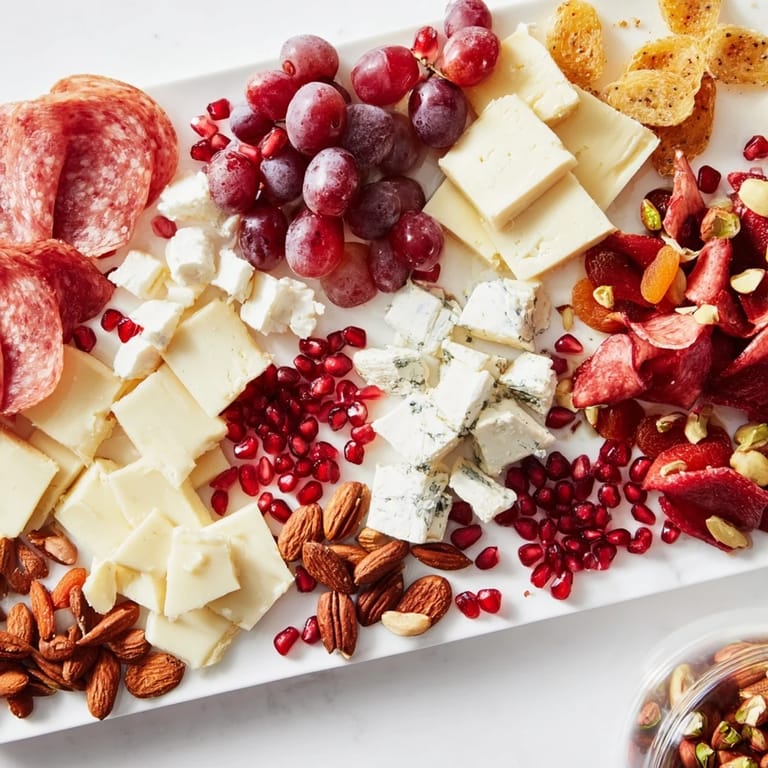
The diagonal cascade isn't just a decoration—it's a philosophy about how food should feel when you look at it. When I first started arranging boards, I used to cover every inch, thinking fullness meant generosity. Then a chef friend taught me that negative space is where elegance lives. The gaps between your manchego and your grapes let your eye rest and appreciate each element individually before the flavors meld together on your palate. It's the culinary equivalent of a beautifully designed room: it's not about having the most furniture, it's about arranging what you have so it breathes. Start with your anchor elements (cheeses and ramekins) along that diagonal line, then fill in around them with precision and intention.
Flavor Pairing: The Secrets Within
Every element on this board has been chosen because it either complements or contrasts with its neighbors, and understanding these relationships transforms how people experience the dish. Blue cheese is intensely salty and sharp—pair it with fig jam and suddenly it becomes elegant and complex. Brie is rich and mild—add a pomegranate seed and the tartness cuts through the richness like punctuation. Candied pecans seem like candy until you pair them with manchego and realize you've created something entirely new. The board teaches a lesson about how food works: context changes everything. A strawberry alone is nice. A strawberry next to aged manchego and toasted bread becomes part of a story. Watch your guests as they graze and you'll see them discovering these pairings organically, and that moment of delight is the entire point of this recipe.
Make-Ahead Wisdom and Service Timing
I used to think grazing boards had to be assembled moments before guests arrived, and it made entertaining stressful. Then I learned the rhythm of preparation that works: you can absolutely assemble the board up to 2 hours ahead. Arrange your cheeses, cured meats, dried fruits, nuts, and garnishes. Cover it loosely with plastic wrap and refrigerate. What you don't do yet is add the crackers, toasted bread, or fresh pomegranate seeds. These go on in the final 15 minutes before serving. The crackers stay crisp, the pomegranate seeds maintain their glossy sheen, and the freshness speaks for itself. Serve at room temperature—pull the board from the refrigerator about 10 minutes before guests arrive so the cheese comes back to its silky state. This timing transforms entertaining from chaotic to manageable, and that calm translates into genuine hospitality.
- Assemble cheese, meats, and dried elements up to 2 hours ahead and cover loosely with plastic wrap in the refrigerator.
- Add crackers, toasted bread, and pomegranate seeds just before serving to preserve crunch and freshness.
- Serve at room temperature—pull from the refrigerator 10 minutes before guests arrive to allow cheeses to reach their ideal silky state.
 Save
Save A grazing board is really just an excuse to slow down and savor—food arranged so beautifully that you can't help but linger over each bite. Make this one and watch what happens: the conversation deepens, the meal stretches longer, and people remember not just that they ate well, but that they felt welcomed.
Recipe FAQ
- → How should the cheeses be prepared for the board?
Slice brie and manchego into thin wedges, cut blue cheese into rustic chunks, and slice goat cheese into coins. Bringing cheeses to room temperature before arranging enhances flavor and texture.
- → What is the best way to extract pomegranate seeds?
Cut the pomegranate in half, hold it cut side down over a bowl, and tap with a wooden spoon to release the seeds. Remove any white pith for the best appearance and taste.
- → How can I prevent crackers from becoming soggy?
Place crackers and toasted baguette slices at both ends of the board, away from moist fruits and cheeses, to keep them crisp and golden.
- → What variations can be made to customize this board?
Swap cheeses such as manchego with aged cheddar or blue cheese with gorgonzola. For plant-based options, use vegan cheeses and charcuterie, or omit meats altogether.
- → How far in advance can this board be assembled?
Assemble up to 2 hours before serving. Cover loosely and refrigerate. Add crackers, bread, and pomegranate seeds just before serving to maintain freshness and crunch.