 Save
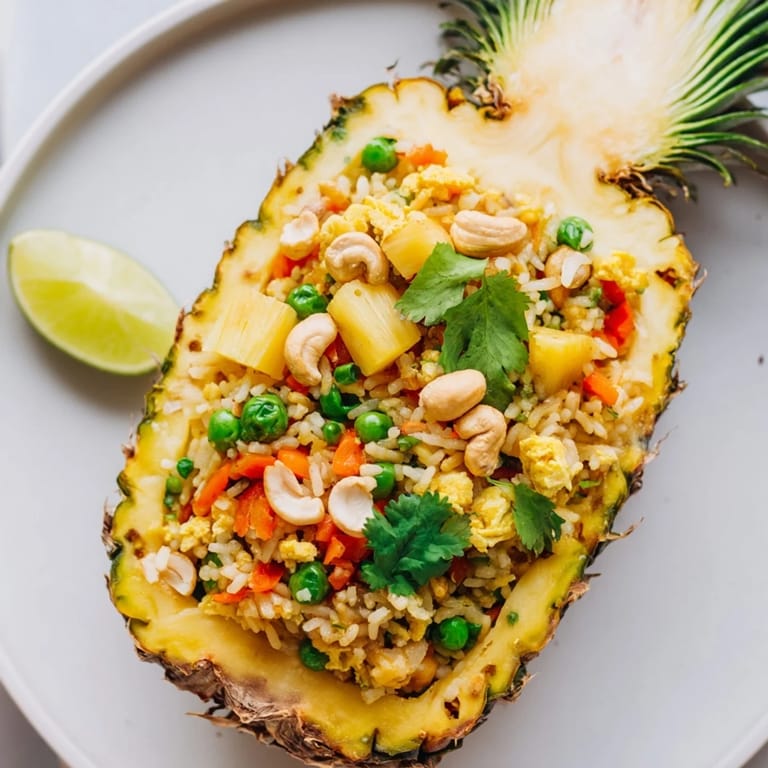
Save The first time I served pineapple fried rice, it wasn't planned. I'd been craving Thai food on a lazy weekend and had half a pineapple sitting on my counter alongside some leftover jasmine rice. Something clicked—what if the pineapple itself became the bowl? My friends gathered around the kitchen as I carved and stirred, and when that golden rice tumbled into the hollowed shell with its crown of leaves still attached, the whole room went quiet. That moment taught me that the best dishes often arrive when you stop overthinking and start playing.
I made this for my cousin's birthday potluck, and she stood in the kitchen watching the wok work its magic—the sizzle of garlic hitting hot oil, the way the rice grains separated and caught the heat, cashews toasting golden brown. When I spooned it into those pineapple halves, she teared up a little. Turns out she'd eaten pineapple fried rice at a tiny Bangkok restaurant during her backpacking year, and this brought her right back to that humid night, street vendors calling out, her whole life ahead of her.
Ingredients
- 1 large ripe pineapple: Look for one that's golden with a subtle give when you press it—too green and it's bland, too soft and it'll collapse when you carve. The leaves should be vibrant and firm.
- 3 cups cooked jasmine rice (preferably day-old): This is non-negotiable; fresh rice will turn to mush. Make it a day ahead or spread it on a tray to dry for a few hours before cooking.
- 2 tablespoons vegetable oil: Use something neutral and high-heat tolerant like canola or peanut oil.
- 1 small onion, finely diced: The finer the dice, the more evenly it'll cook and distribute flavor.
- 2 cloves garlic, minced: Fresh is worth the extra 30 seconds of knife work.
- 1 medium carrot, diced: Cut into small, uniform pieces so they cook in the same time as the pepper.
- 1 red bell pepper, diced: Red peppers are sweeter and slightly more tender than green, which matches this dish's flavor profile beautifully.
- 2 eggs, lightly beaten (optional): They add richness and help bind everything together, but skip them if you're vegan.
- 1/2 cup frozen peas: Don't thaw them—they'll cook perfectly in the wok's heat and stay bright and tender.
- 1/2 cup unsalted roasted cashews: The crunch is essential, and unsalted lets the other flavors shine.
- 1/2 cup pineapple flesh, diced: Reserve this from your carving and dice it just before cooking so it stays fresh.
- 3 scallions, sliced: Add these at the very end to keep their fresh bite.
- 1/4 cup raisins or golden sultanas (optional): They add chewy pockets of sweetness, but they're your call.
- 2 tablespoons soy sauce: Use tamari if gluten is a concern; it's indistinguishable in this dish.
- 1 tablespoon fish sauce (optional): This is the secret whisper of umami, but leave it out for vegetarian versions and you won't miss it.
- 1 teaspoon curry powder: A mild Thai curry powder works best; adjust to your heat tolerance.
- 1/2 teaspoon white pepper: More refined than black pepper, it dissolves into the rice without visible specks.
- 1 teaspoon sugar: Balances the salty and spicy notes.
- Salt, to taste: Add gradually and taste as you go.
- Fresh cilantro leaves and lime wedges for garnish: These brighten everything at the last second.
Tired of Takeout? 🥡
Get 10 meals you can make faster than delivery arrives. Seriously.
One email. No spam. Unsubscribe anytime.
Instructions
- Hollow the pineapple:
- Slice your pineapple in half lengthwise, making sure to keep those leafy crowns intact—they're half the magic of presentation. Using a sharp knife and a small spoon, carefully carve out the flesh, leaving about a half-inch shell so it holds its shape without being fragile. Dice up about a half cup of the flesh for the rice and set the shells aside on a clean towel to dry slightly.
- Heat your wok and build the base:
- Get your wok or large skillet screaming hot over medium-high heat, then add the vegetable oil. When it shimmers, add your diced onion and minced garlic, stirring constantly until the kitchen smells absolutely incredible—about a minute. This aromatics foundation is where all the flavor lives.
- Add the vegetables:
- Toss in the carrot and red bell pepper, stirring constantly for two to three minutes until they've lost their raw edge but still have a little snap to them. You want them cooked through but not limp.
- Scramble the eggs (if using):
- Push all the vegetables to one side of the wok, pour in your beaten eggs, and let them set for a few seconds before scrambling them gently into soft curds. This happens fast, so stay focused.
- Combine the rice with everything else:
- Add your day-old rice, breaking up any clumps with your spatula as you go—this is important, since lumpy rice will stay lumpy. Stir in the frozen peas, diced pineapple, cashews, and raisins if you're using them, mixing everything thoroughly so each grain gets kissed with the other flavors.
- Season to taste:
- Drizzle in the soy sauce, fish sauce (if using), curry powder, white pepper, and sugar. Stir-fry for another two to three minutes, tasting and adjusting salt and seasonings as you go. The rice should taste fully seasoned but not overpowering—balanced and bright.
- Finish with freshness:
- Add your sliced scallions and toss everything once more, just to distribute them without letting them wilt too much.
- Plate and serve:
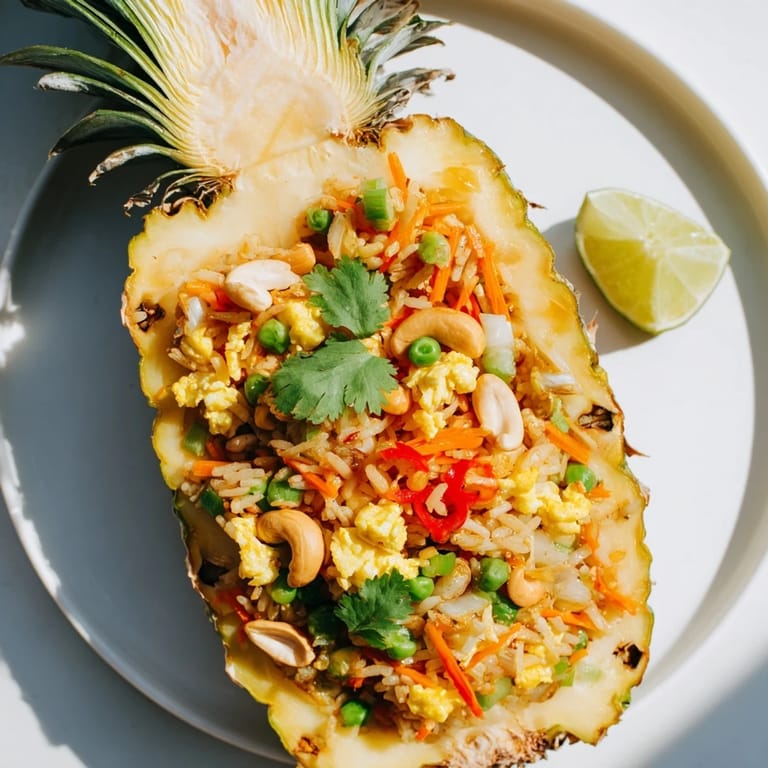
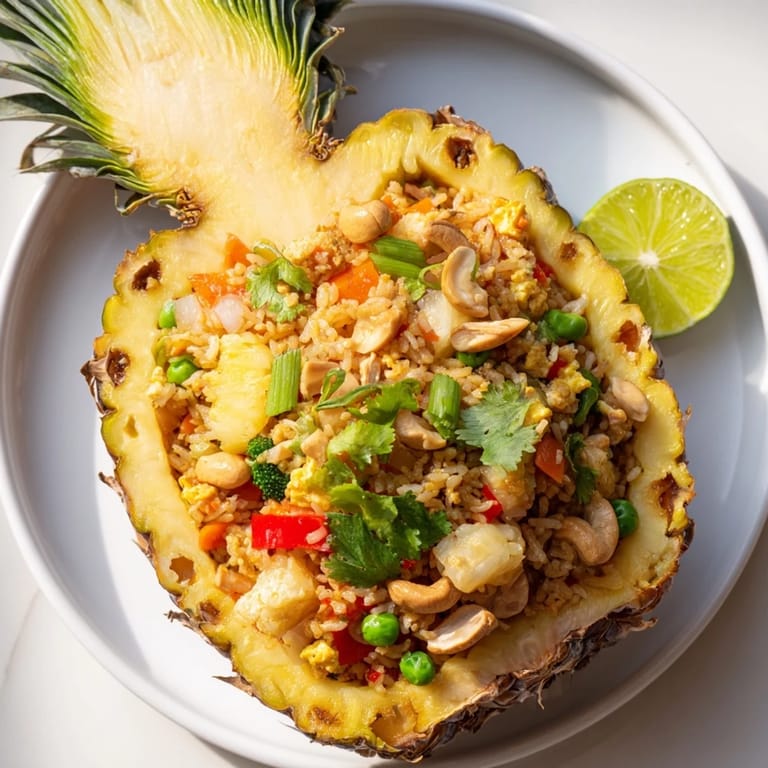
- Spoon the fragrant rice into your hollowed pineapple halves, piling it generously since the shells are sturdy. Top with fresh cilantro and serve with lime wedges on the side—a squeeze of lime at the table makes everything pop.
 Save
Save My partner watched me finish plating and said, 'That looks too pretty to eat,' and I laughed because the best part of cooking for people you love is that moment right before they dig in, when the food is still perfect and full of promise. We squeezed lime over ours and dug in, and the way the warm rice contrasted with cool pineapple, the cashew crunch, the cilantro freshness—it all felt like exactly what we needed that night.
Why This Dish Came Into My Rotation
Pineapple fried rice sits at this beautiful intersection of vegetarian-friendly, genuinely impressive, and somehow easier than it looks. I've made it for dinner parties, weeknight dinners with my partner, and once even as a late-night snack after the movies. Every single time, it feels slightly special because of that pineapple presentation, but it's never fussy or stressful to pull together. It's become my go-to recipe when I want to feel like a competent cook without spending hours in the kitchen.
Kitchen Wisdom I've Learned Along the Way
The wok is your friend here, but honestly, any large, heavy skillet will work if that's what you have. The key is surface area and heat retention—you want everything to cook quickly and evenly, not steam in its own moisture. I used to think you needed a fancy pan to make stir-fries properly, but then I made this in my grandmother's old cast iron and it was just as good, maybe better because of how the heat distributed. That taught me to stop second-guessing my tools and trust the technique instead.
Making It Your Own (And Some Last Thoughts)
This recipe is infinitely adaptable, and I've found that the magic is in understanding the balance rather than following it rigidly. Once you've made it once or twice, you'll develop instincts about what your version should taste like. Maybe you love it spicier, so you add Thai chili sauce or fresh bird's eye chilis. Maybe you're always reaching for the cashews first, so you double them. Maybe the raisins feel too sweet to you, so you swap them for something savory. The pineapple shell is your canvas—respect the base technique and the rest is up to you.
- Protein additions like shrimp, chicken, or crispy tofu turn this from a vegetarian side into a complete meal that still feels light.
- If you're meal prepping, you can prepare the vegetables ahead and even carve the pineapple shells the morning of, storing them in the fridge in a plastic bag.
- Serve this with a simple cucumber salad and Thai iced tea, and you've got yourself a restaurant-quality meal at home.
 Save
Save This dish has a way of making ordinary evenings feel a little more intentional, a little more like you showed up for the people at your table. That's really all any of us are trying to do in the kitchen—create something beautiful and nourishing and share it with the people we care about.
Recipe FAQ
- → Can I make this dish vegan?
Yes, omit the eggs and fish sauce, replacing fish sauce with tamari or soy sauce for a fully plant-based variation.
- → What type of rice works best?
Day-old cooked jasmine rice is ideal as it prevents mushiness and helps achieve the perfect stir-fry texture.
- → How do I hollow out the pineapple properly?
Slice the pineapple in half lengthwise, keep the shell intact, and carefully scoop out the flesh, leaving about a half-inch shell to hold the rice.
- → Can I add protein to this dish?
Yes, cooked chicken, shrimp, or tofu can be added during stir-frying for extra protein and flavor variety.
- → What garnishes complement the dish?
Fresh cilantro leaves and lime wedges add brightness and freshness, enhancing the overall flavor experience.
- → Is this dish gluten-free?
Use tamari instead of soy sauce to make it gluten-free. Double-check all seasonings for hidden gluten ingredients.