 Save
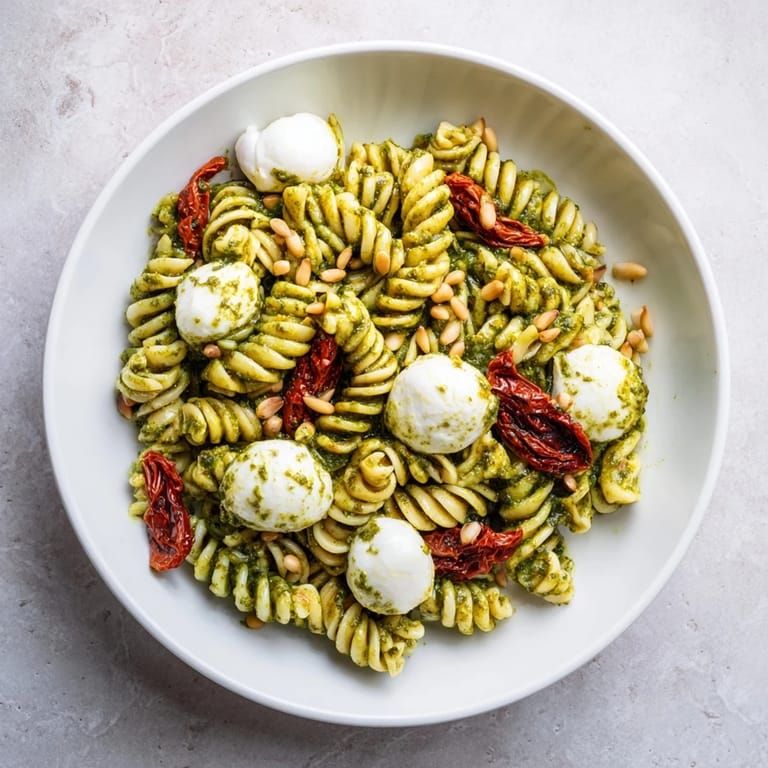
Save There's a moment every summer when I stop fighting the heat and decide to cook something that actually celebrates it. That's when this pesto pasta salad enters my kitchen—no oven required, no hot stove torture. I learned to make this version after a friend casually tossed together whatever she had on a Tuesday afternoon, and I watched it disappear faster than anything I'd ever spent hours perfecting. The basil was bright, the mozzarella was cool, and something about the combination just made sense.
I made this for a beach picnic once where someone forgot to bring a dish, and I assembled it in someone's vacation kitchen with groceries from a tiny market. The pasta absorbed the pesto so perfectly that people kept asking what was different about it—turns out, it was just that everything was fresh and the proportions were honest. That's when I realized this salad isn't about being fancy; it's about letting good ingredients speak for themselves.
Ingredients
- Short pasta (fusilli, penne, or farfalle): 350g—the shapes trap pesto in their curves, so skip the long strands and let the ridges do the work.
- Basil pesto: 100g—use store-bought without guilt if your basil supply is questionable; honestly, life's too short to make pesto when someone else already perfected it.
- Sun-dried tomatoes: 100g, drained and sliced—they add a concentrated sweetness and chewy texture that fresh tomatoes can't match in this context.
- Fresh mozzarella: 200g, in balls or chunks—the creaminess matters here, so don't substitute with aged cheese or you'll change the entire personality of the dish.
- Pine nuts: 40g, lightly toasted—a quick toast in a dry pan wakes them up and prevents that flat, waxy taste from raw nuts.
- Baby spinach: 50g, optional but recommended—it wilts slightly from the warm pasta and adds an earthy note that balances the richness.
- Extra virgin olive oil: 2 tbsp—this isn't just liquid; it helps emulsify the pesto and makes the whole thing silkier.
- Lemon zest: from 1 lemon—optional but it's the secret whisper that ties everything together and cuts through the richness.
- Salt and freshly ground black pepper: to taste—taste as you go because pesto varies wildly in salt content depending on the brand.
Tired of Takeout? 🥡
Get 10 meals you can make faster than delivery arrives. Seriously.
One email. No spam. Unsubscribe anytime.
Instructions
- Boil the pasta until it's just tender:
- Cook it in salted water according to the package timing, but aim for al dente—pasta that still has a tiny bit of resistance when you bite it. Drain it, then rinse under cold running water while stirring gently with a fork so it doesn't clump together.
- Dress the pasta while it's still warm:
- Toss the cooled pasta with the pesto and olive oil in a large bowl, working from the bottom up with a wooden spoon so every strand gets coated. You're not making a cream sauce; you're building flavor into every piece.
- Add the rest of your ingredients gently:
- Fold in the sun-dried tomatoes, mozzarella, pine nuts, and spinach with a light hand—these are delicate things and you want them to stay recognizable, not broken into sad fragments. Be tender with the mozzarella especially.
- Season and taste:
- Add salt, pepper, and lemon zest if you're using it, then taste a forkful. Adjust whatever feels flat—usually it's salt or more lemon zest that fixes it.
- Chill or serve:
- If you have time, let it sit in the fridge for an hour so the flavors marry and it becomes properly cold. If you're hungry now, eat it; both ways are completely valid.
 Save
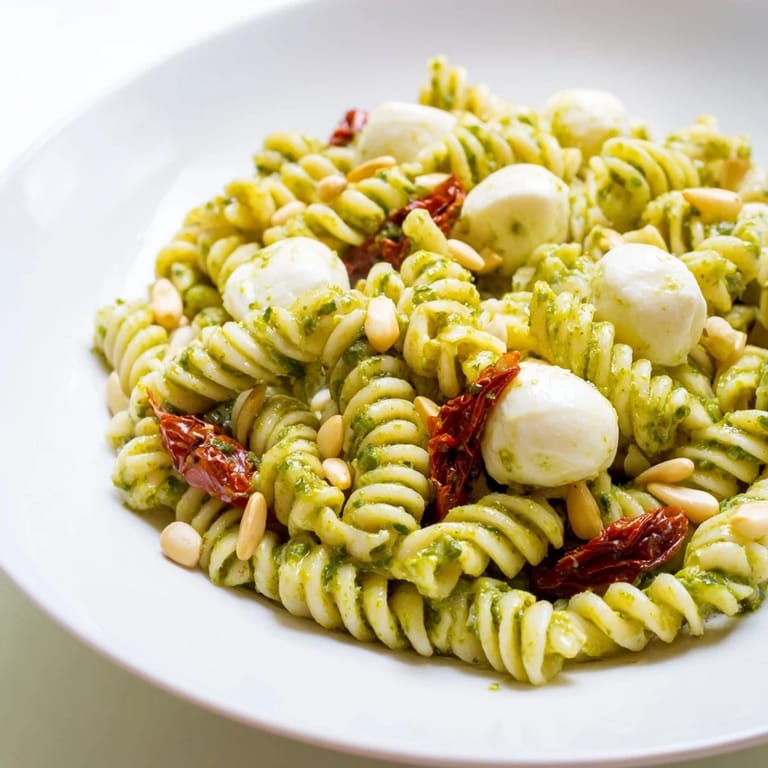
Save My neighbor once asked me to bring this to a neighborhood dinner, and I watched someone go back for thirds while carrying a conversation. That's when I understood the difference between a recipe that works and one that people actually remember. It's the kind of dish that makes you look like you're not trying, which is exactly the point.
Why This Works in Summer
There's no heat involved after the pasta finishes cooking, which means your kitchen stays cool and you're not standing over a stove while the temperature outside is already doing its worst. Cold pasta salad also improves as it sits—the flavors deepen, the mozzarella softens slightly, and by the time you eat it a few hours later, it tastes more intentional than it did fresh. This is one of those rare dishes that actually benefits from patience.
Building Flavor Without Fussing
Pesto is a shortcut that doesn't feel like cheating because it's already made from good things—basil, garlic, pine nuts, cheese, and olive oil all doing exactly what they should. The sun-dried tomatoes add umami and sweetness without needing you to do anything but drain them. Fresh mozzarella stays creamy without melting into the salad, which keeps everything textured and interesting instead of turning into a uniform paste.
Making It Your Own
The beauty of this salad is that it forgives small changes and actually invites them. Add fresh arugula or chopped basil if you want more green earthiness, swap walnuts or almonds for the pine nuts if you want something cheaper or if someone at your table has a nut allergy, use roasted red peppers instead of sun-dried tomatoes if that's what you have on hand. The structure is solid enough to accommodate your preferences without falling apart.
- A handful of chopped fresh basil stirred in just before serving adds brightness that store-bought pesto sometimes loses.
- If your mozzarella balls are large, cut them in half so they're easier to eat and distribute more evenly through the salad.
- Make it the morning of if you're bringing it somewhere, so it has time to chill and the flavors have time to settle into each other.
 Save
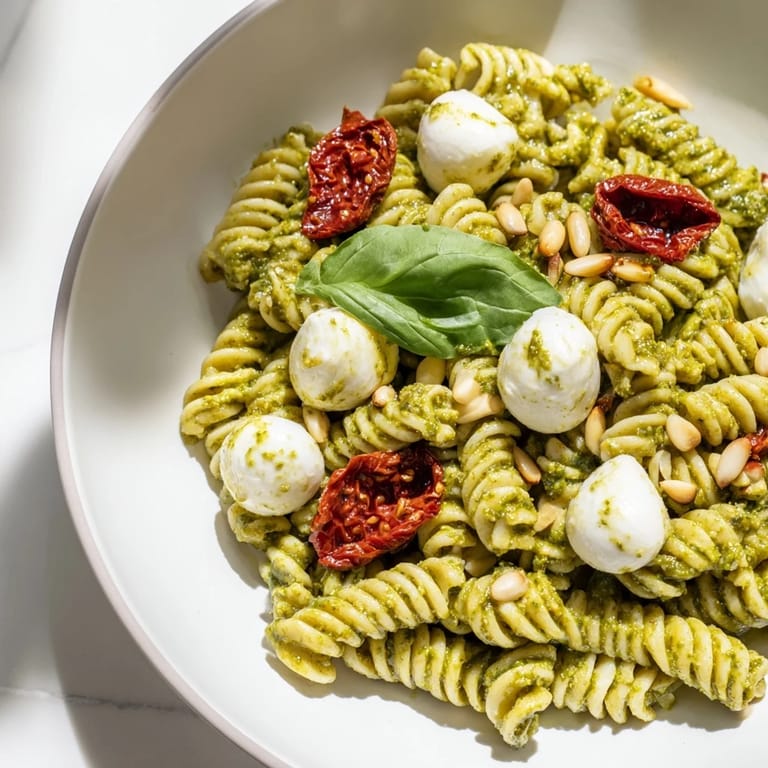
Save This is the kind of recipe that reminds you why you cook in the first place—not to impress anyone, but because feeding people something that tastes like summer and care is a small act that matters. Make it when you have good basil, good mozzarella, and time to let it chill.
Recipe FAQ
- → What type of pasta works best?
Short pasta like fusilli, penne, or farfalle hold the sauce well and provide a pleasing texture.
- → Can I use homemade pesto?
Absolutely. Homemade basil pesto enhances flavor and lets you customize ingredients and consistency.
- → How should I toast pine nuts?
Toast them lightly in a dry skillet over medium heat, stirring frequently until golden and fragrant.
- → Is it better served chilled or at room temperature?
Both work well; chilling intensifies flavors, while room temperature serves the freshness and texture perfectly.
- → Can I substitute other nuts for pine nuts?
Yes, toasted walnuts or almonds make excellent alternatives adding different textures and flavor notes.