 Save
Save I'll never forget the December evening when my neighbor challenged me to create something as stunning as the ballet we'd just seen. She wanted a charcuterie board, but one that matched the theatrical grandeur of The Nutcracker Suite we'd caught at the theater downtown. I spent the next week sketching color palettes and hunting down the most vibrant ingredients I could find. What started as an ambitious idea became an obsession—arranging strawberries like precious jewels, draping prosciutto like silk ribbons, stacking pedestals like a stage set. When I unveiled it at her holiday gathering, the entire room fell silent for just a moment before erupting in delighted conversation. That board became more than food; it became theater you could taste.
I made this for my first dinner party after moving to a new city, when I barely knew anyone and was terrified of making a terrible impression. One of my guests—a woman I'd only met once before—walked in, saw the board, and immediately felt welcomed. She later told me it made her feel like I'd really thought about making her comfortable. That board did the talking for me when my words weren't enough. Now whenever someone asks me for entertaining advice, this is the first thing I recommend.
Ingredients
- Strawberries, hulled and halved (1 cup): These are your red show-stoppers; pick the ones with the deepest color because they photograph like rubies. I learned the hard way that large, uniform berries matter more than quantity here.
- Cherry tomatoes (1 cup): Use the smallest, sweetest ones you can find—they should taste like candy, not water. This is where quality truly matters.
- Pomegranate arils (1/2 cup): These are pure joy to scatter around. Their tartness cuts through the richness of the cheeses and meats beautifully.
- Red pepper hummus (8 oz): This acts as your red section's anchor and mood-setter. The earthy warmth makes people actually eat something healthy at a party.
- Dried cranberries (1/2 cup): These fill gaps like edible jewels and provide a chewy surprise that keeps people reaching back.
- Sliced spicy soppressata (6 oz): The heat in this cured meat makes the whole board feel more sophisticated. Let it come to room temperature just before serving for the best flavor.
- Red wax Gouda, cubed (6 oz): This cheese has a creamy center and slight sweetness that makes people ask what it is. That moment of discovery is worth everything.
- Green grapes, halved (1 cup): Halving them might seem fussy, but it creates more surface area and looks intentional rather than lazy. Your guests will notice.
- Sugar snap peas (1 cup): Keep these crisp and cold; they provide the crunch that makes the board interactive and fun to eat from.
- Castelvetrano olives, pitted (1/2 cup): These green olives are buttery and almost sweet. They're miles better than regular green olives and worth seeking out.
- Pesto dip (8 oz): This is your green section's heart. I always make mine fresh if I can, but a quality store-bought version works beautifully too.
- Roasted pistachios, shelled (1/2 cup): The vibrant green color is non-negotiable here. These nuts add an elegant crunch and their color deepens the whole green section.
- Sliced cucumber (6 oz): Cut these thin and keep them cold until the last moment—they wilt quickly but add a refreshing element that people don't expect.
- Herbed goat cheese, sliced into coins (6 oz): Soft and tangy, these coins create beautiful little rosettes when arranged. They're like tiny flavor bursts.
- Golden cherry tomatoes (1 cup): These are your yellow section's sunshine. Their sweetness is different from red tomatoes, almost floral.
- Fresh pineapple, cubed (1 cup): The tropical sweetness bridges the gap between savory and sweet perfectly. Cut these just before assembly to keep them juicy.
- Dried apricots (1/2 cup): These provide concentrated sweetness and a beautiful golden hue. I soak mine for 10 minutes before using to plump them up slightly.
- Honeycomb or honey drizzle (8 oz): This is your gold section's crowning glory. The way it glistens under good lighting is pure magic.
- Smoked cheddar, cubed (6 oz): The smokiness adds depth and makes this cheese taste like autumn. It's my favorite part of the gold section.
- Marcona almonds (1/2 cup): These are buttery and feel luxurious. They're worth the splurge for a board like this.
- Thin-sliced prosciutto (6 oz): Drape these gently in folds rather than laying them flat—it looks more intentional and takes up visual space beautifully.
- Cauliflower florets (1 cup): Keep these small and arranged in tight clusters for a snowy, elegant look. Blanch them lightly if you want them softer.
- White cheddar cubes (1 cup): Sharp and clean-tasting, these cubes balance the sweetness coming from the white chocolate and pretzels.
- Yogurt-covered pretzels (1/2 cup): These add a sweet-salty element that feels indulgent. Don't add these too early or they'll soften.
- Whipped ricotta (8 oz): Creamy and mild, this is the gentle heart of your white section. I sometimes add a whisper of honey to mine.
- Macadamia nuts (1/2 cup): These are the most buttery, luxurious nuts available. They feel like a special treat scattered across white elements.
- White chocolate bark, broken into shards (1/2 cup): This adds an unexpected sweet element and catches the light beautifully. Add these last so they don't melt.
- Sliced turkey breast (6 oz, optional): If you use this, keep it cold and add it at the very end. It tends to dry out if exposed too long.
- Large baguette, sliced and toasted (1): Toasting these gives them texture and makes them less likely to go soggy. Do this just before you start assembling.
- Assorted crackers (1 box): Mix neutral and seeded varieties so people have choices. This is where you hide the vegetables for anyone who wants them on crackers.
- Fresh herbs for garnish (rosemary, thyme, mint): These are your final flourish. Their aroma ties everything together and makes the board feel alive and intentional.
- Edible flowers (pansies, nasturtiums): These transform a charcuterie board into edible art. They're completely optional but worth the hunt.
Tired of Takeout? 🥡
Get 10 meals you can make faster than delivery arrives. Seriously.
One email. No spam. Unsubscribe anytime.
Instructions
- Build Your Stage:
- Start by gathering all your pedestals and cake stands of varying heights—you want at least three different levels to create that dramatic, tiered effect. Arrange them on a large, sturdy table, placing the tallest one toward the back or center and letting shorter ones cascade forward like a staircase. Cover all surfaces with parchment paper or cheese paper, which not only keeps everything food-safe but makes cleanup wonderfully easy. Step back and look at the overall structure before adding a single ingredient. This is your stage, and every item will perform on it.
- Map Your Color Zones:
- Before you touch a single strawberry, mentally divide your pedestals and boards into four distinct sections: red, green, gold, and white. Imagine you're a stage designer mapping out lighting zones. Identify where each color section will live, and place a small bowl or ramekin in the center of each zone as an anchor for your dips and spreads. This planning step takes five minutes but saves you from rearranging everything halfway through.
- Compose the Red Section:
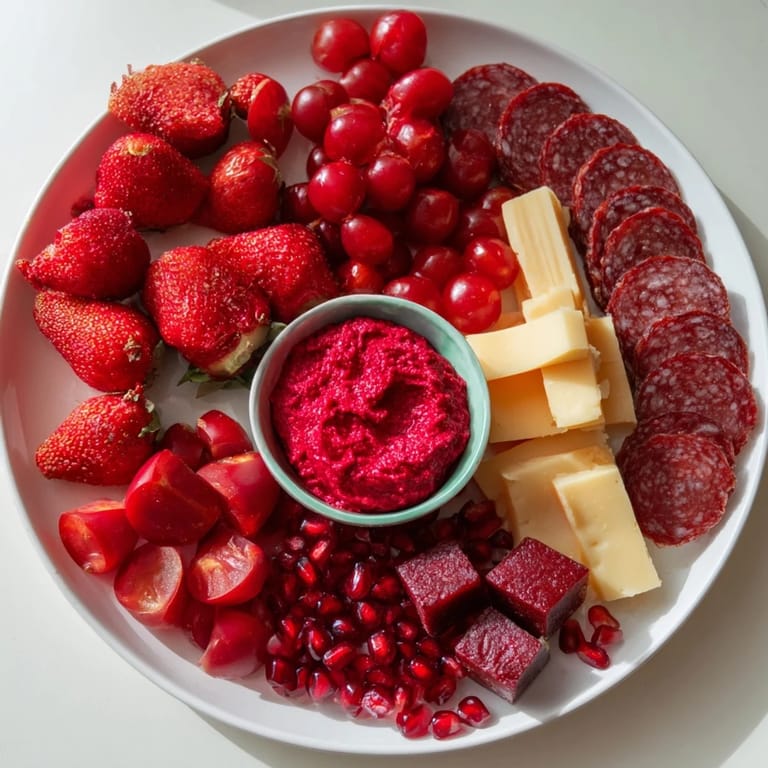
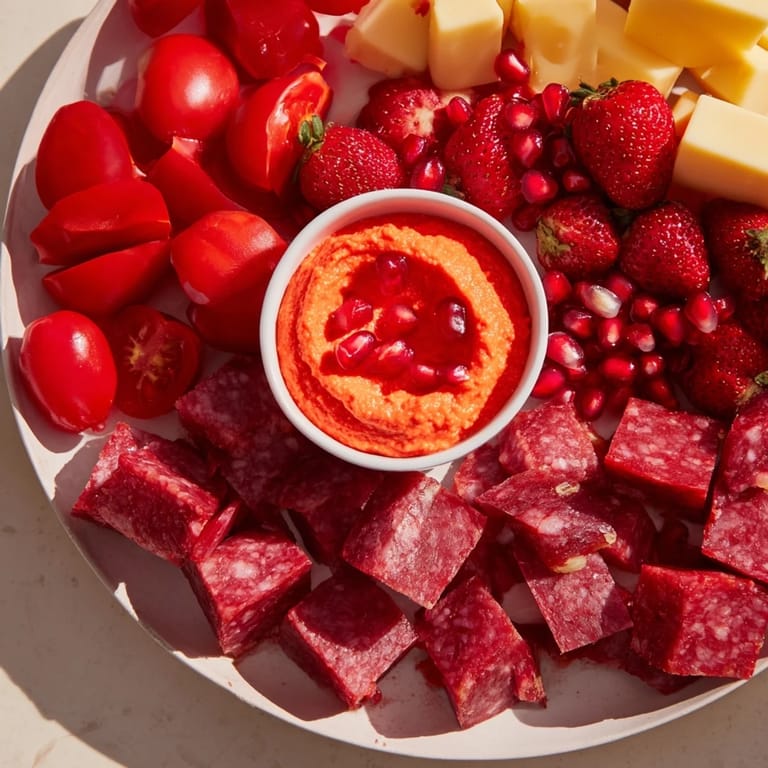
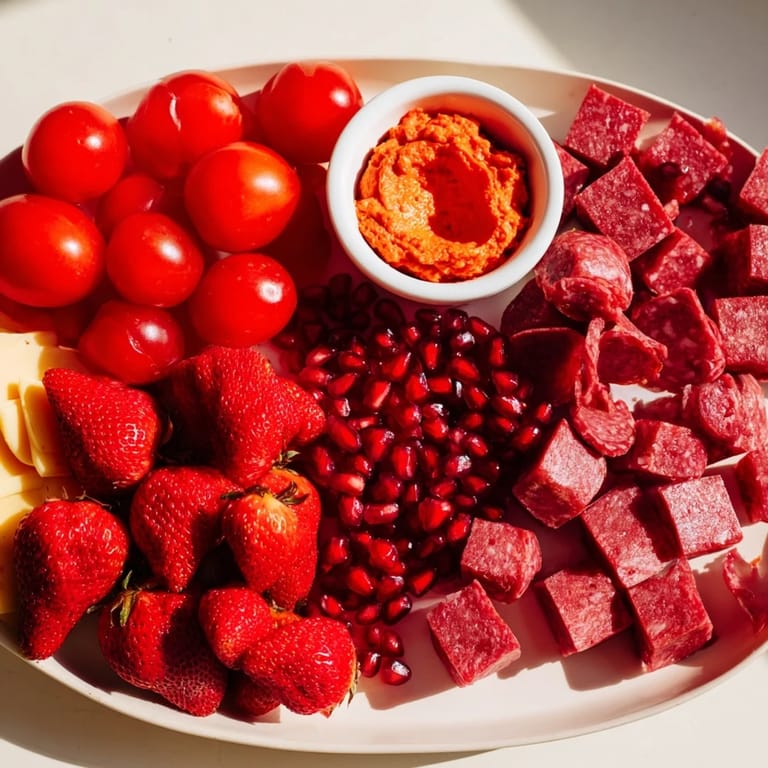
- Start with your red pepper hummus in a small bowl at the center of the red zone—this is your anchor, your focal point, your star. Now imagine you're placing jewels around a crown. Fan out the strawberries so their cut sides face forward, showing off their beautiful pink interiors. Scatter the cherry tomatoes like precious gemstones, ensuring they catch the light. Drop pomegranate arils into gaps like tiny rubies. Fold the soppressata slices gently and tuck them in for color contrast, then cube the red Gouda and position it so you can see the creamy interior. Fill any remaining gaps with dried cranberries, and finish with a few edible flowers if you have them. Step back. This section should look lush and intentional, with every element visible and nothing crowded together.
- Build the Green Section:
- Place your pesto dip in its bowl as the verdant heart of this zone. Arrange green grapes in gentle arcs around the dip, letting them cascade naturally. Position sugar snap peas at various angles to catch light and show off their bright color. Tuck in the Castelvetrano olives—these buttery gems deserve individual recognition, not to be buried. Arrange the herbed goat cheese coins in neat rows or delicate rosettes. Sprinkle pistachios over the entire section like edible emeralds. Finish with fresh mint sprigs that will release their aroma when guests lean in to admire the board. This section should feel fresh, verdant, and alive with varying shades of green and contrasting textures.
- Create the Golden Section:
- Set your honeycomb or honey drizzle in a bowl at the center—this is liquid gold, your section's warmth. Fan the golden cherry tomatoes around it like a sunrise, then scatter the fresh pineapple cubes to add a tropical brightness. Gently fold the prosciutto so it creates soft, delicate folds that catch the light beautifully—this is where elegance lives. Cube the smoked cheddar and position it where the color deepens with the ham's shadow. Intermingle the dried apricots and Marcona almonds, which should gleam like they're lit from within. Finish with fresh thyme sprigs that smell like a summer garden. This section should glow with warmth, the honey glistening like stage lighting, every element glowing with golden hues.
- Design the White Section:
- Anchor this section with whipped ricotta in a small bowl at its heart. Arrange cauliflower florets in tight clusters that create volume and that snowy appearance. Add white cheddar cubes in groups so their sharpness stands out. Scatter yogurt-covered pretzels for sweetness and crunch, but add these last or they'll soften. Nestle macadamia nuts throughout, and add shards of white chocolate bark at the very end so they don't melt from the warmth of the other ingredients. If using turkey breast, roll it gently and tuck it in now. Finish with rosemary sprigs and white edible flowers if you can find them. This section should feel crisp, clean, and elegant—a study in whites with unexpected textures.
- Unify the Whole Creation:
- Now step back and view your work as a complete picture. Slot toasted baguette slices and crackers between sections where they can be easily reached. Distribute fresh herb sprigs and edible flowers throughout the entire board to create visual continuity and add aromatic depth. Adjust heights if needed, rotate items for better balance and symmetry. This is your final compositional moment. The entire board should look theatrical, opulent, and meticulously organized—like something that belongs on stage.
- Present at Its Peak:
- The board is best served at room temperature for maximum flavor and texture, but keep it covered loosely with plastic wrap until the moment you reveal it. Avoid refrigerating for more than two hours before service—cold dulls flavors and condensation can make things soggy. When you bring it out, pause for just a moment. Let people see it before they eat it. That moment of intake of breath, that silent appreciation—that's what you've created. The entire display should be aromatic, visually dazzling, and offer a journey of textures: crunchy, creamy, juicy, and tender.
 Save
Save The moment that changed everything for me came when I overheard someone at a party tell their friend, 'I'm going to remember this board forever.' They weren't talking about how it tasted—though it was delicious. They were talking about how it made them feel when they walked into the room. That's when I understood that a board like this is really about creating a memory, not just serving food. It's about saying to your guests, 'I spent time thinking about you, about what would make you happy, about creating beauty in an ordinary moment.' That's what this board truly is: an edible love letter.
The Power of Presentation
I've learned that people eat with their eyes first, and this board gives them a visual feast before they take a single bite. The moment you understand this—that the way something looks changes how it tastes—you stop making just food and start creating experiences. The color-blocking isn't arbitrary; it's intentional theater. When you group reds together, they become more vibrant. When you let greens cluster naturally, they feel like an edible garden. When you arrange whites with intention, they feel luxurious rather than boring. This is why professional boards are arranged the way they are. It's not fussy; it's strategic. Every choice you make about placement affects the story the board tells.
Sourcing Like a Board Artist
The real secret to a stunning board isn't the technique—it's the ingredients themselves. I've learned to shop for a board like I'm shopping for a gallery opening. Each item needs to be the best version of itself. Those strawberries should be the deepest red in the market, not just any red strawberry. That cheese should be one that makes you pause and really taste it. Those crackers should have texture and interest. When you start viewing your ingredients this way, the board stops being a charcuterie board and becomes a curation of the best things you could find. And yes, this means spending a little more than usual. But your guests will taste the difference in every single element, and that investment pays for itself in the joy on their faces.
Mastering the Day-of Timing
Timing is where most boards go wrong, and I've learned this through experience. Here's what I know works: prep all your non-perishable items the day before—toast your bread, break your chocolate, arrange your nuts into little piles. On the day of, give yourself a full hour to assemble, and start with the most temperature-sensitive items last. Meats and soft cheeses go on last, herbs and flowers go on moments before guests arrive. This isn't about rushing; it's about strategy. A board assembled this way stays fresh and gorgeous for the entire party, while one assembled too early starts to look tired by the time people are hungry. The goal is for your board to be at its absolute peak exactly when your guests are ready to enjoy it.
- Assemble your structure and anchor bowls the evening before, then store the base components in the refrigerator overnight
- Prepare your toasted bread, nuts, and any items that won't wilt or soften at least 2-3 hours before guests arrive
- Wait until no more than 30 minutes before serving to add fresh herbs, flowers, and any items prone to moisture or wilting
 Save
Save This board will become something you make again and again, each time a little more confidently. It's one of those recipes that teaches you about balance, color, and the magic that happens when simple, beautiful ingredients come together with intention.
Recipe FAQ
- → How do I assemble the multi-tier display?
Start with sturdy pedestals of varying heights centered to create cascading layers. Cover with parchment or cheese paper for cleanliness, then arrange each color section on the different levels for a theatrical effect.
- → What is best for color-blocking the board?
Divide the board into distinct red, green, gold/yellow, and white sections using fresh fruits, cheeses, cured meats, nuts, and dips to create vibrant, organized zones that enhance visual appeal.
- → Can this be adapted for vegetarians?
Yes, meats can be omitted or substituted with marinated tofu, plant-based cheeses, and savory dips to maintain texture and flavor variety.
- → How should leftovers be stored?
Store leftovers in airtight containers in the refrigerator for up to two days. Keep honeycomb, nuts, and crackers separate to avoid sogginess.
- → What tips ensure freshness during serving?
Serve at room temperature for best flavor. If outdoors, use cold packs beneath trays and replenish elements regularly to maintain freshness and visual appeal.
- → What utensils are recommended for assembling the board?
Use small bowls for dips, cheese knives, spreaders, paring knives, tongs, and serving spoons along with food-safe gloves and parchment to ensure precise and hygienic assembly.