 Save
Save The steam rising from my first bowl of miso soup at a tiny Tokyo counter changed how I thought about comfort food. I was cold, tired from walking all day, and that simple broth warmed me from the inside out in three spoonfuls.
My roommate in college taught me that the secret is never boiling the miso. She caught me once, hovering over the pot with the miso ready to dump in, and gently guided my hand away from the heat.
Ingredients
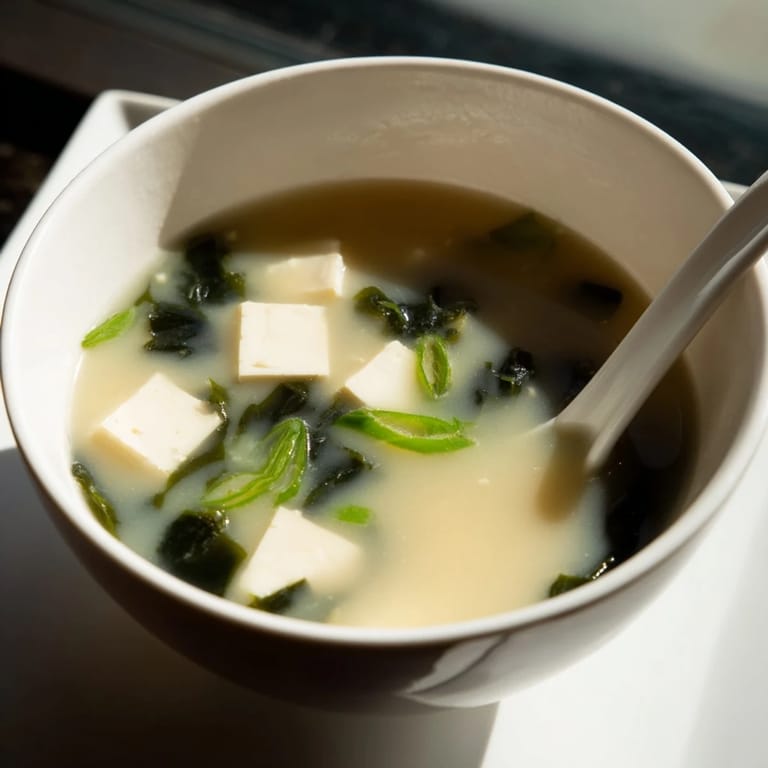
- 4 cups dashi stock: The foundation of the entire soup, homemade dashi brings a depth you cannot get from instant granules
- 3 tablespoons miso paste: White miso gives a milder sweetness while yellow adds more earthiness, either works beautifully here
- 200 g silken tofu: Silken tofu is essential for that delicate mouthfeel that practically melts on your tongue
- 2 tablespoons dried wakame seaweed: This expands dramatically when soaked, so a little goes a long way
- 2 scallions: Fresh scallions add a bright crunch that cuts through the rich broth perfectly
Tired of Takeout? 🥡
Get 10 meals you can make faster than delivery arrives. Seriously.
One email. No spam. Unsubscribe anytime.
Instructions
- Prepare the broth:
- Bring the dashi to a gentle simmer, watching for tiny bubbles to form around the edges
- Soak the seaweed:
- Place the dried wakame in cold water for about 5 minutes until it softens and plumps up
- Dissolve the miso:
- Whisk the miso paste with a ladleful of hot dashi in a separate bowl until completely smooth
- Add the tofu and seaweed:
- Gently lower the tofu cubes into the simmering broth, then add the drained wakame
- Finish with care:
- Remove the pan from heat completely before stirring in the miso mixture
- Serve immediately:
- Ladle the soup into bowls and scatter the sliced scallions over the top
 Save
Save This recipe became my go-to sick day food after a particularly rough flu season when nothing else tasted right.
Building A Better Broth
I have found that mixing equal parts white and red miso creates a complexity that surprises people who think miso soup is one note. The white brings sweetness while the red adds a deeper, almost fermented richness that lingers.
The Tofu Question
Silken tofu can feel intimidating because it breaks so easily, but that fragility is exactly what makes it perfect here. Use a sharp knife and cut straight down without sawing motions to keep those cubes intact.
Make It Your Own
The base recipe is beautiful on its own, but miso soup welcomes additions like an old friend welcomes you home.
- Thinly sliced shiitake mushrooms add meaty texture without overwhelming the delicate broth
- A handful of spinach dropped in during the last minute wilts perfectly and adds color
- A teaspoon of sesame oil swirled in right before serving brings a nutty warmth on colder days
 Save
Save There is something profoundly restorative about a bowl of miso soup, like a warm hug in edible form.
Recipe FAQ
- → What type of miso works best for this soup?
White or yellow miso paste offers a milder, sweeter flavor ideal for everyday bowls. Red miso provides deeper, more intense umami. Mixing white and red miso creates balanced complexity.
- → Why shouldn't miso be boiled?
Boiling miso destroys beneficial probiotics and can create bitter, off flavors. The fermented paste requires only gentle heat to dissolve properly while preserving its delicate enzymatic properties and nutritional benefits.
- → Can this be made vegan?
Yes. Substitute traditional dashi made from bonito flakes with kombu and shiitake mushroom stock. Most miso pastes are naturally plant-based, though always verify labels for hidden fish-derived ingredients.
- → How should leftover soup be stored?
Miso soup keeps refrigerated for 2-3 days in airtight containers. Reheat gently without boiling—the miso flavor intensifies over time. Tofu may soften further but remains perfectly enjoyable.
- → What vegetables can be added?
Sliced shiitake mushrooms, spinach, bok choy, or daikon radish complement the base beautifully. Add heartier vegetables during simmering, while delicate greens should be stirred in just before serving.