 Save
Save There's something about the smell of lemon and chicken hitting a hot pan that instantly lifts my mood, no matter what kind of day I've had. My neighbor brought over a pot of this orzo one spring evening, and I was skeptical at first—pasta with spinach sounded so simple—but that first bite changed everything. The creamy, citrusy warmth of it felt both elegant and deeply comforting, like she'd unlocked some Mediterranean secret in her kitchen. I asked for the recipe that night, and now it's become my go-to when I want to impress without the stress.
I made this for my roommate when she was going through a rough patch, and watching her face soften at that first spoonful reminded me why cooking for people matters. She went back for seconds without asking, and that quiet moment of contentment felt like the whole point of being in the kitchen in the first place.
Ingredients
- Chicken breasts or thighs, cut into bite-sized pieces: Thighs stay juicier if you're not watching them like a hawk, but breasts work beautifully if you don't overcook them—aim for that moment when they're just cooked through.
- Orzo pasta: Those tiny rice-shaped noodles absorb all the broth and become almost creamy on their own, which is why this dish feels so luxurious.
- Fresh baby spinach: It wilts down so much faster than you'd expect, so don't be shy with the handful you toss in.
- Yellow onion, finely diced: The sweetness of the onion balances the tartness of the lemon perfectly.
- Garlic, minced: Just thirty seconds in the hot oil is enough to wake it up without letting it burn—timing matters here.
- Low-sodium chicken broth: This is your flavor foundation, so use something you'd actually drink on its own.
- Whole milk or half-and-half: This is what transforms the dish from simple pasta into something that feels indulgent.
- Lemon zest and juice: Use a microplane for the zest if you have one—it makes a real difference in how evenly the lemon distributes.
- Parmesan cheese, grated: Freshly grated melts more smoothly than the pre-grated kind, but honestly, either works in a pinch.
- Olive oil: Split into two tablespoons so you can brown the chicken properly without crowding the pan.
- Salt, black pepper, and chili flakes: The flakes are optional, but a tiny pinch adds a whisper of heat that you won't quite identify but will absolutely love.
- Fresh parsley, chopped: This is for garnish, and it feels like a small celebration on top of each bowl.
Tired of Takeout? 🥡
Get 10 meals you can make faster than delivery arrives. Seriously.
One email. No spam. Unsubscribe anytime.
Instructions
- Sear the chicken until golden:
- Heat a tablespoon of olive oil in your largest skillet over medium-high heat and add the chicken pieces in a single layer. Season with salt and pepper, and let them sit for a moment before stirring—you're looking for a light golden crust that tells you they've developed flavor. After five to seven minutes, they should be cooked through and smell absolutely irresistible.
- Build the flavor base:
- Add the second tablespoon of oil to the same pan and sauté the diced onion until it turns translucent and sweet, about two to three minutes. Then add the minced garlic and cook just until fragrant—thirty seconds is truly all you need, or it'll turn bitter and regretful.
- Toast the orzo for texture:
- Pour in the dry orzo and stir constantly for about a minute, letting it pick up some color from the heat. This toasting step is what gives the pasta a subtle nutty undertone that people always ask about.
- Simmer until creamy:
- Pour in the chicken broth and bring it to a gentle boil, then lower the heat to medium-low and let it simmer, stirring occasionally, for eight to ten minutes. The orzo will absorb the liquid slowly, and you'll watch it transform from swimming in broth to tender and almost creamy.
- Bring everything back together:
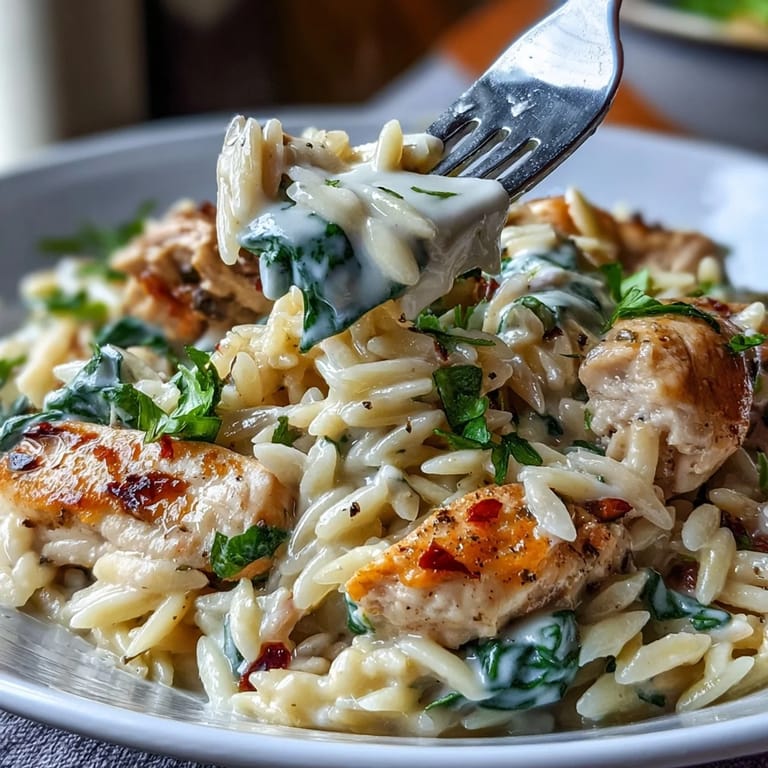
- Return the cooked chicken to the skillet and add the fresh spinach, stirring until the spinach has wilted into tender ribbons, about two minutes. Everything's warm, everything's ready, and the hard part is done.
- Finish with brightness and creaminess:
- Stir in the lemon zest, lemon juice, milk, and Parmesan cheese, stirring until everything is evenly distributed and creamy, about two to three minutes. Taste it now and adjust the salt and pepper to your preference—this is your moment to make it exactly how you want it.
- Serve with joy:
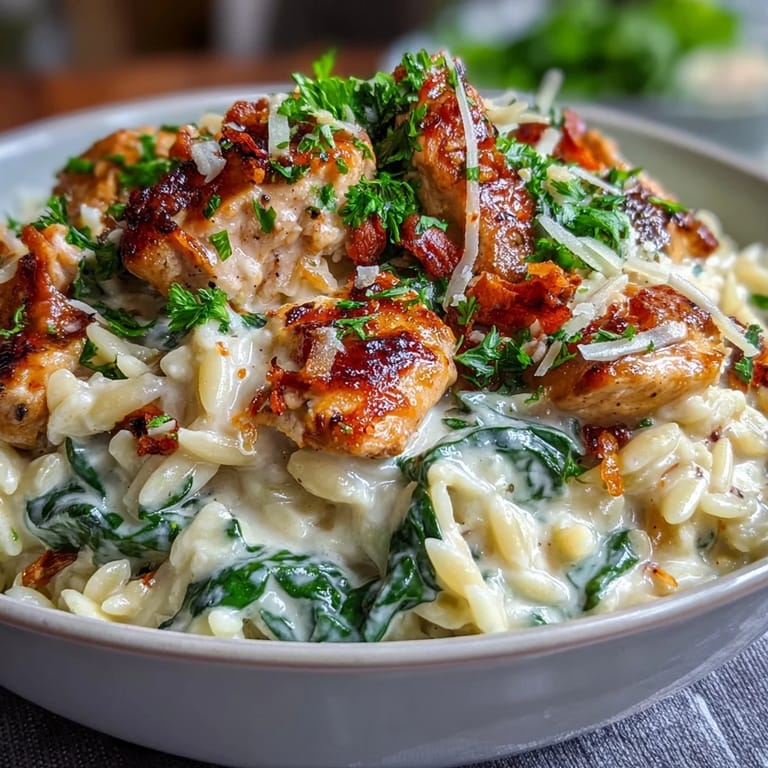
- Divide into bowls, garnish with fresh parsley and extra Parmesan, and serve immediately while everything is still warm and the lemon flavor is bright.
 Save
Save What I love most about cooking this dish is that moment when you look at the pan and realize it's not just dinner—it's spring on a plate, it's health without sacrifice, it's proof that the simplest things can feel like celebration. That's when I know I'll be making it again next week.
The Lemon Does All the Work
The first time I made this, I was stingy with the lemon, thinking the mild creaminess was the star. But then I added extra zest at the last minute out of desperation, and suddenly everything clicked—the lemon woke up every flavor and made the dish feel alive instead of heavy. Now I always zest an extra half lemon just to have it on the side, in case someone wants to push the brightness even further. It's remarkable how one citrus fruit can be the difference between a nice dinner and one people actually remember.
Timing the Pasta Just Right
Orzo cooks differently than you'd expect because it's absorbing broth the whole time, not just boiling in water, so the timing is a little more forgiving than with regular pasta. I usually start checking at the eight-minute mark by fishing out a single piece and tasting it—you want it tender but still with a whisper of resistance. The genius of the dish is that the pasta finishes right when the liquid is almost gone, so you don't have to drain anything, and every last bit of flavor stays in the pan where it belongs.
Make It Your Own
This recipe feels structured, but it's actually incredibly flexible once you understand what's happening—the chicken and orzo are the backbone, but everything else can shift with what you have and what you're craving. I've made it with thighs when I had them, with regular pasta shapes when orzo wasn't in the pantry, and even without the milk when I was out, and each version tasted honestly wonderful. The beauty is that the technique stays the same, so you can improvise without second-guessing yourself.
- If you don't have fresh spinach, frozen works perfectly—just thaw it first and squeeze out the excess water so it doesn't water down your sauce.
- Try adding sun-dried tomatoes, artichoke hearts, or roasted red peppers to the mix if you want more texture and color.
- A splash of white wine in step four instead of all broth adds a subtle sophistication that guests always notice.
 Save
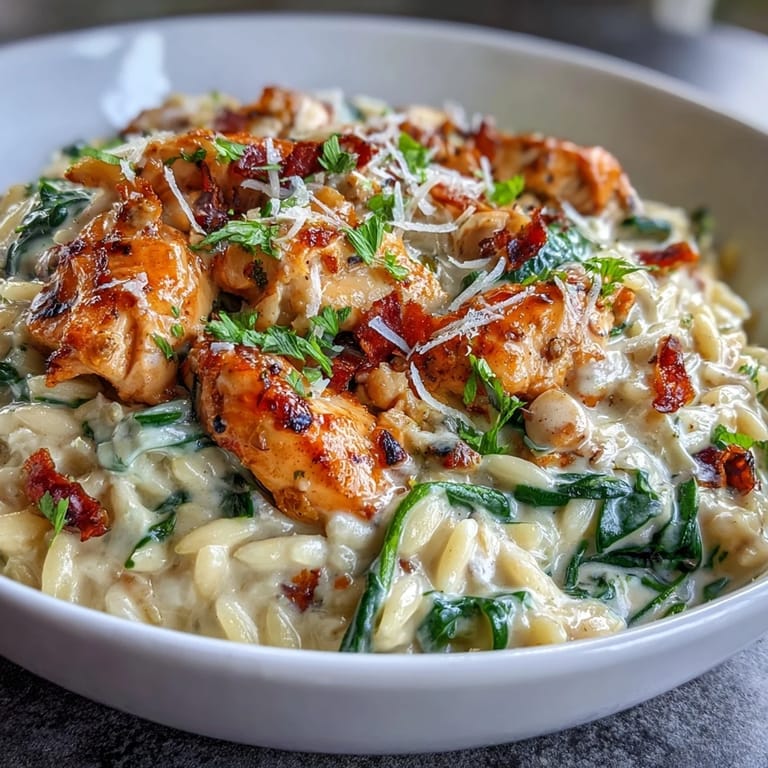
Save This is the kind of dish that becomes a staple not because it's complicated, but because it delivers every single time you make it. Once you've tasted it and understood how it comes together, you'll find yourself reaching for it on busy weeknights and confident weekends alike.
Recipe FAQ
- → What type of chicken works best?
Boneless, skinless chicken breasts or thighs work well; thighs add extra juiciness while breasts give a lean option.
- → Can I substitute orzo with another grain?
Small pasta shapes like risoni or couscous are excellent alternatives, maintaining similar texture and cooking time.
- → How do I ensure the spinach doesn’t overcook?
Add spinach at the end of cooking and stir gently just until wilted to preserve its bright color and nutrients.
- → What can I use instead of Parmesan?
For dairy-free options, nutritional yeast or plant-based cheese alternatives provide a similar savory touch.
- → Is it important to toast orzo before cooking?
Toasting orzo briefly in oil enhances its nutty flavor and helps keep the grains separate as they cook.