 Save
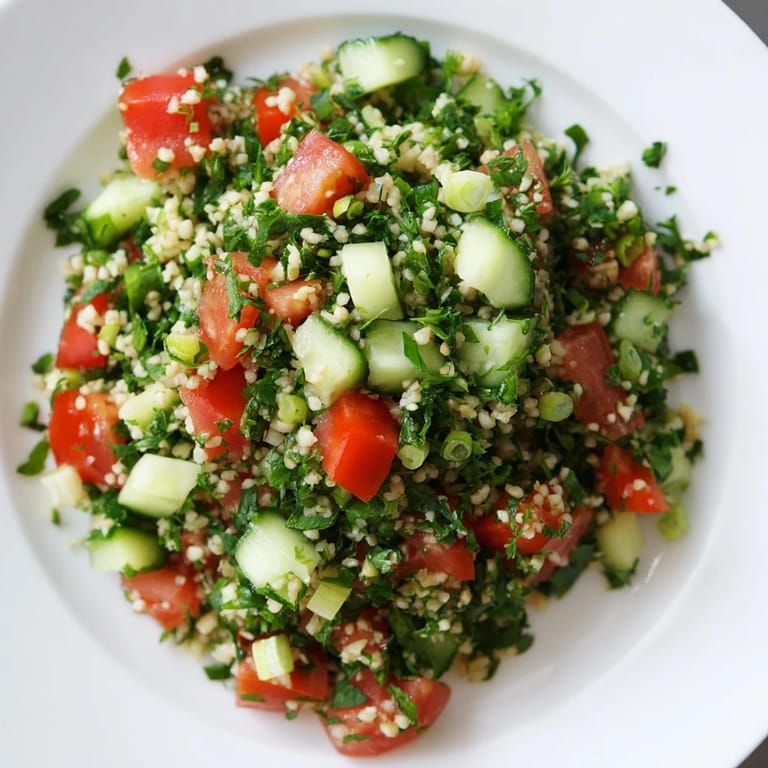
Save There's a particular afternoon I can't shake—sitting on a friend's sun-soaked patio in Beirut, watching her grandmother assemble tabbouleh with the kind of practiced ease that comes from decades of repetition. She didn't measure anything, just grabbed handfuls of parsley that seemed impossibly generous, tossed them into a brass bowl, and somehow knew exactly when the bulgur had absorbed just enough water. I went home determined to recreate that magic, and what I discovered was that tabbouleh isn't complicated at all—it's just about good ingredients treated with respect and a willingness to use way more herbs than feels reasonable at first.
I made this for a potluck once where someone had to bring something 'light,' and I watched people go back for thirds while complaining they were supposed to be eating less. That's when I realized tabbouleh has this trick up its sleeve—it feels substantial even though it's basically just vegetables and herbs, and it tastes better the longer it sits, which is ideal for someone like me who makes dinner and then gets distracted by a book.
Ingredients
- Fine bulgur wheat (1/2 cup): Use the fine kind, not the coarse version—it hydrates faster and integrates into the salad without turning gritty.
- Boiling water (3/4 cup): Get this actually boiling; it makes a real difference in how the grains soften.
- Flat-leaf parsley (2 cups packed, finely chopped): This is where tabbouleh earns its name—parsley should be the star, not a supporting actor.
- Fresh mint (1/2 cup, finely chopped): The brightness that prevents everything from feeling heavy.
- Spring onions (2, finely sliced): They add a whisper of bite that makes the whole thing come alive.
- Medium tomatoes (3, seeded and diced): Seed them to keep the salad from getting watery as it sits.
- Cucumber (1/2 medium, diced): Cut it right before mixing so it doesn't release too much liquid.
- Extra-virgin olive oil (1/4 cup): This is worth buying the good stuff for—it's a quarter of what gives this salad its soul.
- Fresh lemon juice (1/4 cup): Squeeze it yourself if you can; bottled tastes different and the salad will know.
- Fine sea salt (1/2 teaspoon): Taste as you go—different lemons and tomatoes have different needs.
- Freshly ground black pepper (1/4 teaspoon): Grind it fresh, five seconds before you need it.
Tired of Takeout? 🥡
Get 10 meals you can make faster than delivery arrives. Seriously.
One email. No spam. Unsubscribe anytime.
Instructions
- Hydrate the bulgur:
- Pour your boiling water over the bulgur, cover the bowl, and set a timer for 10 to 15 minutes. You're listening for silence—when the water stops making that little sizzle sound, it's ready. Fluff it gently with a fork; it should feel tender but not mushy, with tiny grains that separate when you run the fork through.
- Prepare the fresh elements:
- While the bulgur softens, this is when you do your chopping—it keeps everything as bright and crisp as possible. The parsley should be fine but not pulverized, more like confetti than paste.
- Build the salad base:
- Combine the parsley, mint, spring onions, tomatoes, and cucumber in a large bowl. You're creating the foundation that the bulgur will rest into, so don't be shy with the herbs—tabbouleh is one of the rare dishes where more parsley is always the right answer.
- Make the dressing:
- Whisk together the oil, lemon juice, salt, and pepper in a small bowl until it's emulsified and tastes bright. This is the moment to taste and adjust—if the lemon isn't punchy enough, add another squeeze.
- Bring it together:
- Add the cooled bulgur to the herb mixture and pour the dressing over everything. Use gentle tossing motions, turning the salad over itself until the dressing coats every ingredient and the colors deepen slightly as the herbs release their oils.
- Finish with intention:
- Taste again and adjust seasoning if needed. Sometimes you'll want a tiny pinch more salt, sometimes a whisper more lemon. Let it sit for 10 minutes before serving so the flavors can settle and say hello to each other.
 Save
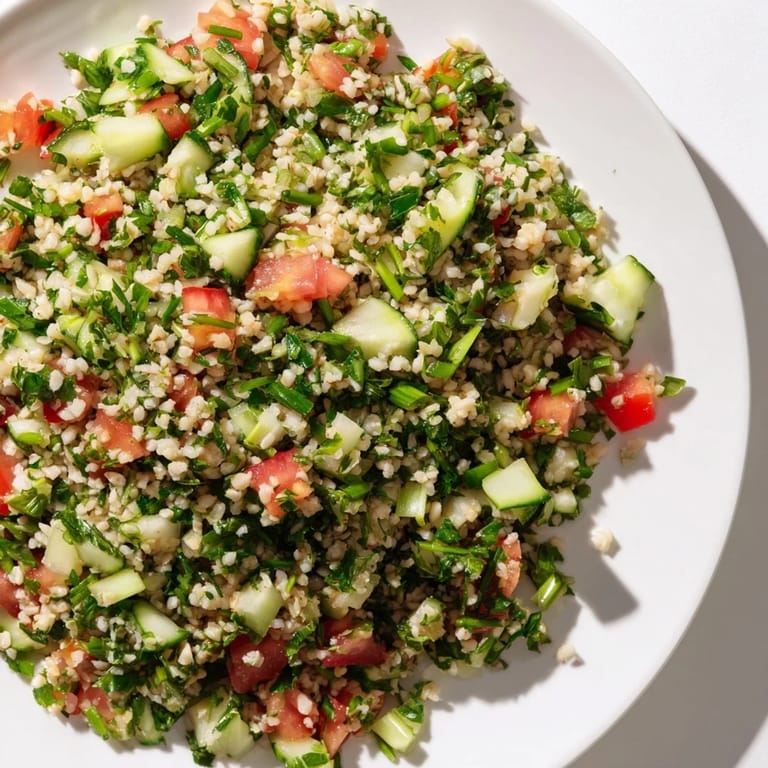
Save Someone once told me that tabbouleh is what you make when you're trying to say thank you to summer itself—when the herbs are at their peak and the tomatoes taste like tomato-colored sunshine. That stuck with me because it changed how I think about seasonality in cooking.
When to Make This
Tabbouleh is a summer dish first and foremost, when herb bunches are thick and cheap and tomatoes actually taste like something. But I've made it in March with groceries from the farmers market and December with hothouse tomatoes, and it still brings something genuine to the table. The key is not forcing it in the dead of winter when the ingredients are tired—that's when you pivot to a different salad entirely.
How to Serve It
Tabbouleh works as a standalone lunch, as part of a mezze spread with hummus and flatbread, or alongside grilled meats that benefit from its acid and freshness. I've brought it to potlucks where it disappeared before the main course even arrived, and I've eaten it cold straight from the bowl the next morning because sometimes yesterday's salad is better than today's fresh one.
Variations and Swaps
Once you understand the basic architecture—bulgur, herbs, vegetables, acid—tabbouleh becomes flexible in a way that rewards experimentation. Add pomegranate seeds if you want brightness and texture, use dill instead of mint if that's what calls to you, swap the cucumber for diced bell pepper. The baseline is just a template, not a rule.
- For gluten-free eating, use cooked quinoa instead of bulgur and adjust the water ratio accordingly.
- If you only have curly parsley, it'll work but won't taste quite as clean—flat-leaf really is worth seeking out.
- Make this salad a few hours before you need it; the flavors deepen and marry in a way that's always better than immediately serving.
 Save
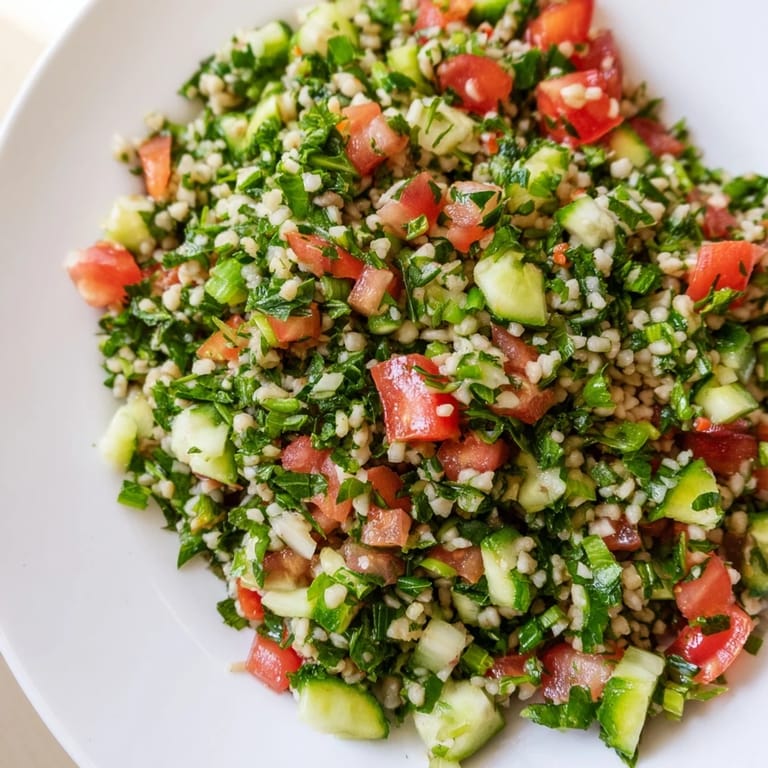
Save Tabbouleh taught me that some of the best things to eat are the simplest things, made with attention and good ingredients. Make this when you want to taste summer, or when someone you care about needs something fresh and uncomplicated.
Recipe FAQ
- → What is bulgur and how is it prepared?
Bulgur is a cracked wheat grain that is soaked in boiling water until tender, then drained and fluffed before mixing with other ingredients.
- → Can I substitute bulgur for a gluten-free option?
Yes, cooked quinoa is a popular gluten-free alternative that works well in this salad.
- → What herbs are essential for authentic flavor?
Flat-leaf parsley and fresh mint leaves provide the signature fresh and vibrant taste in this dish.
- → How should the dressing be prepared?
The dressing is a simple mix of extra-virgin olive oil, freshly squeezed lemon juice, salt, and black pepper, whisked together until combined.
- → How is this salad best served?
It can be served chilled or at room temperature, making it a versatile accompaniment to a variety of meals.
- → How long can the salad be stored?
For optimal freshness, it is best enjoyed within 2 days when refrigerated.