 Save
Save My grandmother used to make mjadra on quiet weeknights when the kitchen needed to feel full without much fuss. There's something magical about watching lentils and rice transform into something so satisfying with just a handful of spices and time. The first time she let me handle the onions, I was impatient—I cranked the heat and nearly burned them black. She laughed, turned it down, and whispered that good things never rush. That lesson stuck with me, and now every time I make this dish, I understand what she meant.
I served this to a friend who'd just moved to the neighborhood, and she sat down looking tired from unpacking. By the time she finished her bowl, something had shifted—she was smiling, asking for the recipe, already planning to make it the next evening. That's when I realized mjadra isn't just food; it's the kind of dish that quietly says you're welcome here.
Ingredients
- Brown or green lentils (1 cup): These hold their shape beautifully and don't turn mushy—that's the whole point of choosing them over red lentils for this dish.
- Long-grain rice like basmati (¾ cup): Rinsing it twice prevents the grains from sticking together and keeps the texture light.
- Water or vegetable broth (4 cups): Broth adds richness, but water lets you taste the spices more honestly—both are right.
- Olive oil (5 tablespoons total): Use good oil here; it's not hidden in a long sauce, it's doing real flavor work.
- Cumin, allspice, and cinnamon: This warm spice combination is the soul of the dish—don't skip any of them or substitute.
- Bay leaf: It vanishes into the background but makes everything taste more intentional.
- Salt and black pepper: Taste as you go; the final seasoning should make you pause and appreciate it.
Tired of Takeout? 🥡
Get 10 meals you can make faster than delivery arrives. Seriously.
One email. No spam. Unsubscribe anytime.
Instructions
- Toast and start the lentils:
- Heat 2 tablespoons olive oil in a large saucepan and let it shimmer just slightly. Add the rinsed lentils and bay leaf, stirring for about 2 minutes—you want them to smell toasty, not raw.
- Simmer the lentils:
- Pour in your broth or water and bring it to a rolling boil, then drop the heat low and let it bubble gently, uncovered, for 15 minutes. The lentils should soften but still hold their shape.
- Build the caramelized onions:
- While the lentils cook, heat 3 tablespoons olive oil in a separate large skillet over medium-low heat. Add your thinly sliced onions and a pinch of salt, then settle in—this takes time and stirring, usually 25 to 30 minutes total.
- The onions are ready when:
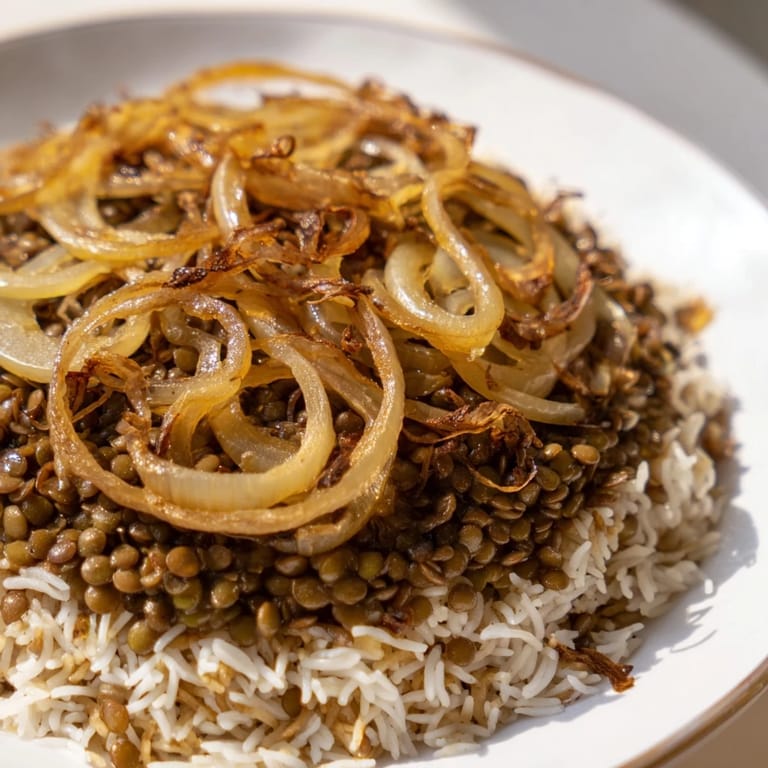
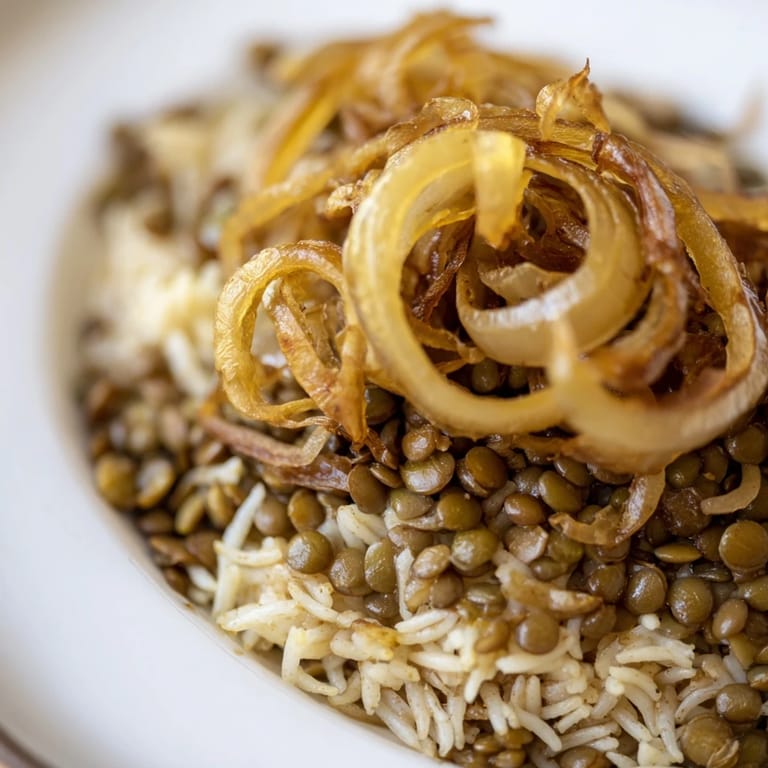
- They've turned a deep golden brown, almost amber in spots, and smell sweet and rich rather than raw. Don't rush this step; that's where all the flavor concentration happens.
- Add rice and spices:
- Once the lentils have had their 15 minutes, stir in the rinsed rice, cumin, allspice, cinnamon, salt, and pepper. Make sure everything is evenly distributed and the spices are coating the grains.
- Finish cooking covered:
- Cover the saucepan, turn the heat to low, and let it simmer for 20 to 25 minutes until the rice is tender, the lentils are creamy, and the liquid has been absorbed. If it looks dry before the rice is done, splash in a bit more water.
- Rest and fluff:
- Remove from heat and fish out the bay leaf. Use a fork to gently fluff everything together, breaking up any clumps so the rice and lentils are separate and light.
- Plate and crown it:
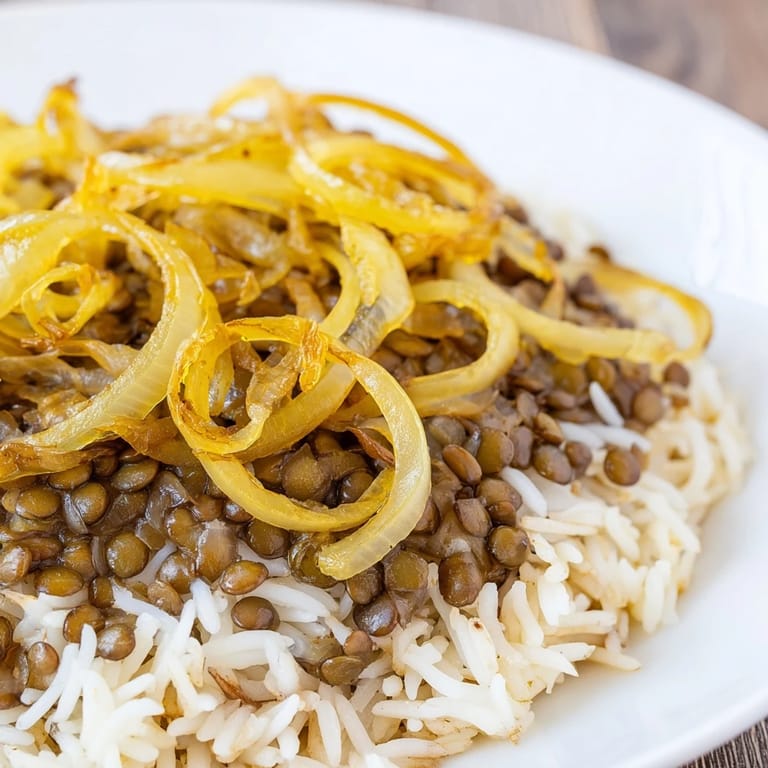
- Divide the mjadra among bowls and generously pile the caramelized onions on top—they're not a garnish, they're the whole point. Serve it hot or at room temperature; both are equally good.
 Save
Save There's a moment, usually halfway through eating, when someone stops and asks what you did differently—like they're tasting something they've eaten a hundred times but never really noticed before. That's the moment I love, because it means the quiet work of slow-cooked onions and warm spices actually landed.
Why Caramelized Onions Change Everything
Caramelization isn't just browning; it's breaking down the onion's natural sugars over time until they become concentrated and complex. When you rush this, you get bitter burnt onions. When you slow down and stir occasionally, those same onions become sweet, almost toffee-like, and transform the entire dish from simple to craveable. The texture also matters—they should be soft enough to melt into the rice but still distinct enough to recognize as onions.
Adapting It to What You Have
Red lentils will work if that's what's in your pantry, but the texture shifts toward creamier and softer, which changes the whole eating experience. Reduce their cooking time to about 10 minutes before adding the rice. If you don't have all three spices, cumin is the non-negotiable one—it's the flavor anchor. Allspice and cinnamon add warmth, but they can be adjusted based on your preference for earthier or sweeter notes.
Serving and Storage Wisdom
Serve this hot straight from the stove, or let it cool to room temperature and eat it cold the next day with a dollop of plain yogurt stirred in. The flavors actually deepen overnight as the spices continue to infuse. Leftovers keep beautifully in the refrigerator for up to four days, and reheating is as simple as adding a splash of water and warming it gently on the stovetop or in the microwave.
- Fresh parsley scattered on top at the end brings a bright contrast to the warm spices and caramelized sweetness.
- A side of fresh tomato and cucumber salad or brined pickles cuts through the richness perfectly.
- This is equally at home on a weeknight dinner table or brought to a potluck where it always disappears first.
 Save
Save Mjadra is the kind of dish that proves how much flavor comes from patience and intention rather than complexity. Once you make it, you'll understand why it's been fed from kitchen to kitchen across Lebanon for generations.
Recipe FAQ
- → What type of lentils works best for Lebanese Mjadra?
Brown or green lentils are ideal as they hold their shape well during simmering and provide a firm texture that complements the rice.
- → How do you achieve perfectly caramelized onions?
Cooking thinly sliced onions slowly over medium-low heat with olive oil and a pinch of salt for 25–30 minutes allows natural sugars to develop a rich, golden color and deep flavor.
- → Can I use a different type of rice in this dish?
Long-grain rice such as basmati is preferred for its fluffy texture, but other varieties can be used with adjustments to cooking times.
- → Is it necessary to add spices like cumin and allspice?
These warm spices enhance the aromatic profile of the lentils and rice, creating the signature flavor of this Middle Eastern dish.
- → How should Lebanese Mjadra be served for best taste?
Serve warm or at room temperature, topped generously with caramelized onions. It pairs well with fresh tomato and cucumber salads or pickles for contrast.