 Save
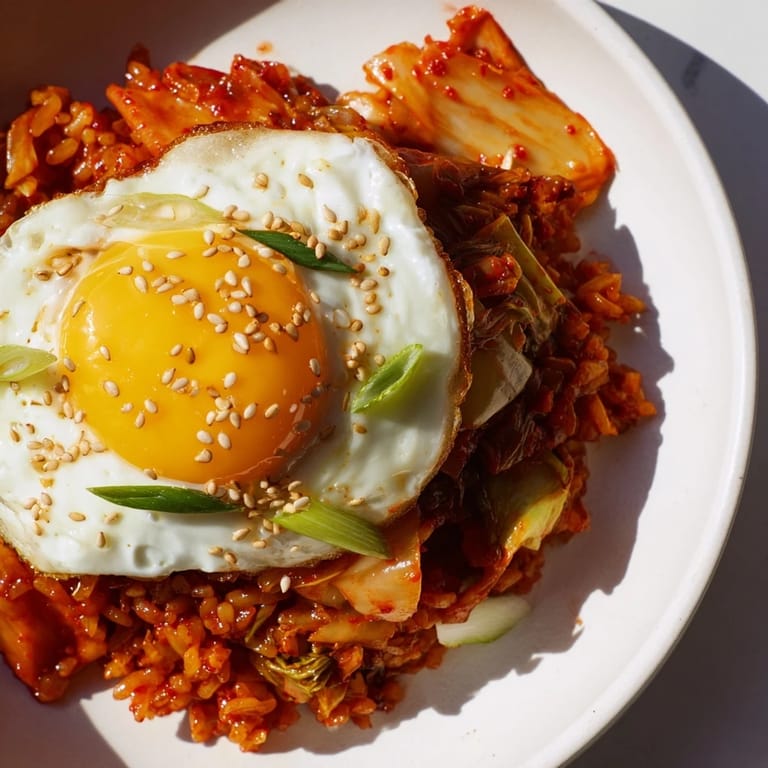
Save I stumbled into kimchi fried rice on a Tuesday night when my fridge was nearly empty and I had a container of kimchi that was just begging to be used. The smell hit me the second I opened the jar—sharp, funky, alive. I tossed it into a hot pan with some leftover rice, and within minutes, my kitchen smelled like a tiny Seoul street cart. That first bite was a revelation: tangy, spicy, deeply savory, and somehow exactly what I needed.
I made this for a friend who was having a rough week, and I'll never forget the way her face lit up after the first forkful. She said it tasted like a warm hug with a kick. We sat at my tiny kitchen table, runny yolks mixing into the rice, and she asked for the recipe before she even finished her bowl. That's when I knew this dish was a keeper.
Ingredients
- Cooked short-grain rice: Day-old rice is your secret weapon here—it's drier and fries up perfectly without turning mushy, giving you those crispy, separate grains.
- Napa cabbage kimchi: The soul of this dish, bringing tang, funk, and a little heat; don't skip the juice, it's liquid gold for flavor.
- Yellow onion: Adds sweetness and a bit of bite that mellows beautifully as it sautés.
- Carrot: A pop of color and subtle sweetness that balances the kimchi's sharpness.
- Green onions: The white parts cook down and sweeten, while the green tops stay bright and fresh as a finishing touch.
- Gochujang: This Korean chili paste is the backbone of the sauce—sweet, spicy, savory, and slightly smoky all at once.
- Soy sauce: Brings that deep, salty umami that ties everything together.
- Toasted sesame oil: A few drops at the end and the whole dish smells like a dream; it's nutty, warm, and essential.
- Sugar: Just a pinch to round out the heat and acidity, making the flavors sing.
- Black pepper: Freshly ground adds a subtle warmth that complements the gochujang.
- Vegetable oil: For high-heat stir-frying; it keeps everything moving and prevents sticking.
- Toasted sesame seeds: A little crunch and nuttiness sprinkled on top makes each bite feel special.
- Fried eggs: Optional, but the runny yolk mixing into the rice is pure magic and adds richness.
Tired of Takeout? 🥡
Get 10 meals you can make faster than delivery arrives. Seriously.
One email. No spam. Unsubscribe anytime.
Instructions
- Soften the aromatics:
- Heat a tablespoon of oil in your largest skillet over medium-high heat until it shimmers. Toss in the onion, carrot, and white parts of the green onion, and let them sizzle and soften for a few minutes, stirring occasionally.
- Caramelize the kimchi:
- Add the chopped kimchi and let it cook until the edges start to brown and the smell becomes irresistible—this step builds serious depth. You'll know it's ready when it smells tangy and toasty.
- Build the sauce:
- Stir in the gochujang, soy sauce, kimchi juice, sugar, and black pepper, mixing everything until the vegetables are glossy and coated. Let it bubble for a minute so the flavors meld together.
- Toss in the rice:
- Add your cold rice and break up any clumps with your spatula, then stir-fry everything together until each grain is coated in that fiery red sauce and heated all the way through. This takes a few minutes of active tossing.
- Finish with sesame and greens:
- Drizzle the sesame oil over the top and toss in the green parts of the green onion, stirring well. The aroma will hit you like a wave—nutty, bright, and irresistible.
- Fry the eggs (optional):
- In a separate pan, heat a bit of oil and fry your eggs until the whites are set but the yolks are still runny. Slide them on top of the rice just before serving.
- Serve and garnish:
- Divide the rice into bowls, top each with a fried egg if using, and sprinkle with toasted sesame seeds. Serve immediately while it's hot and fragrant.
 Save
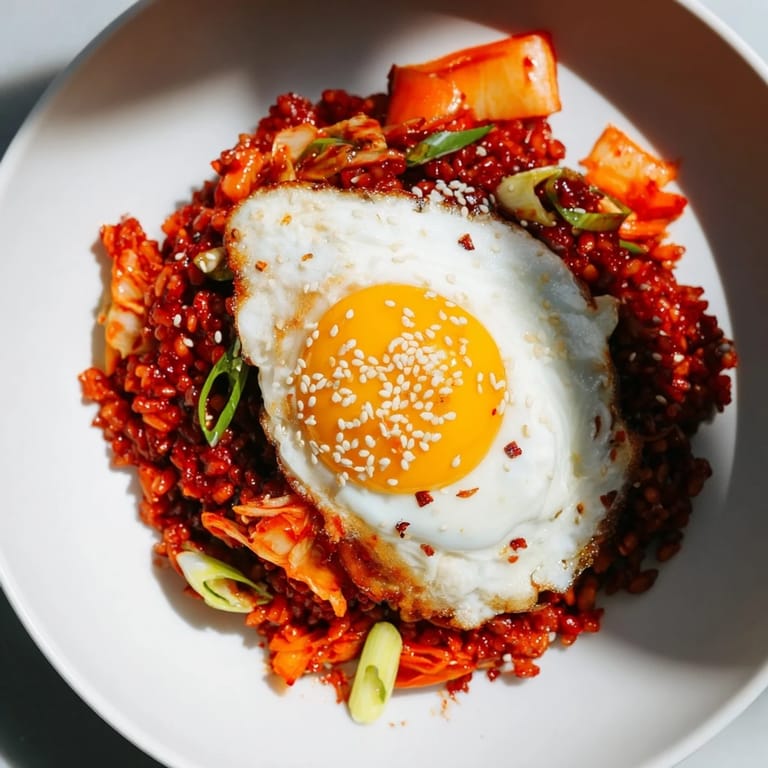
Save There was a rainy Saturday morning when I made this for breakfast, and the steam rising from the bowl mingled with the smell of sesame and gochujang. I cracked the yolk and watched it pool into the rice, and for a moment, everything felt right. It wasn't just food—it was comfort, warmth, and a little bit of home, even though I'd never been to Korea.
Making It Your Own
This recipe is endlessly flexible and welcomes whatever you have on hand. I've stirred in crumbled tofu for extra protein, tossed in leftover grilled chicken, and even added a handful of frozen peas when I was short on veggies. Some nights I go heavy on the gochujang for a fiery kick, other times I mellow it out with a splash more sesame oil. Trust your taste buds and your fridge—this dish rewards improvisation.
Storing and Reheating
Leftovers keep beautifully in an airtight container in the fridge for up to three days. When you reheat it, add a tiny splash of water or oil to a hot pan and stir-fry it again to bring back that crispy texture. The flavors actually deepen overnight, so don't be surprised if it tastes even better the next day. Just fry a fresh egg on top and you're back in business.
Pairing and Serving Ideas
I love serving this with a simple cucumber salad dressed in rice vinegar and a pinch of sugar—it cuts through the richness and adds a cool, crunchy contrast. A cold glass of barley tea or a crisp lager works wonders alongside the heat. If you're feeding a crowd, set out little bowls of extra kimchi, sesame seeds, and sliced green onions so everyone can customize their bowl.
- Add a drizzle of sriracha or chili oil if you like it extra spicy.
- Serve with a side of steamed bok choy or sautéed spinach for a bit of green.
- Top with a sprinkle of nori strips or furikake for an umami boost.
 Save
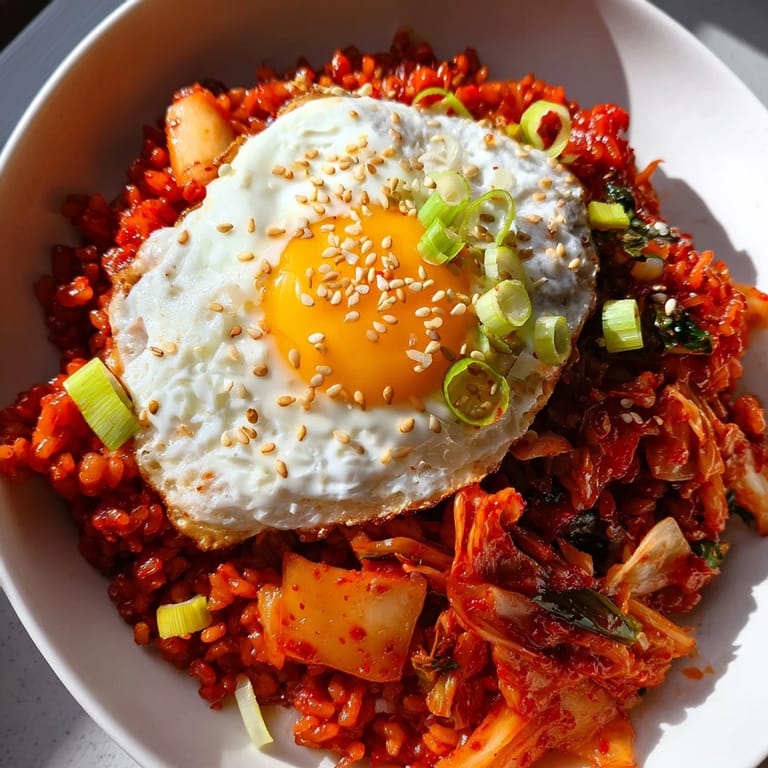
Save This dish has become my go-to whenever I need something fast, flavorful, and deeply satisfying. I hope it brings you as much joy as it's brought me, one crispy, tangy, spicy bite at a time.
Recipe FAQ
- → What type of rice works best for this dish?
Day-old short-grain rice is ideal as it’s less sticky and fries more evenly, providing the best texture.
- → Can I adjust the spice level?
Yes, modifying the amount of gochujang and kimchi juice will increase or reduce the heat to suit your preference.
- → Is this dish suitable for vegans?
Omit the fried egg or use a plant-based alternative to keep the dish vegan-friendly.
- → What proteins can be added?
Diced tofu, chicken, or shrimp can be included to boost protein and add variety.
- → How can I enhance the flavor further?
Toasted sesame oil and seeds add nutty depth, while caramelizing kimchi enhances sweetness and complexity.