 Save
Save I still remember the year I decided to host my first major holiday gathering, and I was terrified. My grandmother had always been the one orchestrating those sprawling, magnificent centerpieces that made everyone's eyes light up the moment they walked through the door. I remember standing in her kitchen, watching her glaze a ham with that deep mahogany shine, and thinking it looked like something you'd see in a fine restaurant. She smiled and said, "The secret isn't complicated, but it is intentional." Years later, when I finally attempted my own glazed ham board, I realized she was teaching me that hospitality isn't about perfection—it's about creating a moment where people feel welcomed the instant they see what you've prepared. This board has become my love letter to that memory.
I'll never forget when my friend Sarah brought this board concept to a holiday potluck, and within twenty minutes, more people were gathered around that wooden platter than anywhere else in the house. Someone said, "This is what abundance looks like," and it struck me that a well-composed board isn't just food—it's an invitation to slow down, to taste things intentionally, and to connect. That moment taught me that hospitality through food is really about creating permission for people to linger and enjoy each other's company.
Ingredients
- Small bone-in ham (4–6 lbs, cooked): A pre-cooked ham is your secret weapon here; it means you're really just adding glaze and warmth, not managing a long cooking timeline. Look for one labeled "fully cooked" to save yourself stress and oven space.
- Brown sugar (1 cup, packed): This is what creates that deep, caramelized exterior. Pack it down in the measuring cup so you get the full sweetness and richness; loose brown sugar will give you less flavor than you need.
- Honey (1/3 cup): The honey adds shine and a subtle complexity that regular sugar alone cannot achieve. It also prevents the glaze from becoming grainy.
- Dijon mustard (1/4 cup): This isn't about making it spicy; it's about adding a sophisticated tang that keeps the glaze from being one-dimensional sweet. It's the reason people taste this and say, "What is that?"
- Apple cider vinegar (2 tbsp): This cuts through richness and adds a gentle brightness that makes people want to come back for another slice.
- Ground cloves (1/2 tsp): Cloves are warm and slightly mysterious; this tiny amount is what makes people smell your ham from across the room and want to know what it is.
- Ground black pepper (1/2 tsp): Black pepper is the gentle backbone here, adding depth without announcing itself.
- Sharp cheddar (8 oz, sliced): Cheddar's firm texture makes it easy to slice and arrange, and its sharpness balances beautifully against the sweet ham.
- Brie (8 oz, cut into wedges): Brie is the soft, luxurious moment on the board; its creamy richness is what people will layer onto bread with ham.
- Gouda (8 oz, cubed): Gouda's smoky, caramel notes echo the ham's glazed flavor, creating harmony on the palate.
- Assorted olives (2 cups): Mix green, black, and Castelvetrano olives for visual interest and different flavor profiles. Olives are your palate cleansers between rich bites.
- Spicy or Dijon mustard (8 oz): Offer mustard as a dipping option; it's the bridge between the sweet ham and savory bread.
- Cornichons or baby gherkins (8 oz): Their bright acidity is essential for cutting through the richness of cheese and ham. Don't skip these.
- Seeded rye or sourdough baguette (16 slices): Toast these just before serving; stale bread will ruin an otherwise perfect board. A good bread is your vehicle for showcasing the ham.
- Salted mixed nuts (1 cup): Nuts add texture and visual variety. The salt on them complements the sweet glaze beautifully.
- Pickled pearl onions (1 cup): These add a surprising pop of acidity and delicate crunch that many guests don't expect but absolutely love.
- Seedless grapes (2 cups): Keep red and green grapes separate in small clusters; they're refreshing and add beautiful jewel-tones to the composition.
- Fresh pears (2, cored and sliced): Pears have a sweetness that echoes the ham glaze; slice them just before serving to keep them fresh and crisp.
- Fresh apples (2, cored and sliced): Granny Smith apples work beautifully here because their tartness contrasts the sweet ham. Slice just before serving.
- Dried apricots (1/2 cup): These chewy gems add a concentrated fruitiness and beautiful color contrast.
- Dried figs (1/2 cup, halved): Figs feel luxurious and pair beautifully with aged cheeses.
- Fresh cranberries (1/2 cup, for garnish): These are decorative only; their bright red adds festive visual drama. Arrange them just before serving.
- Fresh rosemary sprigs (1/4 cup, for garnish): Rosemary is aromatic and says "holiday" without saying a word. The fragrance adds to the sensory experience.
Tired of Takeout? 🥡
Get 10 meals you can make faster than delivery arrives. Seriously.
One email. No spam. Unsubscribe anytime.
Instructions
- Start with your oven and glaze:
- Preheat your oven to 350°F and give it time to reach temperature; this ensures your ham glaze will caramelize evenly rather than burning or cooking unevenly. While that's happening, combine the brown sugar, honey, Dijon mustard, apple cider vinegar, cloves, and black pepper in a small saucepan. Whisk continuously over medium heat, watching as the sugar dissolves and the mixture transforms into something glossy and thick. You'll know it's ready when it coats the back of a spoon and smells like autumn and warmth. This should take about 3–5 minutes. If you cook it too long, it hardens into a brittle candy; the moment it thickens, take it off heat. You'll use this glaze in layers, which is the trick to getting that deep, lacquered finish.
- Score and prepare the ham:
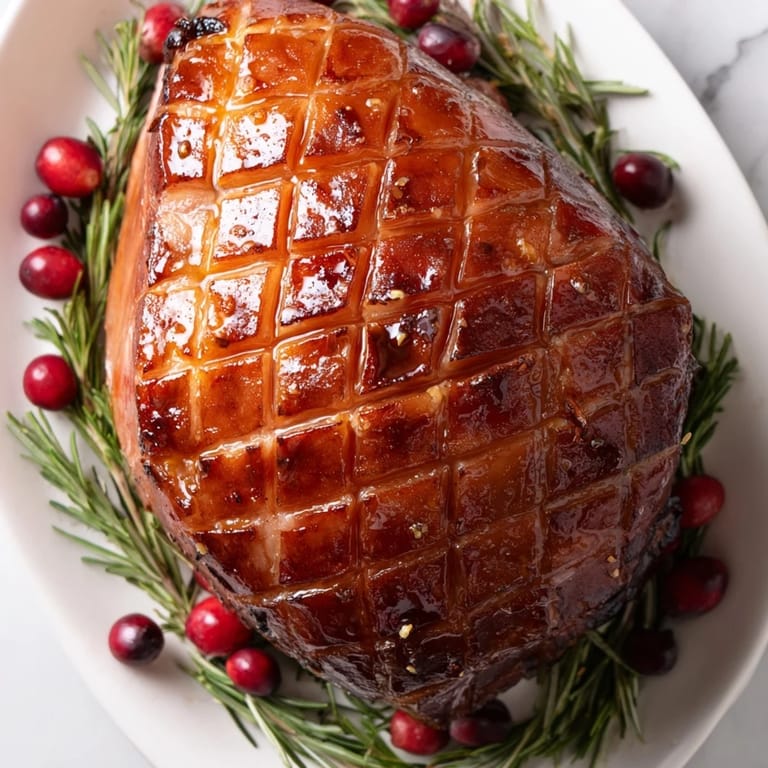
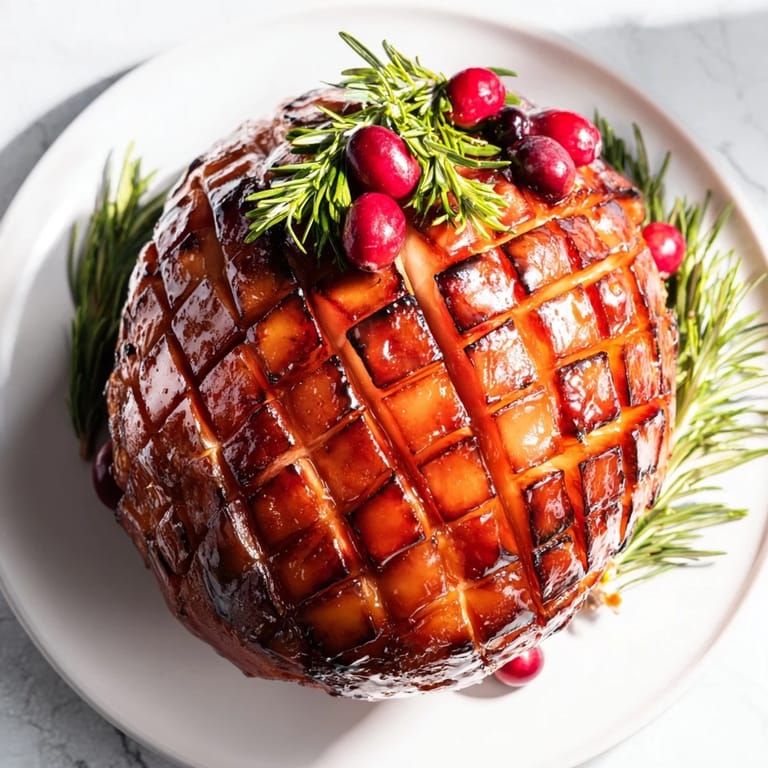
- Take your ham and, using a sharp knife, score the surface in a 1-inch diamond pattern, cutting just through the skin and fat layer. This scoring serves two purposes: it allows the glaze to penetrate deep into the ham, and it creates those beautiful crosshatch lines that make your ham look intentional and impressive. Place the ham flat side down on a rack in a roasting pan that you've lined with foil (this prevents sticking and makes cleanup easier). Brush about a third of your glaze over the entire surface, making sure you work it into those scored crevices. The ham should look glossy but not dripping; you're building layers, not drowning it.
- Roast and baste with intention:
- Roast the ham for 1 hour and 30 minutes, but here's the part that makes the difference: every 30 minutes, take it out and brush more glaze over it. This basting is what transforms a plain baked ham into something that looks restaurant-quality. As it roasts, the glaze will deepen to a mahogany brown. If you see it darkening too quickly, loosely tent it with foil to slow the caramelization. You're aiming for a deep, rich color with a sticky, shiny surface. For pre-cooked hams, the internal temperature should reach at least 140°F, but since it's already cooked, you're really just heating it through and caramelizing the outside. When you take it out, let it rest, tented with foil, for 15–20 minutes. This rest allows the juices to redistribute, ensuring that when you slice it, it's moist and tender, not dry.
- Prepare your supporting cast:
- While the ham rests, slice your cheeses into uniform pieces. This isn't just about looks; uniformity signals that care went into this. Toast your bread slices in a single layer at 350°F for about 10 minutes until they're golden and crisp. You want crunch but not rock-hard brittleness; golden edges are your signal that they're ready. Just before serving, slice your apples and pears, tossing them lightly with lemon juice to prevent browning. This timing matters because fresh fruit oxidizes quickly.
- Compose your board like you're creating art:
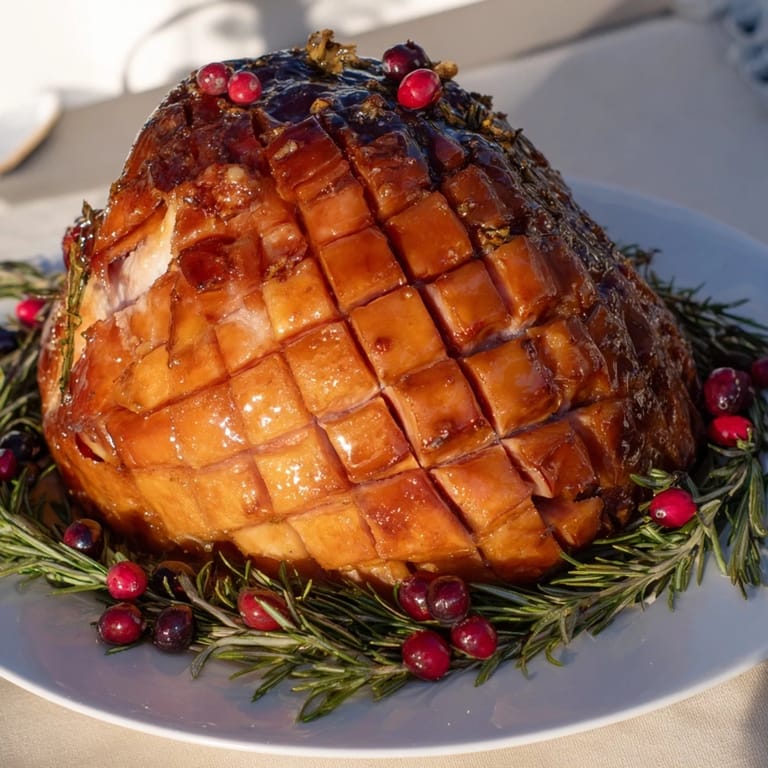
- This is the moment where you get to be creative. Place your glazed ham (or ham roses, if you've chosen that elegant route) at the exact center of your board or platter. The ham is your anchor point. From there, fan out your cheese slices in even arcs, then arrange your toasted bread in similar arcs radiating outward. Fill the spaces between these arcs with small bowls containing olives, pickles, nuts, and mustard. Arrange your fruit clusters—grapes, pears, apples—tucking them into the remaining gaps while maintaining color balance and visual harmony. The board should look lush and full, with no empty patches. Finally, just before serving, garnish with fresh rosemary sprigs tucked at intervals around the ham and scattered fresh cranberries for a jewel-like festive touch.
- Carve at the table:
- The final moment is slicing the ham in front of your guests. Use a sharp knife and carve thinly across the grain; this ensures tenderness. Encourage guests to build their own bites, layering ham with cheese, bread, fruit, and mustard. This isn't a passive eating experience; it's interactive and joyful.
 Save
Save I learned something important the first time someone took a slice of my glazed ham, added a piece of cheddar, a thin slice of pear, and a bit of that tangy mustard, then closed their eyes as they tasted it. They weren't just eating; they were experiencing something intentional. That's when I realized that this board isn't about showing off or being fancy. It's about creating a space where people feel cared for, where flavor and beauty and generosity converge on a wooden platter.
Why This Board Works for Gatherings
A glazed ham board is the kind of centerpiece that does the heavy lifting for you. It's beautiful enough to be a focal point, substantial enough to serve as an actual meal, and interactive enough to keep people engaged and lingering. Unlike a formal plated dinner, a board invites guests to be co-creators of their own experience. Someone who's vegetarian can skip the ham and load up on cheese and fruit. Someone who wants an indulgent bite can layer ham, brie, and nuts. The flexibility is built in, which means you're feeding a crowd without making anyone feel excluded or requiring you to prepare individual plates.
The Architecture of a Beautiful Board
The magic of board composition is all about balance and intention. Your glazed ham at the center isn't just a flavor anchor; it's a visual focal point that everything else radiates from. The cheeses and bread create natural arcs that guide the eye. The bowls of olives, pickles, and nuts break up the composition and add visual texture. The fresh fruits—those vibrant apple slices, the jewel-tone grapes—catch light and add liveliness. The dried fruits and garnishes fill the gaps and add sophistication. When you step back and look at the finished board, it should feel abundant but organized, luxurious but approachable. This balance is what makes people want to linger and taste everything.
Here's what makes this recipe genuinely manageable: you can do almost everything in advance. The ham can be glazed and roasted hours before your guests arrive; you simply reheat it gently in a 300°F oven for about 20 minutes before placing it on the board. The cheeses can be sliced the morning of, covered, and refrigerated. The bread can be toasted hours ahead and stored in an airtight container. The dried fruits and olives can all be arranged the day before. The only things you do at the last moment—slicing the fresh fruits, adding the garnish, placing the warm ham on the board—are quick enough that you're not stressed when guests arrive.
- Slice apples and pears within 15 minutes of serving; toss them with lemon juice to maintain their brightness and crispness.
- Toast your bread no more than an hour before serving; bread loses its crispness over time, and stale bread will undermine your entire board.
- If making ham roses instead of serving the ham whole, prepare them the morning of and cover them with plastic wrap; they'll stay fresh and ready to arrange at the last moment.
 Save
Save This board has taught me that sometimes the most generous thing you can offer people is permission to slow down and enjoy their food intentionally. There's something about a beautiful centerpiece that invites people to take their time, to try new combinations, to notice flavors and textures. That's hospitality at its heart.
Recipe FAQ
- → How is the glaze prepared for the ham?
The glaze combines brown sugar, honey, Dijon mustard, apple cider vinegar, ground cloves, and black pepper, simmered until thick and glossy to coat the ham with a sweet-spiced finish.
- → Why is the ham scored before roasting?
Scoring the ham’s surface in a diamond pattern allows the glaze to penetrate deeply, enhancing flavor and creating an attractive caramelized appearance.
- → What accompanies the ham on the board?
The ham is surrounded by a variety of sliced cheeses, assorted olives, pickled vegetables, toasted rye or sourdough bread, mixed nuts, fresh fruits, and dried fruits for balance and color.
- → How long should the ham rest before serving?
After roasting, the ham rests tented with foil for 15–20 minutes to retain moisture and ensure tender, juicy slices when carved.
- → Can substitutions be made for dietary needs?
Yes, smoked turkey breast can replace ham for a lighter option, and gluten-free bread or lactose-free cheeses may be used to accommodate restrictions.
- → What’s the best way to toast the bread slices?
Toast bread in a single layer at 350°F (175°C) for about 10 minutes until golden and crisp, avoiding burnt or bitter edges for optimal crunch.