 Save
Save I remember the first time I arranged a cheese board like a wreath—it was three days before Christmas, and my kitchen counter felt too small for my holiday ambitions. My sister called asking what I was bringing to the family gathering, and I found myself describing this beautiful circular arrangement I'd seen in a magazine: cheeses spiraling outward like edible garland, pomegranate jewels catching the light, and fresh rosemary sprigs that made the whole board smell like a forest. That night, I stayed up late arranging and rearranging until it looked less like food and more like something you'd frame. When I brought it to the table, the room went quiet for just a moment—and I knew I'd created something special.
I'll never forget watching my grandmother's eyes light up when she saw this wreath for the first time at a holiday party. She's the kind of person who picks at appetizers all evening, and she stood there for ten minutes just grazing around the circle, telling stories about each element—which cheese reminded her of a trip to France, how the pomegranate arils looked like little rubies. That's when I realized this board isn't just food; it's an invitation to slow down and connect.
Ingredients
- Brie cheese, 100 g sliced into wedges: This melts slightly at room temperature and becomes buttery soft—it's your crown jewel. The way it catches light when you arrange it matters more than you'd think.
- Aged cheddar, 100 g cubed: Choose something that's been aged at least six months; the sharpness cuts through the richness of everything else. I learned this the hard way after using mild cheddar and feeling like something was missing.
- Goat cheese, 100 g cut into rounds: Slice it thicker than you think you should—thin slices crumble. I use dental floss or a guitar cutter to get clean rounds, and it honestly changed my life.
- Prosciutto, 80 g folded: Ask the deli counter for it sliced a bit thicker than usual; the paper-thin stuff tears when you handle it. Fold it loosely so it catches light and looks abundant.
- Salami, 80 g sliced: Roll or fold these gently—they're your little flavor pockets that people discover as they work around the wreath.
- Red and green grapes, 2 cups halved: Halving them stops them from rolling everywhere and makes them feel intentional. Pat them dry first so they don't make everything wet.
- Pomegranate arils, 1/2 cup: These are your jewels. Remove them at least an hour before serving so the juice doesn't bleed onto the board. They're what make people say "wow" when they first see it.
- Cherry tomatoes, 1 cup: Use the small ones and leave them whole. They add pops of color and something substantial between all the soft cheeses.
- Mini cucumbers, 1/2 cup sliced: These are your green element and they add a refreshing crunch. Slice them just before serving so they stay crisp.
- Roasted almonds, 1/2 cup: The roasting brings out sweetness that balances the salty meats and cheeses. Use whole or halved—I prefer halves because they scatter better.
- Mixed olives, 1/2 cup: Use the Castelvetrano if you can find them—they're buttery and less aggressively salty. Their pale green color adds sophistication to the darker greens of the rosemary.
- Dried cranberries, 1/4 cup: These are tart-sweet pops of deep red that seem to glow on the board. They keep their color and don't wilt the way fresh berries might.
- Fresh rosemary, 6-8 sprigs: Look for long, sturdy sprigs. The leaves stay on better and look more like actual wreath foliage. The smell is half the magic here.
- Olive branches, a few small sprigs: These are optional but they're what transforms this from a board into something that feels alive. Make sure they're food-safe varieties and wash them thoroughly.
- Whipped feta dip, 1 cup: This is your anchor, your reason to stay in the center. If you can't find good whipped feta, hummus works beautifully for a vegetarian option.
- Olive oil, 1 tablespoon: Use your best oil—something fruity that smells like olives. This gets drizzled over the dip and it should glisten.
- Freshly cracked pepper, 1/2 teaspoon: The grind matters. Crack it fresh right before serving so it looks and tastes vital.
Tired of Takeout? 🥡
Get 10 meals you can make faster than delivery arrives. Seriously.
One email. No spam. Unsubscribe anytime.
Instructions
- Start with the center and the stage:
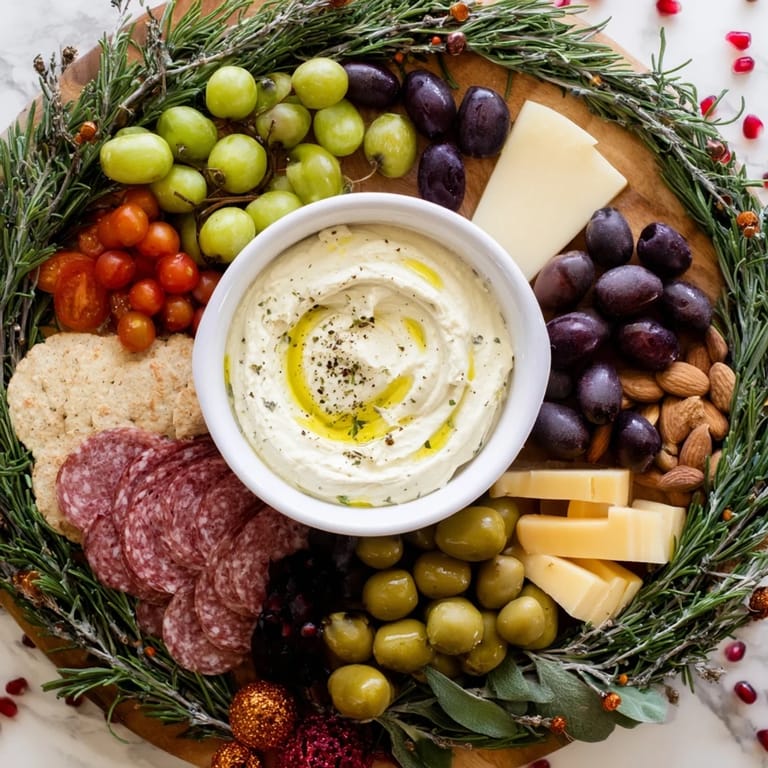
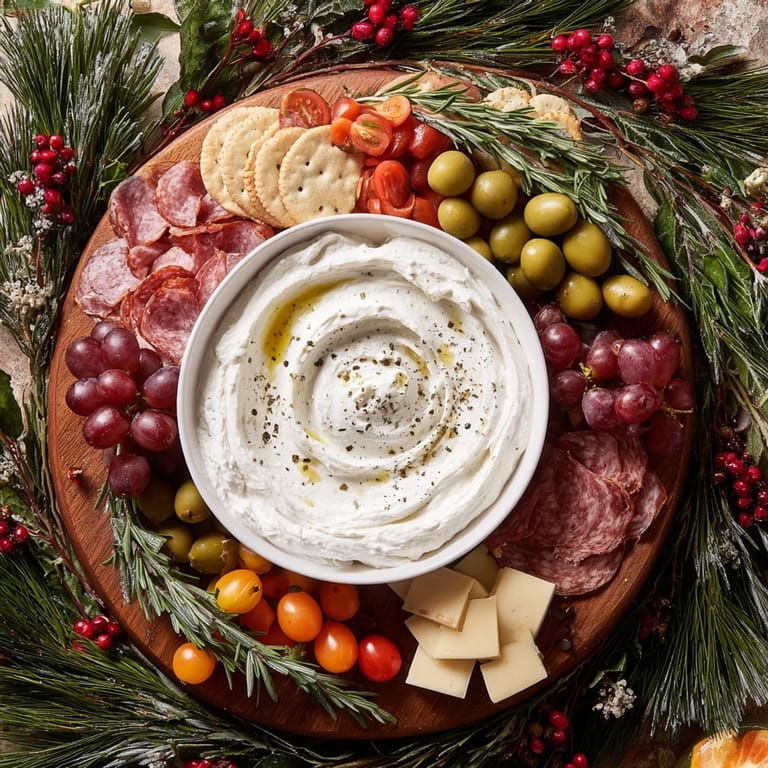
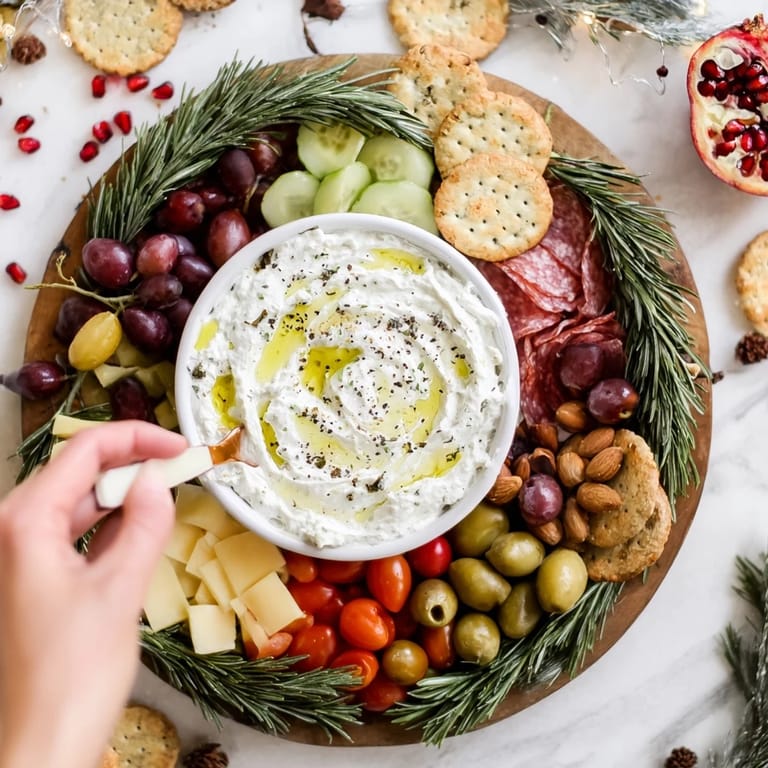
- Place your small bowl dead center on the largest round board or platter you own. Fill it with whipped feta dip and let it sit for a moment. Drizzle that good olive oil over the top—not sparingly, but generously enough that it pools slightly. Then crack that pepper over it so you can see each grain. This dip is your anchor and your reward. Step back and let it sit there looking perfect while you work.
- Create the wreath skeleton:
- Now the fun part. Take those rosemary sprigs and arrange them in a large circle around the bowl, leaving about two inches of space. They should point outward like rays from the sun. Don't make it perfect—that's not the point. Let them angle different ways. If you have olive branches, tuck them in between the rosemary so the foliage looks abundant and natural. You're creating the green base that everything else will nestle into. This is your wreath bones.
- Layer the cheeses with intention:
- Start placing your cheese wedges, cubes, and rounds around the circle, nestling them into the foliage. Alternate the three varieties so you get color variation—the pale brie next to the golden cheddar next to the white goat cheese. Space them so there are little gaps where other elements will go. This is where you start seeing the magic—the creamy, the sharp, the tangy, all working together.
- Tuck in the cured meats:
- Fold your prosciutto into loose waves and tuck them between the cheese pieces. Do the same with the salami, rolling some into little corkscrews. These elements should feel like pleasant surprises as people work their way around. They're the salty-savory that makes everything else sing.
- Add the jewels:
- Now scatter your grapes, tomatoes, and cucumber slices around the wreath, nestling them into any gaps. Then—and this is important—add your pomegranate arils carefully. These are your showstoppers. They should be visible but not overwhelming. Let them catch the light. They're what people photograph before eating.
- Scatter abundance:
- Sprinkle your almonds, olives, and dried cranberries throughout the wreath in little clusters. You're not trying to cover every inch; you're creating visual moments where different elements come together. A cluster of dark olives next to pale almonds. Cranberries catching against the deep green of the rosemary. This is when it starts looking less like a board and more like edible art.
- Step back and balance:
- Walk away for a moment. Look at it from different angles. Adjust anything that feels heavy in one spot or sparse in another. The circle should feel balanced and abundant without looking chaotic. If something looks lonely, add a little more. If something feels crowded, give it space. This moment of stepping back and seeing the whole thing is where you make it truly beautiful.
- Serve with presence:
- Set out crackers or bread alongside if you want, but honestly, people will eat around them to get to the good stuff. Pour yourself a glass of something nice, place this beautiful thing on your table or buffet, and watch people's faces. That's the real point of this recipe.
 Save
Save There was a moment at a dinner party when my daughter—who usually won't touch cheese—came back to this board three times, each time trying something different, each time discovering something new. She spent more time at this board than at any other food we served. That's the gift of this recipe: it gives everyone permission to graze, explore, and enjoy without pressure. It's festive but not formal. Abundant but not overwhelming.
Why This Board Works Every Time
The secret to making this look professional without professional skill is understanding that chaos that looks intentional is actually beautiful. When you combine different shapes, sizes, and textures—chunky cheese next to sleek salami next to round grapes—it creates visual interest that a uniform board never could. The rosemary and olive branches give you permission to make it look organic and wild rather than rigid and perfect. Every element serves the whole, and every element shines individually. That's why people respond so powerfully to this board. It feels generous, thoughtful, and alive.
The Vegetarian Pivot
The most beautiful version of this board I ever made was completely vegetarian. I simply omitted the prosciutto and salami, increased the cheese quantities slightly, and added some thinly sliced fresh figs, some candied walnuts, and a handful of fresh thyme sprigs to add more herbaceous green. The feta dip stayed the same, and honestly, the board felt lighter and more elegant. If you're serving mixed guests, this is actually a brilliant move—it makes the vegetarians feel included rather than accommodated, and often the vegetarian eaters become the most enthusiastic about the board because they're discovering the depth in the cheeses and produce rather than relying on meat as the focal point.
Scaling and Seasons
This recipe is beautifully adaptable depending on when you're making it and how many people you're feeding. In winter, lean into pomegranate, cranberries, and dark olives. In summer, add fresh figs, peaches, and berries. For a larger crowd, use a bigger board and increase everything proportionally—eight servings is just a guide, not a rule. I've made this for twenty people on a massive wooden round, and I've made it for four on a small slate tile. The magic doesn't change with scale; it just becomes more or less impressive to look at. The spirit stays the same.
- In autumn, try adding thinly shaved apple or pear, candied pecans, and aged gouda
- In spring, feature fresh berries, ricotta rounds, and tender herbs like dill and mint
- For any season, remember that color is your most powerful tool—aim for contrast and balance rather than matching
 Save
Save This board has become my answer to almost every gathering. It says "I care enough to make something beautiful," while whispering "but I didn't stress myself out doing it." That might be the best promise any recipe can make.
Recipe FAQ
- → What cheeses work best for the wreath board?
Soft cheeses like Brie, goat cheese rounds, and aged cheddar cubes provide a balance of flavors and textures ideal for layering around the wreath.
- → Can this board be made vegetarian?
Yes, simply omit cured meats and choose hummus as the dip alternative for a vegetarian-friendly version.
- → How do the rosemary and olive branches enhance the platter?
They add a fresh, fragrant greenery that mimics natural foliage, offering an aromatic and festive visual element without overpowering flavors.
- → What fruits pair well on the board?
Red and green grapes, cherry tomatoes, pomegranate arils, and optional additions like starfruit or kiwi contribute brightness and color contrast.
- → How should the dip be prepared and presented?
Place whipped feta or hummus in a small bowl at the center, drizzle olive oil, and sprinkle cracked pepper for a creamy and flavorful base.
- → Are there recommended wines to accompany this board?
Sauvignon Blanc, Pinot Noir, or sparkling wines complement the diverse flavors beautifully, enhancing the overall tasting experience.