 Save
Save I discovered this salad during a particularly hectic week when my energy crashed by mid-afternoon. A friend mentioned she'd been making massive bean salads and keeping them in her fridge, and something about the simplicity of it stuck with me. The first time I tossed together three different canned beans with whatever vegetables I had on hand, I felt oddly accomplished—and honestly, a little surprised at how satisfying it was. That bowl became my secret weapon for lunches that didn't feel like an afterthought.
I remember bringing this to a potluck where everyone was bringing heavy, complicated dishes, and somehow my casual bean situation became the thing people actually went back to. A coworker asked for the recipe with genuine interest, which felt absurd and wonderful at the same time—it's just beans and vegetables, but there's something disarming about food that doesn't pretend to be fancier than it is.
Ingredients
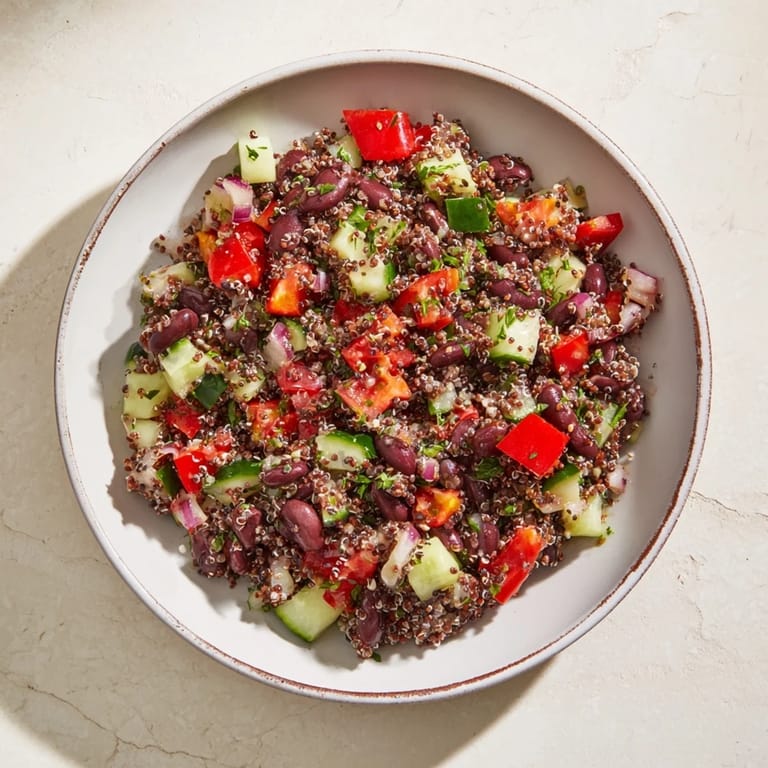
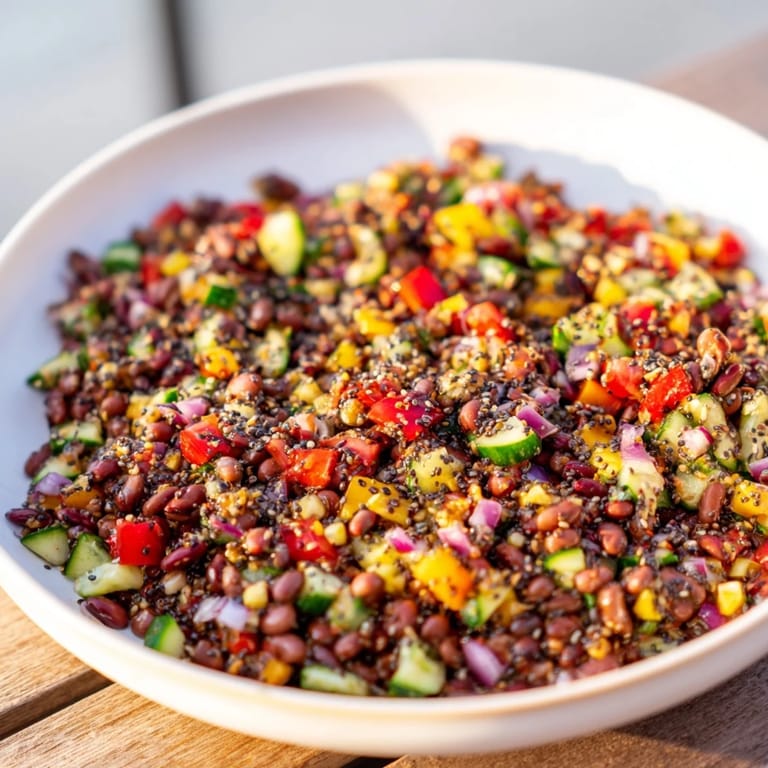
- Chickpeas, kidney beans, and black beans: Three cans instead of one makes this feel substantial and gives you different textures; I learned the hard way that mixing bean varieties is what transforms this from side dish to actual meal.
- Red bell pepper, red onion, cherry tomatoes, cucumber, and parsley: The vegetables are your color and crunch—don't skip the parsley because that green brightness is what makes people notice the salad.
- Chia and hemp seeds: These aren't just trendy additions; they plump up as they sit, absorbing dressing and creating little pockets of texture that feel intentional.
- Extra virgin olive oil, lemon juice, apple cider vinegar, and Dijon mustard: This dressing ratio is the quiet hero—tart enough to cut through the beans, rich enough to feel complete.
- Sea salt, black pepper, and cumin: The cumin is optional but don't skip it if you're serving this to people who like their food seasoned with intention.
Tired of Takeout? 🥡
Get 10 meals you can make faster than delivery arrives. Seriously.
One email. No spam. Unsubscribe anytime.
Instructions
- Drain and rinse your beans:
- Open all three cans and rinse them under cold water—this removes the starchy liquid that would make your salad gummy. You'll see the water run clear after a few seconds, which is weirdly satisfying.
- Chop your vegetables mindfully:
- Dice the pepper and cucumber into roughly the same size as the bean halves, so every bite feels balanced. The red onion should be thin enough that it doesn't dominate, but present enough that you taste it.
- Combine everything in one big bowl:
- Add beans, then vegetables, then scatter the seeds on top—there's no wrong order, but this one looks nice. Toss it gently a few times just to get everything acquainted before the dressing arrives.
- Whisk your dressing:
- In a small bowl, combine oil, lemon juice, vinegar, mustard, salt, pepper, and cumin if you're using it. Whisk until it emulsifies slightly—you'll see it change color and become a little thicker, which means the mustard is doing its job.
- Pour and let it sit:
- This is the patience part: the chia seeds need at least 10 minutes to soften and absorb the dressing, transforming from tiny hard specks into something almost gel-like. The flavors will also meld in a way that tastes noticeably better than fresh.
 Save
Save There was a moment when I packed this for a long day of errands and ate it sitting in my car between appointments, and it was genuinely comforting in a way nothing else had been that week. That's when I understood—this salad isn't about being healthy or Instagram-perfect. It's about taking care of yourself in small, honest ways.
Flavor Foundations That Matter
The cumin is optional in the ingredient list, but optional things sometimes become non-negotiable once you taste them. It brings a warmth that doesn't announce itself loudly but makes the whole salad feel more sophisticated, like someone actually thought about spices instead of just chopping vegetables. The Dijon mustard does similar quiet work—it binds the dressing and adds a subtle sharpness that keeps everything from tasting one-note. If you've been making bean salads that taste flat, these two ingredients are usually the culprits.
Making It Your Own
The beauty of this salad is that it's genuinely flexible without becoming chaotic. I've swapped kidney beans for cannellini when that's what was in my pantry, added roasted chickpeas for extra crunch, or thrown in whatever herbs were wilting in the fridge. One time I added crumbled feta and a pinch of smoked paprika, and a vegetarian guest suddenly felt like the salad was made specifically for her. The formula is sturdy enough to handle creativity.
Storage and Serving Wisdom
This salad keeps beautifully in the refrigerator for up to three days, which means you can make it once and eat it three completely different ways. Monday it's a standalone lunch, Tuesday it becomes a base for leafy greens if you're tired of the same thing, Wednesday you pile it onto toasted bread with a smear of something creamy. The chia seeds will continue absorbing liquid as it sits, making the salad slightly thicker and richer with time.
- Store it in an airtight container so the vegetables don't dry out and the flavors stay concentrated.
- If the salad seems dry by day three, you can always whisk together a quick extra dressing—the original recipe scales up easily.
- Serve it chilled straight from the fridge or let it sit at room temperature for 20 minutes before eating, depending on your mood.
 Save
Save This salad became the thing I make when I want to feel grounded and fed without overthinking it. That's probably its greatest gift.
Recipe FAQ
- → Can I substitute the beans in this salad?
Yes, cannellini, pinto, or navy beans work well as alternatives without altering the balance of flavors.
- → What is the purpose of soaking the salad before serving?
Allowing the salad to rest for at least 10 minutes helps the chia seeds swell and the flavors meld for a more harmonious taste.
- → How can I add more flavor to this dish?
A pinch of smoked paprika or crumbled feta cheese (omit for vegan) enhances depth and complexity.
- → Is this dish suitable for gluten-free and vegan diets?
Yes, it naturally fits gluten-free and vegan diets unless cheese is added for variation.
- → What dressing ingredients are used?
The dressing blends extra virgin olive oil, fresh lemon juice, apple cider vinegar, Dijon mustard, sea salt, black pepper, and optional cumin.
- → How should leftovers be stored?
Keep leftovers in an airtight container in the refrigerator for up to three days to maintain freshness.