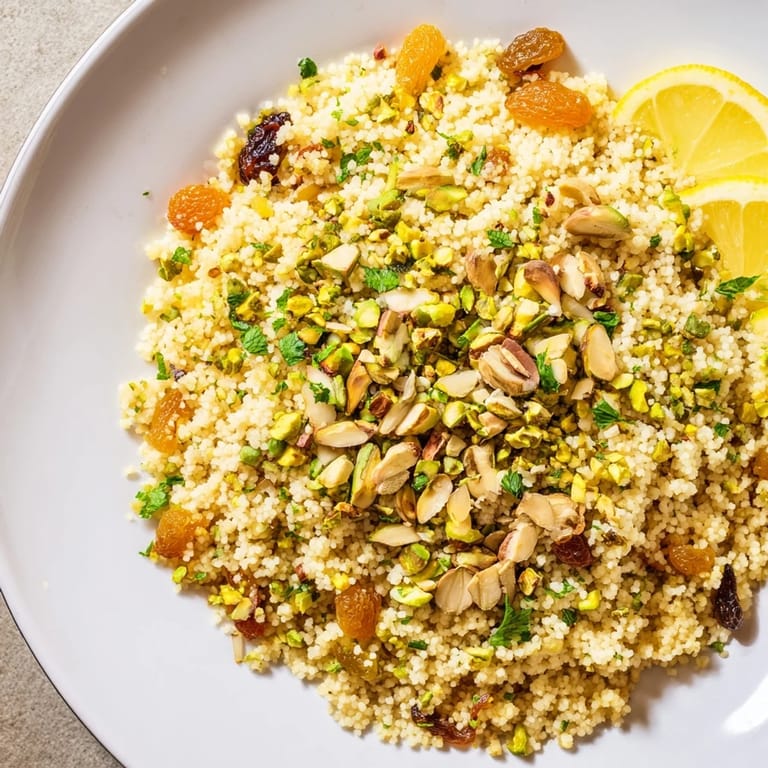
 Save
Save I discovered couscous pilaf on a rainy Tuesday while browsing through my roommate's spice rack, and honestly, I was overwhelmed by how many jars she had collected. She caught me standing there and said, "Just make the pilaf—it's foolproof and smells incredible." That first attempt taught me that the most fragrant dishes often come from the simplest ingredients cooked with intention. Now whenever I need something that feels both impressive and effortless, this is what I reach for.
I made this for a potluck once and watched people go back for thirds, which never happens with side dishes. One guest asked if I'd spent hours on it, and I loved having a secret—that this golden, nutty pilaf was actually made in the time it takes to watch a TV episode. That moment sealed it for me: simple doesn't mean forgettable.
Ingredients
- Couscous: Use the regular variety, not pearl couscous, so it absorbs the broth quickly and stays light and fluffy.
- Vegetable broth: This is your liquid foundation—I learned the hard way that water alone leaves it tasting flat.
- Dried apricots and golden raisins: They plump up beautifully in the heat and add natural sweetness that balances the warming spices.
- Slivered almonds and pistachios: Toast them yourself if you can—the difference between raw and toasted nuts is honestly night and day.
- Olive oil: A good quality oil makes this taste like you know what you're doing, even if you're just winging it.
- Onion and garlic: The flavor foundation that makes every bite feel thoughtful and layered.
- Cumin, cinnamon, coriander, and turmeric: These four spices are the soul of the dish—they create warmth without being overpowering.
- Fresh parsley and mint: The herbs brighten everything at the very end, cutting through the richness with their green freshness.
Tired of Takeout? 🥡
Get 10 meals you can make faster than delivery arrives. Seriously.
One email. No spam. Unsubscribe anytime.
Instructions
- Build your aromatic base:
- Heat the olive oil and sauté your onion until it's soft and golden, about 2–3 minutes. You'll smell it before it's done. Add the garlic next, just for a minute—it should smell alive and fragrant, not brown.
- Bloom the spices:
- This is the step that makes everything sing. Add all your warm spices and let them cook for just 30 seconds, stirring constantly. The whole kitchen will smell like a spice market, and that's exactly when you know you're on the right track.
- Toast the dried fruit:
- Stir in your apricots and raisins, making sure they get coated in the spice oil. This helps release their sweetness and flavor.
- Pour in the broth and bring to life:
- Add your vegetable broth and let it come to a boil. You'll see steam rising and hear the gentle bubbling—that's the signal that everything is ready for the couscous.
- Let the couscous absorb and rest:
- Remove from heat, stir in your couscous, cover, and walk away for 5 minutes. Resist the urge to peek. When you lift that lid, the couscous will have absorbed every bit of that fragrant liquid.
- Fluff and fold gently:
- Use a fork to gently break up the couscous, then fold in your toasted nuts and fresh herbs. Handle it like you're waking something delicate.
- Taste and adjust:
- This is always worth doing. Sometimes the broth is saltier than expected, or you want a touch more brightness from lemon.
 Save
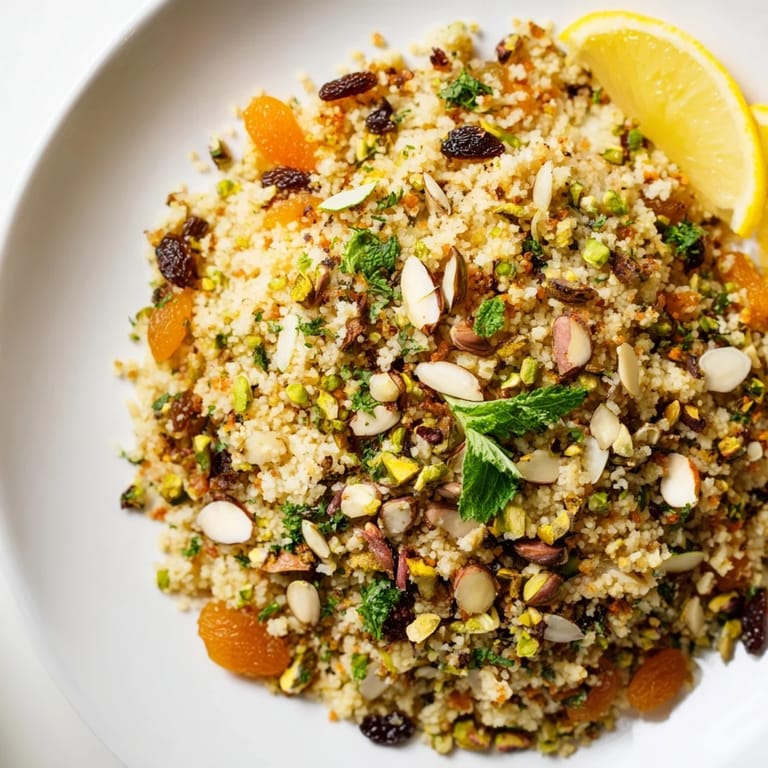
Save I remember my grandmother tasting this and nodding quietly, then asking for the recipe written down. She'd never made couscous before, but something about the way the spices and fruit came together reminded her of traveling through Morocco as a young woman. That's when I realized this pilaf carries a kind of emotional weight that transcends its simplicity.
The Magic of Warm Spices
Cumin, cinnamon, coriander, and turmeric together create something greater than their individual parts. They're gentle and layered, warming without being harsh or spicy. I learned this by experimenting—sometimes I'd add too much of one and the whole dish would taste lopsided, but hitting that balance means every spoonful feels intentional and complex.
Why This Works as a Main or a Side
The couscous is light enough to serve alongside grilled chicken or lamb, but the nuts and dried fruit make it substantial enough to be eaten on its own with a simple salad. I've served it both ways, and honestly, it shines either way. The beauty is that it doesn't demand attention or compete—it complements.
Making It Your Own
This pilaf loves flexibility. I've swapped dried cranberries for raisins when I was out, added chickpeas for protein on nights I wanted something more filling, and even stirred in pomegranate seeds at the very end for a pop of tartness. The core spice blend and technique stay the same, but the dish adapts to what you have and what you're hungry for.
- Try stirring in cooked chickpeas or white beans for extra protein and texture.
- Pomegranate seeds or fresh lemon juice added at the end bring brightness that cuts through the richness beautifully.
- Serve it at room temperature the next day if you have leftovers—it's equally delicious cold or gently warmed up.
 Save
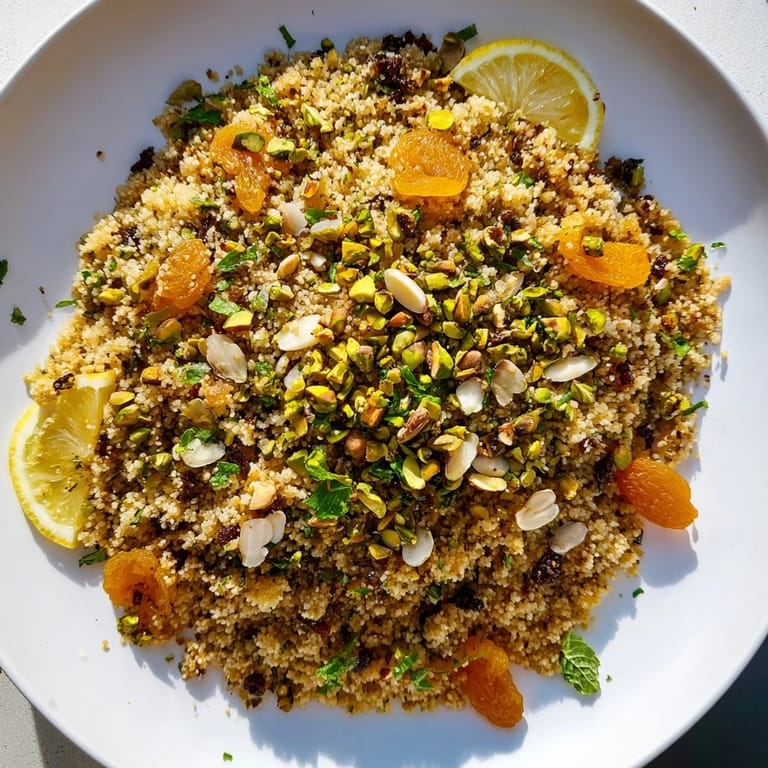
Save This pilaf has become my go-to when I want to feel like I've cooked something meaningful in half an hour. It's the kind of dish that reminds you that simple ingredients treated with care can taste like you put your whole heart into the kitchen.
Recipe FAQ
- → Can I make this dish vegan?
Yes, using vegetable broth ensures the dish is completely vegan while preserving rich flavor.
- → What nuts work best for texture?
Toasted almonds and pistachios add crunch and a pleasant nutty aroma to the pilaf.
- → How do spices enhance the couscous?
Warm spices like cumin, cinnamon, coriander, and turmeric infuse the grains with depth and subtle complexity.
- → Can I substitute dried fruit?
Dried cranberries, cherries, or dates make excellent alternatives, each adding unique sweetness and color.
- → What dishes pair well with this pilaf?
Grilled vegetables, chicken, or lamb complement the pilaf’s fragrant and slightly sweet flavors wonderfully.
- → Is it possible to add protein?
Cooked chickpeas can be stirred in for an extra boost of protein and texture.