 Save
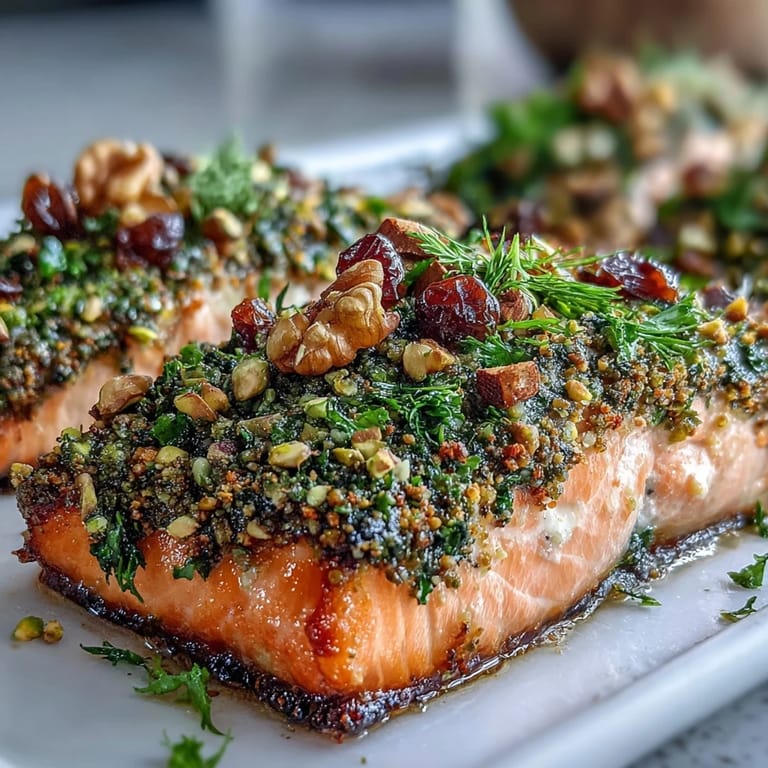
Save The first time I made confit salmon, I was intimidated by the elegance of it all—that pool of golden oil, the delicate fish, the precision required. But then my friend tasted it and said something that stuck with me: sometimes the most impressive dishes are actually the gentlest ones. Now whenever I make this, I think about how low and slow cooking transforms salmon into something almost buttery, something that melts on your tongue before you even realize you're eating it.
I made this for a dinner party on a spring evening when everyone was tired of heavy food, and something shifted in the room the moment they took their first bites. There was this pause, this quiet moment of appreciation that you don't often get around a dinner table. That's when I realized this dish works because it feels luxurious without being heavy, impressive without demanding hours in the kitchen.
Ingredients
- Salmon fillets (4, about 150 g each): Look for fillets that are evenly thick so they cook at the same rate; ask your fishmonger to remove pin bones because hitting one with your teeth is never the vibe you're going for.
- Olive oil (500 ml): Use something you'd actually want to taste, not your cooking oil—this becomes part of the experience, and it's worth getting something with character.
- Lemon zest: Microplane it fresh right before cooking so it doesn't lose its brightness and aromatic oils.
- Sea salt and black pepper: Season generously; the salmon will absorb flavors gently as it confits.
- Shelled pistachios (60 g): Chop them by hand rather than using a food processor so you get uneven, interesting texture instead of a paste.
- Tahini (3 tbsp): This is your binding agent and brings a subtle nuttiness; make sure it's well-stirred before measuring.
- Garlic clove: Grate it finely on a microplane so it distributes evenly without harsh chunks.
- Fresh parsley, dill, and mint (2 tbsp each): Chop these just before mixing into the crust so they stay vibrant and don't oxidize.
- Lemon juice (1 tbsp): This cuts through the richness and keeps everything tasting fresh.
- Honey (1 tsp): A tiny amount balances the earthiness of tahini and cumin.
- Ground cumin (½ tsp): It's optional in spirit but essential in practice—adds a subtle warmth that ties everything together.
Tired of Takeout? 🥡
Get 10 meals you can make faster than delivery arrives. Seriously.
One email. No spam. Unsubscribe anytime.
Instructions
- Set your oven to a gentle temperature:
- Preheat to 100°C (210°F)—this is the whole philosophy of confit, cooking low and slow so the fish becomes silky rather than firm.
- Arrange the salmon carefully:
- Place fillets skin-side down in a small ovenproof dish where they fit snugly without overlapping; season each with salt, pepper, and lemon zest.
- Submerge in oil:
- Pour olive oil over the salmon until mostly covered, then transfer to the oven for 25–30 minutes—you're looking for that moment when the flesh turns just opaque and flakes gently under a fork.
- Build the crust while the salmon cooks:
- Combine pistachios, tahini, grated garlic, all three herbs, lemon juice, honey, cumin, and a pinch of salt and pepper in a bowl, stirring until you have a thick, spoonable paste with actual texture.
- Remove and cool the salmon:
- When done, carefully lift fillets from the oil using a slotted spatula and place them on paper towels—the slight cooling helps the crust adhere better.
- Crown with the crust:
- Spread a generous layer of tahini-pistachio mixture over the top of each fillet, pressing gently so it stays put.
- Finish and serve:
- Serve warm or at room temperature, garnished with extra herbs, lemon wedges, and a final drizzle of that beautiful confit oil.
 Save
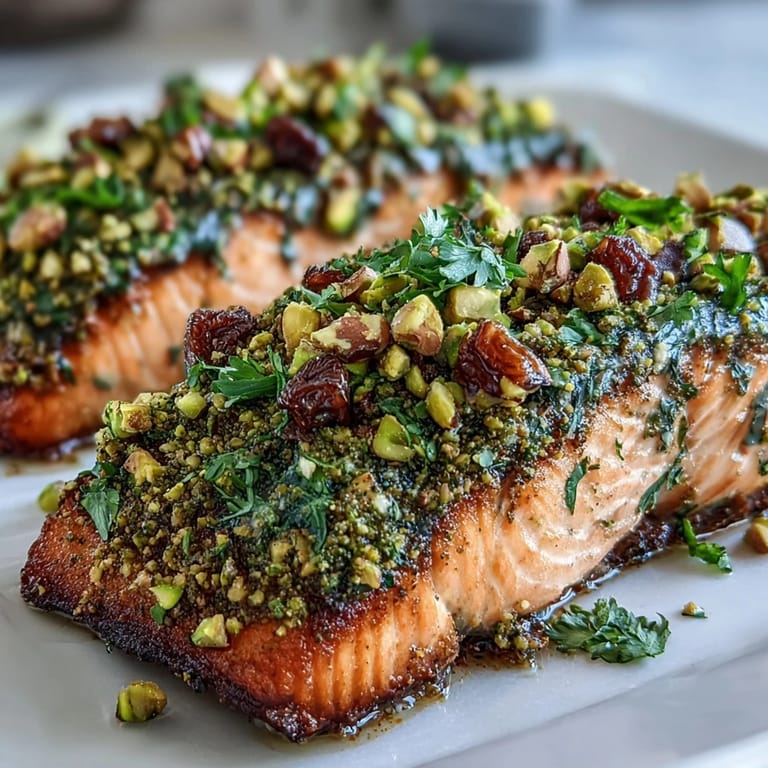
Save There's something almost meditative about watching salmon confit in that golden oil, barely a bubble on the surface, the kitchen filling with the scent of lemon and olive. It reminds me that not every impressive dish requires drama or high heat—sometimes the best things happen quietly.
The Art of Gentle Heat
Confit is one of those cooking techniques that sounds fancy but is actually about restraint, which is the opposite of what most of us think cooking should be. When I finally understood that low temperature doesn't mean less flavor—it means different flavor—this dish became a regular in my rotation. The salmon stays so close to translucent that you forget you're eating something cooked; it feels like a completely different preparation.
Making the Crust Work
The crust is where personality comes in, and honestly, once you understand the ratio of tahini to herbs to pistachio, you can play with it. I've added different combinations depending on what's in my garden or what mood I'm in—sometimes more mint for brightness, sometimes a whisper of cilantro for something unexpected. The honey is the secret weapon that nobody expects; it softens the earthiness and makes the whole thing taste intentional rather than thrown together.
Serving and Storage Wisdom
One of my favorite things about this dish is that it tastes equally beautiful at room temperature, which means you can make it hours ahead and let your oven space free up for sides. Serve it alongside a crisp green salad with a sharp vinaigrette to cut through the richness, or with warm flatbread if you want something more substantial. The confit oil can be strained and saved for dressing salads or finishing soups—nothing goes to waste, and it carries the memory of this meal into your next cooking day.
- For extra textural contrast, broil the crusted salmon under the grill for just 2–3 minutes until the top starts to toast and the pistachios deepen in color.
- If you don't have all three fresh herbs, parsley and dill are the non-negotiables; mint can be substituted with basil or even chives.
- Almonds or walnuts work beautifully if pistachios aren't available, though pistachios bring a subtle sweetness that's genuinely special.
 Save
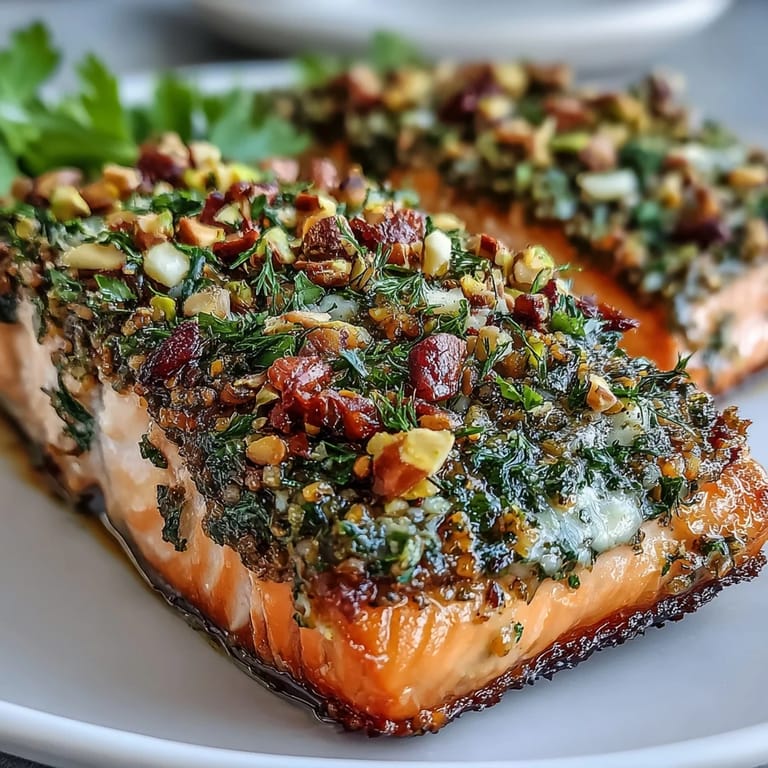
Save This dish proves that restraint in the kitchen can be just as impressive as complexity, and that sometimes the most memorable meals are the quiet ones. Make it when you want to feel like you're cooking with intention.
Recipe FAQ
- → What does confit mean in cooking?
Confit is a French cooking technique where food is gently poached in oil or fat at a low temperature, resulting in exceptionally tender and flavorful results.
- → Can I reuse the oil after cooking the salmon?
Yes, you can strain and store the confit oil for future cooking. It will be infused with delicate salmon flavor and works well for sautéing vegetables or making dressings.
- → What can I substitute for pistachios?
Almonds or walnuts work well as substitutes for pistachios. Simply chop them finely and follow the same preparation method for the crust mixture.
- → How do I know when the salmon is properly cooked?
The salmon is ready when it becomes just opaque and flakes easily with a fork. After 25-30 minutes at 100°C, it should have a tender, butter-like texture.
- → Can this dish be served cold?
Yes, this salmon is delicious warm or at room temperature, making it perfect for preparing ahead for dinner parties or buffet-style meals.
- → What sides pair well with this salmon?
A crisp green salad, warm flatbread, roasted vegetables, or a light grain salad like quinoa or couscous complement the rich flavors beautifully.