 Save
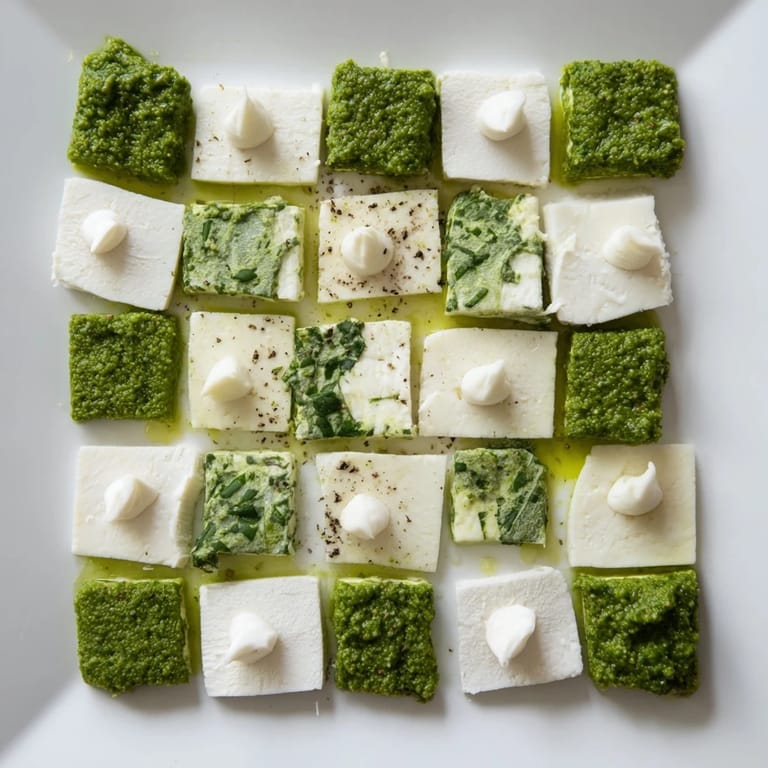
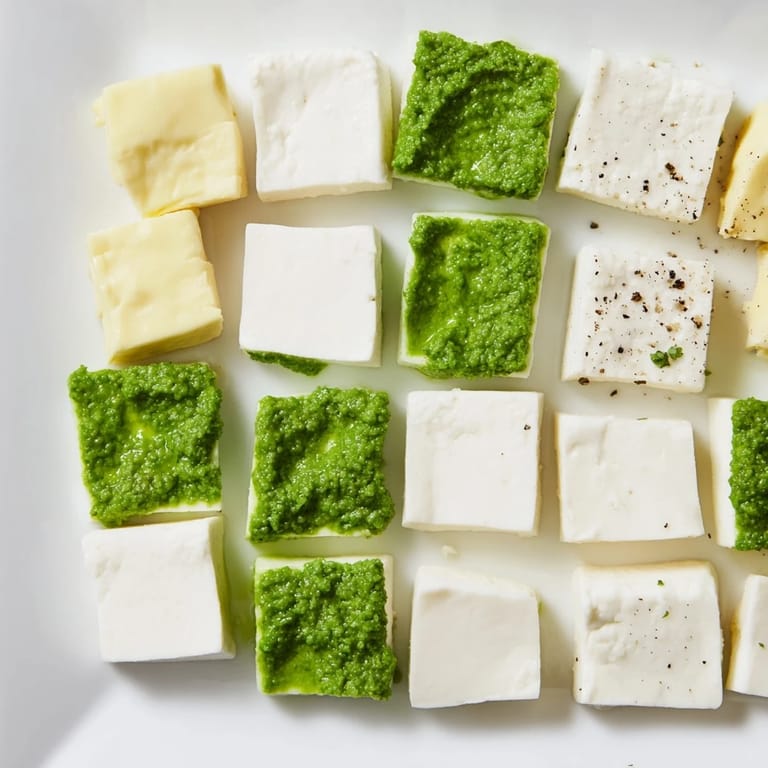
Save I discovered this checkerboard garden almost by accident at a dinner party where I was trying to impress someone who noticed everything about presentation. Instead of fussing over a complicated hot dish, I decided to play with cheese and herbs on a board, arranging them like a puzzle. The moment I stepped back and saw the white and green squares catching the light, I realized I'd stumbled onto something that looked far more intentional than it actually was—which is maybe the best kind of cooking discovery.
My neighbor once asked to bring something to a potluck and I made this, nervous it was too simple. She came back three days later asking for the recipe because her family wouldn't stop talking about it. Turns out people don't always want the most complicated thing—they want something beautiful they can actually taste the ingredients in.
Ingredients
- Fresh mozzarella: This is where you notice the difference between good cheese and great cheese, so don't skip the quality. Look for creamy, milky ones that slice cleanly.
- Ricotta cheese: The blank canvas that holds your other flavors. Smooth ricotta spreads easier than grainy versions.
- Feta cheese: Your salty anchor point that makes the herbs sing. Get block feta if you can, not crumbles.
- Fresh basil and flat-leaf parsley: These are doing the heavy lifting flavor-wise, so buy them the day you're making this if possible. Wilted herbs make sad paste.
- Chives: Just enough to add a whisper of onion without overpowering everything else.
- Extra virgin olive oil: Use one you'd actually drink because it's going to be the only fat holding this together.
- Garlic, lemon zest, salt and pepper: The seasoning layer that prevents this from tasting flat or one-dimensional.
Tired of Takeout? 🥡
Get 10 meals you can make faster than delivery arrives. Seriously.
One email. No spam. Unsubscribe anytime.
Instructions
- Make your green paste:
- Put all your herbs, oil, garlic, and zest in a food processor and blend until you have something that looks like vibrant pesto. Don't over-blend into baby food texture—you want it smooth but with personality.
- Prep your canvas:
- Line your serving board with parchment paper so you can move the whole thing without everything sliding around. This is the trick nobody tells you.
- Cut your cheese into neat squares:
- Use a ruler or a sharp knife to slice mozzarella and feta into pieces roughly the same size. Precision here makes the checkerboard actually look intentional instead of chaotic.
- Spread ricotta squares:
- Use an offset spatula to create even ricotta squares in your pattern, or pipe it if you're feeling fancy. Either way, clean edges are what make this look restaurant-quality.
- Build your checkerboard:
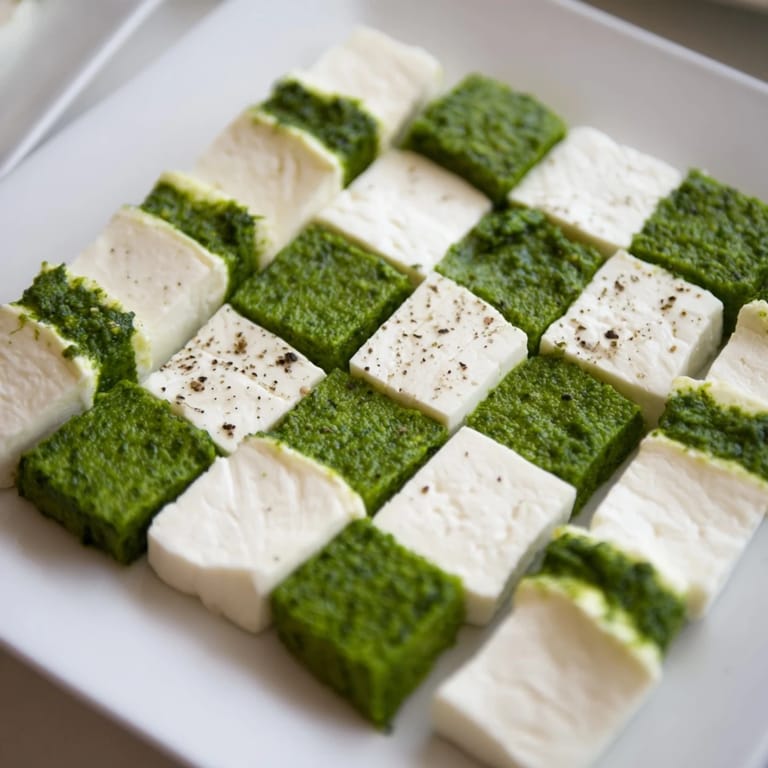
- Arrange everything in alternating squares like you're laying tile—white, green, white, green. This is meditative and oddly satisfying, like a puzzle that tastes good.
- Add the finishing touch:
- Sprinkle microgreens, edible flowers, or fresh black pepper on top for color and texture. Don't skip this because it's what makes people actually want to photograph your food.
- Chill before serving:
- Let it sit in the refrigerator for ten to fifteen minutes so everything sets and the flavors get to know each other. Serve with whatever you like to dip.
 Save
Save This dish became my secret weapon for moments when I needed to feel creative without the pressure of cooking. It taught me that sometimes the most impressive thing you can do is arrange good ingredients with intention and let them speak for themselves.
The Power of Precision
The first time I made this, I got sloppy with sizing and the whole thing looked messy. Then I actually used a ruler and suddenly it transformed into something that looked curated, something people leaned in to photograph. It's strange how much a little geometry matters when you're working with visual food like this.
Variations That Work
Swap goat cheese in for ricotta if you want something tangy that cuts through the richness differently. Add thin slices of cucumber or radish underneath the cheese squares for a hidden crunch that people love discovering. You could also do a mint-based herb paste instead of basil and parsley, or add sun-dried tomatoes for a deeper earthiness.
Making It Your Own
The beauty of a checkerboard is that you're not locked into anything—you can swap cheeses, adjust herbs, or add garnishes based on what you have and what you love. I've done this with whipped goat cheese, dill instead of basil, even added thin prosciutto under some squares for people who eat meat.
- Pair it with a crisp Sauvignon Blanc or light Pinot Grigio if you're the type to think about wine pairings.
- Make this the night before and just add garnishes the day of if you're short on time.
- Serve it with whatever bread or crackers you'd actually want to eat, not the boring ones.
 Save
Save This is the kind of dish that reminds you that entertaining doesn't have to be complicated to feel thoughtful. Make it when you want to feel like you actually tried.
Recipe FAQ
- → How do I make the herb mixture vibrant and smooth?
Combine fresh basil, parsley, chives, olive oil, garlic, lemon zest, salt, and pepper in a food processor. Blend until completely smooth and adjust seasoning to taste.
- → What is the best way to achieve clean cheese squares?
Use a sharp knife or a small square cutter to slice mozzarella and feta into even squares. You may pipe or spread ricotta for neat edges.
- → Can I prepare this ahead of time?
Yes, assemble the checkerboard and chill it for 10–15 minutes before serving to allow the flavors to meld and the presentation to set.
- → What garnishes enhance the final presentation?
Delicate microgreens, edible flowers, or a light sprinkle of freshly ground black pepper add color and texture contrast.
- → Are there variations to the cheese choices?
Ricotta can be swapped with goat cheese for a tangier note, and thin slices of cucumber or radish can be layered beneath for extra flavor and crunch.