 Save
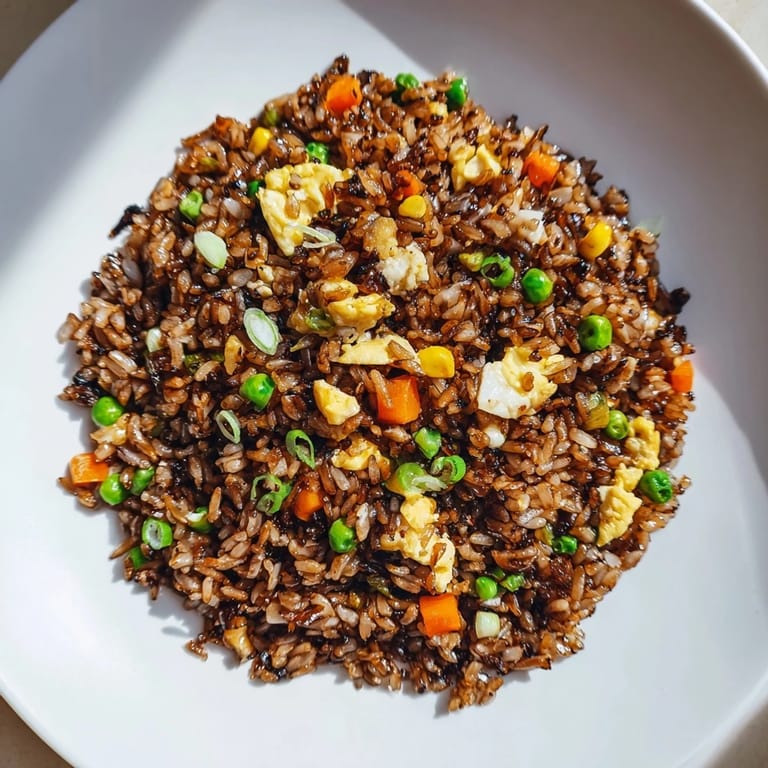
Save Black garlic discovered me in a tiny Asian market where I was hunting for something, anything, to make fried rice feel less ordinary. The vendor handed me a small box—these wrinkled, glossy cloves that looked ancient and mysterious. I took them home skeptical, chopped one up, and the kitchen filled with this deep, sweet, almost molasses-like fragrance. That first bite of fried rice changed something. This isn't fried rice trying to be fancy; it's fried rice that finally tastes like itself.
My sister called it a weeknight miracle when I served this to her unannounced. She was stressed, tired, not in the mood for anything complicated. Twenty-five minutes later she was scraping the bottom of her bowl, asking if black garlic was something I'd always known about or if I'd finally lost it in the best way. That's when I knew this recipe wasn't just about efficiency or flavor—it was about quiet moments that feel generous.
Ingredients
- Jasmine rice (3 cups, day-old and cold): Cold rice is everything here—it separates instead of clumping, giving you that restaurant texture without the stress. Make this the night before or buy it ready-cooked from the store.
- Black garlic (6 cloves, peeled and finely chopped): These gentle giants have already surrendered their harshness through fermentation, so they melt into the rice like dark caramel without any bite.
- Regular garlic (2 cloves, minced): This keeps the dish grounded with brightness, a reminder that regular garlic still belongs even when black garlic is stealing the show.
- Scallions (2, white and green parts separated): The white parts cook down into the rice for depth; the greens stay fresh and crisp on top for contrast.
- Onion (1 small, finely diced): Diced small so it dissolves almost entirely, building sweetness underneath everything else.
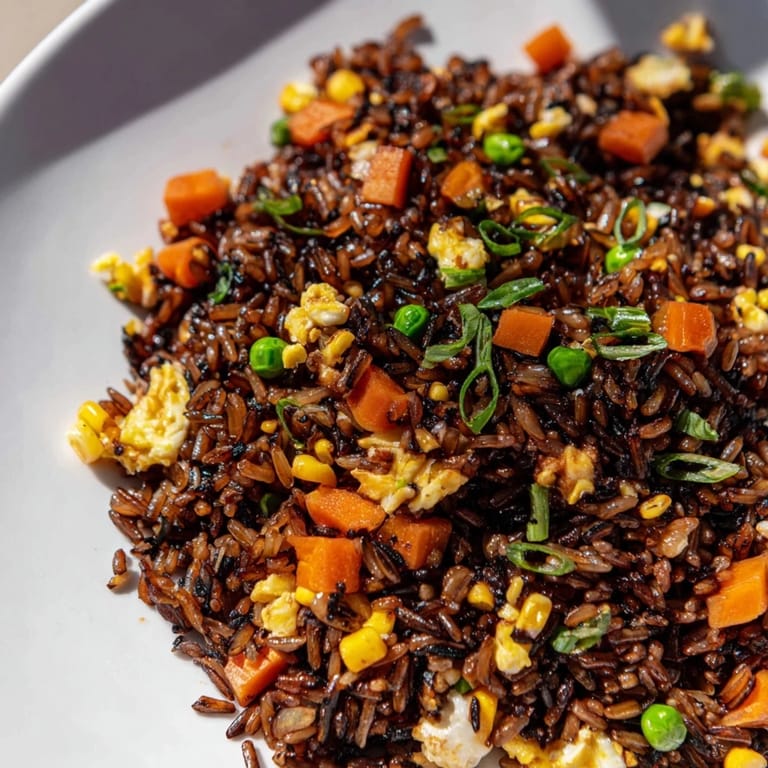
- Mixed vegetables (1 cup peas, carrots, corn or your choice): Whatever you have works—frozen is perfectly fine and honestly easier than fresh.
- Light soy sauce (2 tbsp): Light soy, not dark, so the black garlic remains the star without getting overshadowed.
- Oyster sauce (1 tbsp, optional or vegetarian): This adds that extra layer of umami if you want it, but the dish stands beautifully without it.
- Toasted sesame oil (1 tbsp): Drizzle it at the very end—heat kills its delicate, nutty purpose, so timing matters.
- Sugar (1 tsp): A whisper of sweetness that balances salt and makes everything feel complete.
- Black pepper (½ tsp, freshly ground): Freshly ground makes a real difference; pre-ground tastes tired by comparison.
- Eggs (2 large, lightly beaten, optional): They scramble into pillowy pockets throughout the rice, adding protein and richness.
- Neutral oil (2 tbsp, canola or sunflower): Use something with a high smoke point so it doesn't protest when your pan gets hot.
Tired of Takeout? 🥡
Get 10 meals you can make faster than delivery arrives. Seriously.
One email. No spam. Unsubscribe anytime.
Instructions
- Scramble the eggs first (if using):
- Heat 1 tablespoon of oil in your wok or large skillet over medium-high heat until it shimmers. Pour in the beaten eggs and let them sit for a moment before stirring—they'll set quickly into tender, slightly chunky pieces. Move them to a plate and forget about them for now.
- Build the flavor base:
- Add the remaining tablespoon of oil to the pan and let it get hot again. Toss in the white parts of the scallions and diced onion, stirring constantly for about a minute until the kitchen smells sweet and alive.
- Introduce the black garlic:
- Add both the minced regular garlic and chopped black garlic, stirring for another minute. You'll notice the black garlic softening, almost collapsing as it releases its deep, molasses-like flavor into the oil—this is exactly what you want.
- Cook the vegetables:
- Add your mixed vegetables and let them cook for 2 to 3 minutes, stirring occasionally, until they're heated through and still have a little firmness. Don't overdo this step; they should feel alive, not soft.
- Add the rice:
- Break up any clumps of cold rice with your spatula, then add it to the pan in batches if needed. Stir constantly for 2 to 3 minutes, making sure every grain touches hot surface and gets coated in that fragrant oil.
- Season and finish:
- Drizzle in the soy sauce, oyster sauce if you're using it, sugar, and black pepper, tossing constantly so the seasonings distribute evenly. The rice should smell deeply savory at this point, almost like toasted chestnuts.
- Bring everything together:
- Return the scrambled eggs to the pan, breaking them into smaller pieces as you stir them throughout the rice, then finish with a generous drizzle of toasted sesame oil. Toss one more time, then move the whole thing into a serving dish.
- Garnish and serve:
- Scatter the green scallion tops over the top and serve immediately while the rice is still hot and the sesame oil fragrance is strongest.
 Save
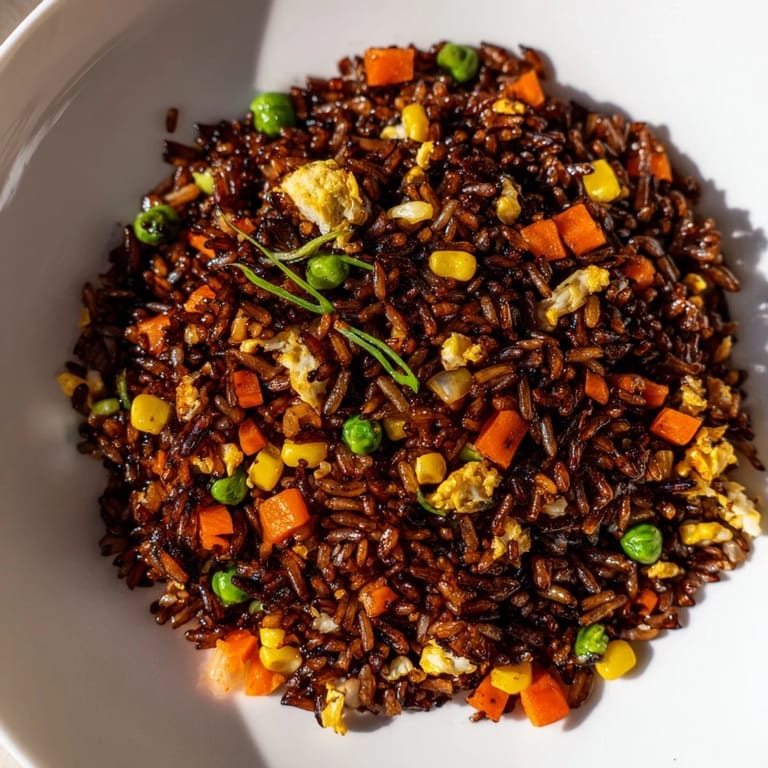
Save The best part wasn't even the taste—it was watching someone I love slow down over a bowl of rice. In that moment, food became permission to pause. That's what fried rice does when you actually care about the ingredients.
The Black Garlic Difference
Black garlic isn't a substitute or a trick; it's a completely different ingredient that happens to look like garlic. During fermentation, the cloves lose their pungency and develop a soft, sweet depth that regular garlic can't touch. When you add them to hot oil, they practically dissolve, coating every grain of rice with an almost burgundy undertone. The result is fried rice that feels sophisticated without trying, umami-rich without tasting heavy. Once you've tasted it this way, regular fried rice feels like a memory.
Why Temperature and Timing Matter
Fried rice lives and dies by heat and sequence. A wok or heavy skillet needs to be genuinely hot so the rice grains stay separate and develop a subtle toastiness rather than steaming into clumps. The order also matters: aromatics first to build a flavor base, vegetables at the right moment so they stay crisp, eggs last if using them so they don't scatter before they're meant to. When everything hits the pan in the right order and at the right temperature, the dish comes together in just 10 minutes with a texture that feels intentional, not rushed.
Variations and Swaps
This recipe holds strong because the base is so clean and adaptable. Swap vegetables for whatever you have—mushrooms, snap peas, zucchini, bell peppers—and the black garlic still shines through. Add protein with diced tofu, shrimp, or chicken cooked right into the vegetables stage, and you've got a complete meal. Even the aromatics can shift slightly: garlic chives instead of scallions, shallots alongside onion for more sweetness, a touch of ginger for warmth. The black garlic remains the anchor that ties everything together.
- Kimchi or pickled vegetables on the side add a bright, acidic counterpoint that wakes up your palate between bites.
- Drizzle with a touch of chili oil if you want heat without overpowering the subtle sweetness of black garlic.
- Make it richer with a poached egg on top instead of scrambled eggs mixed in, letting the yolk break over the warm rice.
 Save
Save This fried rice isn't trying to impress anyone. It just wants to be good, to be honest, to remind you that some of the best meals come from paying attention to small things like the right rice, the right garlic, and the right moment to add the oil. Serve it to someone who needs feeding, and watch what happens.
Recipe FAQ
- → What makes black garlic different in this dish?
Black garlic provides a sweet, mellow umami flavor that deepens the overall taste, distinguishing it from regular garlic’s sharper profile.
- → Is day-old rice essential for fried rice?
Using day-old, chilled jasmine rice helps prevent clumping and yields a better texture when stir-frying.
- → Can I substitute the toasted sesame oil?
Toasted sesame oil adds a nutty aroma; mild oils can be used but the signature flavor may be less pronounced.
- → How do the vegetables contribute to this dish?
Mixed diced vegetables add sweetness, color, and texture that balance the savory elements of the dish.
- → What role does soy and oyster sauce play?
Soy and optional oyster sauce introduce salty, savory depth enhancing the umami complexity of the stir-fried rice.